


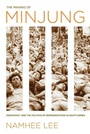
The Making of Minjung
Democracy and the Politics of Representation in South Korea
Published on 15. June 2011
368 pages
978-0-8014-6169-9 (ISBN)
Description

In this sweeping intellectual and cultural history of the minjung ("common people's") movement in South Korea, Namhee Lee shows how the movement arose in the 1970s and 1980s in response to the repressive authoritarian regime and grew out of a widespread sense that the nation's "failed history" left Korean identity profoundly incomplete.The Making of Minjung captures the movement in its many dimensions, presenting its intellectual trajectory as a discourse and its impact as a political movement, as well as raising questions about how intellectuals represented the minjung. Lee's portrait is based on a wide range of sources: underground pamphlets, diaries, court documents, contemporary newspaper reports, and interviews with participants. Thousands of students and intellectuals left universities during this period and became factory workers, forging an intellectual-labor alliance perhaps unique in world history. At the same time, minjung cultural activists reinvigorated traditional folk theater, created a new "minjung literature," and influenced religious practices and academic disciplines.In its transformative scope, the minjung phenomenon is comparable to better-known contemporaneous movements in South Africa, Latin America, and Eastern Europe. Understanding the minjung movement is essential to understanding South Korea's recent resistance to U.S. influence. Along with its well-known economic transformation, South Korea has also had a profound social and political transformation. The minjung movement drove this transformation, and this book tells its story comprehensively and critically.
Reviews / Votes
Lee's books is one of few studies that attempts to analyze the Korean democratic movement from its origins in the early 1970s to its denouement in the 1990s. While most studies focus on the May 1980 Gwangju uprising or the post 1987 democratic transition and consolidation, Lee's book covers the entire period of the movement, Thus, in Lee's book we get the full story: how the movement emerged in the 1970s, the catalytic effects of the Gwangju uprising in the 1980, and how the movement became increasingly radicalized in the 1980s.- Paul Y. Chang (Mobilization) This book is the best, and virtually the only, political ethnography of South Korean antigovernment political activism by students and intellectuals during the 1980s' turbulent democratization periods. While a few works have been published regarding the political democratization processes in South Korea recently, they fail to achieve the accuracy and in-depth description that Namhee Lee has provided through this meticulous survey of real life experiences of South Korean activists in the 1980s.
- Jungmin Seo (Korean Studies)
More details
Other editions
Additional editions
Book
12/2009
Cornell University Press
€28.50
Shipment within 10-20 days
Book
11/2007
Cornell University Press
€56.95
Shipment within 10-20 days
Person
Namhee Lee is Associate Professor of Asian Languages and Cultures at the University of California, Los Angeles.
Content
- Intro
- Contents
- Acknowledgments
- Notes on Romanization and Translation
- Introduction: Minjung, History, and Historical Subjectivity
- Part I. The Crisis of Historical Subjectivity
- 1. The Construction of Minjung
- 2. Anticommunism and North Korea
- 3. Anti-Americanism and Chuch'e Sasang
- Part II. Building a Counterpublic Sphere
- 4. The Undongkwon as a Counterpublic Sphere
- 5. Between Indeterminacy and Radical Critique: Madangguk, Ritual, and Protest
- 6. The Alliance between Labor and Intellectuals
- Part III. The Politics of Representation
- 7. "To Be Reborn as Revolutionary Workers": Gramscian Fusion and Leninist Vanguardism
- 8. The Subject as the Subjected: Intellectuals and Workers in Labor Literature
- Conclusion: The Minjung Movement as History
- Bibliography
- Index
