

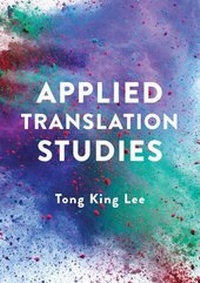
Applied Translation Studies
Published on 20. November 2017
X, 178 pages
978-1-137-60655-6 (ISBN)
Available for download
Description

This textbook is a practical and interactive reader designed to give anyone interested in language and communication a rigorous yet accessible head-start to the emerging field of translation. Organised along neat paradigms and models, the book features fresh applications of a wide range of theories, drawing on authentic examples from a multitude of languages.
With its strong emphasis on how translation operates in real-world situations, the book is a useful reference not only for students, instructors, and practitioners of translation, but also for the general reader who is curious about the intricacies of communicating across languages and cultures.
With its strong emphasis on how translation operates in real-world situations, the book is a useful reference not only for students, instructors, and practitioners of translation, but also for the general reader who is curious about the intricacies of communicating across languages and cultures.
Reviews / Votes
This book provides the student of the field with a comprehensive and concise panorama of its applications across the closely intertwined paradigms of equivalence, function, and discourse (.). The book covers a broad swath of approaches to the study of language contact, as it is revealed in translation: from the practical issues of the applied subfield to the radical postmodern proposals of Judith Butler. - Norbert Francis, Applied Linguistics, Vol. 39 (4), 2018
More details
Other editions
Additional editions
Tong King Lee
Applied Translation Studies
Book
10/2017
Red Globe Press
€32.50
Shipment within 10-20 days
Person
Tong King Lee is an applied linguist based at the University of Hong Kong. He is a NAATI-accredited professional translator, with several years' experience in translation research and teaching as well as language consultancy. He is the author of the monographs Experimental Chinese Literature: Translation, Technology, Poetics (2015) and Translating the Multilingual City: Crosslingual Practices and Language Ideology (2013), and has published widely in leading international journals on applied linguistics and translation studies, including Applied Linguistics Review, Target, Translation Studies, The Translator, and Meta.
Content
Chapter 1: IntroductionTranslation: Why even bother about it?Translation studies: The applied vs. the conceptualApplied translation studies: Three paradigmsFurther reading and reflection
Chapter 2 : The Equivalence ParadigmTopic MapIn pursuit of equivalenceShifting between languagesFormal vs. dynamic equivalenceDynamic equivalence at work: Some illustrationsThe translator's libertySemantic vs. communicative translation(Un)translatability and its discontentsFurther reading and reflection
Chapter 3: The Functionalist ParadigmTopic MapThe uses and users of textText-type theoryTranslatorial actionTranslatorial action in crosscultural publishing: An exampleSkopos theoryTranslation as language solutionFurther real-life applicationsTranslaboration (Translation + Collaboration)On clients and end-usersResearch as a component of translatorial actionTranslation as genetic transferLocalisationWhen books and movies travelTranslation and global marketing communications: Apple Inc.Further reading and reflection
Chapter 4: The Discourse ParadigmTopic MapDiscourse: A plural conceptThe structure of texts: Baker's analysisThematic patterningMarkednessInformation structureCohesion: Reference, substitution/ellipsis, conjunctionCohesion: Multimodal discourseRegister analysis: Hatim and Mason's modelMeasuring translation quality: House's modelCase analysis of Chief Campaigner's speech in InspiringHK Sports Foundation annual reportFurther reading and reflection
Chapter 5: Beyond the ParadigmsIntegrating the paradigmsBeyond the wordThe translational: From translation to translanguagingMoving on from the applied: Conceptual articulations
Chapter 2 : The Equivalence ParadigmTopic MapIn pursuit of equivalenceShifting between languagesFormal vs. dynamic equivalenceDynamic equivalence at work: Some illustrationsThe translator's libertySemantic vs. communicative translation(Un)translatability and its discontentsFurther reading and reflection
Chapter 3: The Functionalist ParadigmTopic MapThe uses and users of textText-type theoryTranslatorial actionTranslatorial action in crosscultural publishing: An exampleSkopos theoryTranslation as language solutionFurther real-life applicationsTranslaboration (Translation + Collaboration)On clients and end-usersResearch as a component of translatorial actionTranslation as genetic transferLocalisationWhen books and movies travelTranslation and global marketing communications: Apple Inc.Further reading and reflection
Chapter 4: The Discourse ParadigmTopic MapDiscourse: A plural conceptThe structure of texts: Baker's analysisThematic patterningMarkednessInformation structureCohesion: Reference, substitution/ellipsis, conjunctionCohesion: Multimodal discourseRegister analysis: Hatim and Mason's modelMeasuring translation quality: House's modelCase analysis of Chief Campaigner's speech in InspiringHK Sports Foundation annual reportFurther reading and reflection
Chapter 5: Beyond the ParadigmsIntegrating the paradigmsBeyond the wordThe translational: From translation to translanguagingMoving on from the applied: Conceptual articulations

