

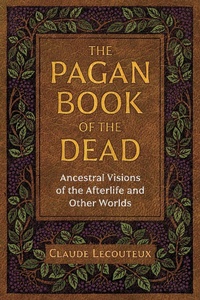
The Pagan Book of the Dead
Ancestral Visions of the Afterlife and Other Worlds
Published on 1. September 2020
320 pages
978-1-64411-048-5 (ISBN)
Description

An extensive look at the cartography and folklore of the afterlife worlds as seen by our ancestors
• Examines how ancient European cultures viewed the beyond, including the Blessed Isles of early Greek and Celtic faith, the Hebrew Sheol, Hades from Homer's Odyssey, Hel and Valhalla of the Norse, and the Aralu of Babylon
• Shows how medieval accounts of journeys into the Other World represent the first recorded near-death experiences
• Connects medieval afterlife beliefs and NDE narratives with shamanism, looking in particular at psychopomps, power animals, the double, the fetch, and what people bring back from their journeys to the spirit realms
Charting the evolution of afterlife beliefs in both pagan and medieval Christian times, Claude Lecouteux offers an extensive look at the cartography and folklore of the afterlife worlds as seen by our ancestors. Exploring the locations and topographies of the various forms taken by Hell, Purgatory, and Heaven, he examines how ancient European cultures viewed the beyond, including the Blessed Isles of early Greek and Celtic faith, the Hebrew Sheol, the pale world of Hades from Homer's Odyssey, Hel and Valhalla of the Norse, and the Aralu of Babylon, the land where nothing can be seen. The author also explores beliefs in Other Worlds, lands different from our own that are not the afterlife but places where time flows differently and which are inhabited by fantastic or supernatural beings such as fairies or dwarfs.
Sharing medieval tales of journeys into the beyond, Lecouteux shows how these accounts represent the first recorded near-death experiences (NDEs) and examines how they compare with modern NDE narratives as well as the work of NDE researchers like Raymond Moody. In addition, he also explores tales of out-of-body experiences, dream journeys, and travels made by a double or fetch and connects these narratives with shamanism, looking in particular at psychopomps, power animals, and what people bring back from their journeys to the spirit realms.
Analyzing the afterlife beliefs of the Middle Ages as a whole, Lecouteux concludes with a collection of medieval afterlife-related traditions, such as placing polished stones in the coffin so the departed soul can find its way back to friends and family at those times of the year when the veil between the worlds grows thin.
• Examines how ancient European cultures viewed the beyond, including the Blessed Isles of early Greek and Celtic faith, the Hebrew Sheol, Hades from Homer's Odyssey, Hel and Valhalla of the Norse, and the Aralu of Babylon
• Shows how medieval accounts of journeys into the Other World represent the first recorded near-death experiences
• Connects medieval afterlife beliefs and NDE narratives with shamanism, looking in particular at psychopomps, power animals, the double, the fetch, and what people bring back from their journeys to the spirit realms
Charting the evolution of afterlife beliefs in both pagan and medieval Christian times, Claude Lecouteux offers an extensive look at the cartography and folklore of the afterlife worlds as seen by our ancestors. Exploring the locations and topographies of the various forms taken by Hell, Purgatory, and Heaven, he examines how ancient European cultures viewed the beyond, including the Blessed Isles of early Greek and Celtic faith, the Hebrew Sheol, the pale world of Hades from Homer's Odyssey, Hel and Valhalla of the Norse, and the Aralu of Babylon, the land where nothing can be seen. The author also explores beliefs in Other Worlds, lands different from our own that are not the afterlife but places where time flows differently and which are inhabited by fantastic or supernatural beings such as fairies or dwarfs.
Sharing medieval tales of journeys into the beyond, Lecouteux shows how these accounts represent the first recorded near-death experiences (NDEs) and examines how they compare with modern NDE narratives as well as the work of NDE researchers like Raymond Moody. In addition, he also explores tales of out-of-body experiences, dream journeys, and travels made by a double or fetch and connects these narratives with shamanism, looking in particular at psychopomps, power animals, and what people bring back from their journeys to the spirit realms.
Analyzing the afterlife beliefs of the Middle Ages as a whole, Lecouteux concludes with a collection of medieval afterlife-related traditions, such as placing polished stones in the coffin so the departed soul can find its way back to friends and family at those times of the year when the veil between the worlds grows thin.
More details
Other editions
Additional editions
Book
10/2020
Inner Traditions Bear and Company
€24.00
Article in reprint
Person
Claude Lecouteux (1943?2025) was a professor emeritus of medieval literature and civilization at the Sorbonne and author of numerous books on medieval and pagan afterlife beliefs and magic, including The Book of Grimoires, Dictionary of Ancient Magic Words and Spells, and The Tradition of Household Spirits.
Content
INTRODUCTION
?In the Midst of Life We Are in Death?
ONE
Accounts of Journeys into the Beyond from Classical Antiquity
TWO
The Beyond as Seen in Mythologies and Religions
THREE
From the Christian Beyond to the Literature of Revelations
FOUR
Hell, Purgatory, and Paradise
FIVE
Between Visions, Tales, and Legends: The Chivalric Romances
SIX
The Otherworld in Medieval Scandinavian Literature
SEVEN
The Paths to the Otherworld
EIGHT
The Otherworld in Folktales and Songs
NINE
In Search of the Lost Spouse
TEN
Folktales and Shamanism
ELEVEN
The Experience of Imminent Death (NDE, OBE)
Conclusion
APPENDIX 1
Index of Signs, Symbols, and Omens
APPENDIX 2
Index of the Beyond
APPENDIX 3
Index of Some Motifs Found in Folktales
APPENDIX 4
Index of Some Story Types Featuring the Otherworld
Notes
Bibliography
Index
?In the Midst of Life We Are in Death?
ONE
Accounts of Journeys into the Beyond from Classical Antiquity
TWO
The Beyond as Seen in Mythologies and Religions
THREE
From the Christian Beyond to the Literature of Revelations
FOUR
Hell, Purgatory, and Paradise
FIVE
Between Visions, Tales, and Legends: The Chivalric Romances
SIX
The Otherworld in Medieval Scandinavian Literature
SEVEN
The Paths to the Otherworld
EIGHT
The Otherworld in Folktales and Songs
NINE
In Search of the Lost Spouse
TEN
Folktales and Shamanism
ELEVEN
The Experience of Imminent Death (NDE, OBE)
Conclusion
APPENDIX 1
Index of Signs, Symbols, and Omens
APPENDIX 2
Index of the Beyond
APPENDIX 3
Index of Some Motifs Found in Folktales
APPENDIX 4
Index of Some Story Types Featuring the Otherworld
Notes
Bibliography
Index
