


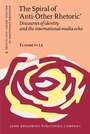
The Spiral of 'Anti-Other Rhetoric'
Discourses of identity and the international media echo
1st Edition
Published on 22. August 2006
XII, 280 pages
978-90-272-9336-7 (ISBN)
Description

How do media inform our representations of the Other and how does this influence intercultural / international relations? While officially dialogues between different national societies are conducted by diplomats in bilateral and multilateral settings, in practice journalists also participate every day in such dialogues through the phenomenon of the "international media echo" in which they report on each others' societies. Until now, media have only been investigated for their potential role in the foreign policy of specific states. In a case study involving media in three national cultures and languages (French, American and Russian), this book presents an interdisciplinary framework that combines quantitative and qualitative analyses for the study of the international media echo in an intercultural / international relations perspective. In particular, the fundamental functioning of "spirals of anti-Other rhetoric", i.e. media wars, is examined in a Critical Discourse Analysis approach completed with Social Identity Theory and International Relations theories.
More details
Other editions
Additional editions
Elisabeth Le
The Spiral of 'Anti-Other Rhetoric'
Discourses of identity and the international media echo
Book
08/2006
John Benjamins Publishing Co
€121.90
Shipment within 10-15 days
Person
Content
- The Spiral of 'Anti-Other Rhetoric'
- Editorial page
- Title page
- LCC data
- Dedication
- Table of contents
- Foreword
- Media, international relations, collective memories, and Critical Discourse Analysis
- 1.1. Media and international relations
- 1.1.1. Theoretical approaches
- 1.1.2. The ``international media echo''
- 1.1.3. Interacting cascading networks model
- 1.2. Media and collective memories
- 1.3. Critical Discourse Analysis
- 1.4. Empirical study of the international media echo: Presentation
- National and international contexts for the international media echo
- 2.1. Russian society
- 2.1.1. Russia in the 1990s
- 2.1.2. Russia and the West
- 2.2. French society
- 2.2.1. French foreign policy
- 2.2.2. Public opinion
- 2.2.3. Intellectuals
- 2.2.4. Human rights and ``Liberté, égalité, fraternité''
- 2.3. American society
- 2.3.1. American foreign policy
- 2.3.2. Public opinion
- 2.3.3. The American concept of liberal democracy
- 2.4. Print elite media
- 2.4.1. Le Monde
- 2.4.2. The New York Times
- 2.4.3. Russian print elite media
- 2.5. General context at the end of the 1990s
- Russia in Le Monde and The New York Times
- 3.1. Linguistic methodology
- 3.1.1. Coherence analysis
- 3.1.2. Coding at the macrostructural level
- 3.1.3. Coding at the all-sentence level
- 3.1.4. Coding complementarity
- 3.1.5. Verification of the analyses
- 3.2. Le Monde's and The New York Times' perspectives
- 3.2.1. Main trends
- 3.2.2. Lines of argumentation
- 3.2.3. Construction of the debate
- 3.2.4. Representation of Russia
- 3.2.5. Representation of Us
- 3.2.6. Le Monde's and The New York Times' positions
- 3.3. Different conceptual frameworks
- Le Monde's and The New York Times' editorials in their national societies
- 4.1. French society
- 4.1.1. French foreign policy
- 4.1.2. Intellectuals
- 4.1.3. French public opinion
- 4.1.4. Le Monde's editorials on Russia and French society
- 4.2. American society
- 4.2.1. American foreign policy
- 4.2.2. Elites
- 4.2.3. Public opinion
- 4.2.4. The New York Times' editorials on Russia and American society
- 4.3. Significance of Le Monde's and The New York Times' editorials on Russia
- Russian reactions to the West
- 5.1. Russian print elite media and the West in 1999-2001
- 5.1.1. Izvestija
- 5.1.2. Nezavisimaja Gazeta
- 5.1.3. Segodnja
- 5.1.4. Media coverage of Western and Russian intellectuals
- 5.1.5. Representation of a turning point in the relations between Russia and France
- 5.1.6. An example of ``international media echo'' stricto sensu: Izvestija and Le Monde
- 5.2. Russian official position
- 5.2.1. Russian foreign policy in 1999-2002
- 5.2.2. Russian government and media
- 5.3. Russian public opinion
- 5.3.1. Relation to the West in connection to the second Chechen war
- 5.3.2. Attitude towards France and the USA
- 5.3.3. Relations to the West from the societal / economic point of view
- 5.3.4. Impact of the West
- 5.3.5. Russia's place in the world
- 5.4. Russia and the West in 1999-2001
- Crossing cultural and disciplinary boundaries
- 6.1. The spiral of ``anti-Other rhetoric''
- 6.1.1. Its source
- 6.1.2. Its development
- 6.1.3. Its weakening
- 6.1.4. Its long-time effects
- 6.1.5. Can it be avoided?
- 6.2. Social identity theory and the international media echo
- 6.3. Realism, constructivism and public spheres
- 6.3.1. Realism
- 6.3.2. Constructivism
- 6.3.3. Realism and constructivism as complementary approaches
- 6.3.4. France, the USA and Russia in 1999-2001
- 6.4. Media identities on the international stage
- 6.5. Crossing boundaries
- Editorials
- Le Monde
- The New York Times
- Chronology
- 1999
- 2000
- 2001
- Coherence analysis
- a3.1. Relations of coherence
- a3.2. Definitions
- a3.2.1. Macrostructural basis and text division
- a3.2.2. Theme
- a3.2.3. Macrostructure
- a3.3. Hierarchical structure of a text
- a3.4. Coding
- a3.5. Example: ``The Truth About a Hero's Death'' (NYT, 29 November 2000)
- Analysis at the all-sentence level
- Summary generated from the analysis at the all-sentence level
- Analysis at the macrostructural level
- Abstract generated from the analysis at the macrostructural level
- Content coding
- a4.1. Ideological square at the macrostructural level
- Examples
- a4.2. Parties appearing in the argumentation
- a4.2.1. Writers' voices
- a4.2.2. Other voices
- a4.2.3. Specific addressees
- a4.2.4. Interactions at the macrostructural level
- a4.3. Representation of Russia in terms of its history
- Examples
- Negative representation of Russia
- a5.1. Le Monde
- a5.2. The New York Times
- Notes
- -24pt
- References
- Index
- The series Discourse Approaches to Politics, Society and Culture
