

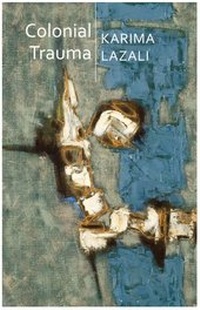
Colonial Trauma
Description

Colonial Trauma is a path-breaking account of the psychosocial effects of colonial domination. Following the work of Frantz Fanon, Lazali draws on historical materials as well as her own clinical experience as a psychoanalyst to shed new light on the ways in which the history of colonization leaves its traces on contemporary postcolonial selves.
Lazali found that many of her patients experienced difficulties that can only be explained as the effects of "colonial trauma" dating from the French colonization of Algeria and the postcolonial period. Many French feel weighed down by a colonial history that they are aware of but which they have not experienced directly. Many Algerians are traumatized by the way that the French colonial state imposed new names on people and the land, thereby severing the links with community, history, and genealogy and contributing to feelings of loss, abandonment, and injustice. Only by reconstructing this history and uncovering its consequences can we understand the impact of colonization and give individuals the tools to come to terms with their past.
By demonstrating the power of psychoanalysis to illuminate the subjective dimension of colonial domination, this book will be of great interest to anyone concerned with the long-term consequences of colonization and its aftermath.
More details
Other editions
Additional editions
Persons
Content
Introduction: The Trouble of Acknowledging Colonial Trauma
The History of French Colonization in Algeria: A Blank Space in Memory and Politics
A Much-Needed Interdisciplinary Approach
1. Psychoanalysis and Algerian Paradoxes
Disarray of the Private and Public Spheres
God's Reinforcement of Failing Institutions
The Power of Religion and the Religion of Power
The Literary Text and the Invisible Staging of Power
The Power of the "Language, Religion and Politics"(LRP) Bloc as Revealed by Clinical Psychoanalysis
The Duplicity of Subjects Confronting Censorship from the LRP
Abandoned Citizenship and Speech Acts
2. Colonial Rupture
The Colony: The Rogue Child of the Enlightenment
Colonialism's Destruction of Social Cohesion
A Colonial Republic Divided, or the "Duty to Civilize [the] Barbarians"
1945: A Literature of Refusal is Born
Nedjma: An Esthetic of Colonial Destruction?
Disrupting Genealogical Ties: The Effect of "Renaming" Algerians in the 1880s
Subjective Catastrophes and the Disappearance of the Father as Symbolic Reference
Writing against Anonymous Filiation
Jean El Mouhoub Amrouche: A Broken Voice
3. Colonialism Consumed by War
1945-1954: The Necessity of War
The Impossibility of Forgetting and Madness, a "Remedy" for Disappearance
Silencing the Unforgettable Mutilation of Bodies
Toulouse, 2012: The Return of Murder
Constructing the "Nation"
The Writer's Pressing Need: Transform Disappearance into Absence
4. Colonialism's Devastating Effects on Post-Independence Algeria
The Mutilated Body of the Colonized and the Hunger for Reparation
Colonial Hogra and a Frantic Quest for Legitimacy
The "Orphaning" Effect of Colonialism and its Impact
Further Distortion of Patronyms
Divested of a Name: A Form of Colonial Murder
Manufacturing Erasure and Denial under Colonialism
From Colonial Trauma to Social Trauma
5. Fratricide: The Dark Side of the Political Order
The Emergence of Algerian Nationalist Movements in the 1930s
The War of Liberation and an Impossible Fraternity
From Parricide to Fratricide
When the Murders between Brothers is Dismissed...
Calling on the Father
A Gap in Memory Sets Off an Endless Deadly Battle
6. The Internal War of the 90s
Reconsidering the LRP Bloc (language, religion and politics)
The Tyranny and Pleasure of Power
The Shift of 1988 and the Experience of Political Plurality
An Internal War of Unprecedented Violence
The Curse of Fratricide
The War Comes Home
A Strange Reversal in Naming
Do Freedom and Terror Go Hand in Hand?
7. State of Terror and State Terror
A Clinical Understanding of Terror
The Terrified Subject's Self-Elimination
Psychological Terror is always Political
Reconciliation: State Terror?
When the State Tries to Make its Practice of Disappearance Disappear
8. Legitimacy, Fratricide and Power
Jugurtha: A Fratricidal Hero
Unpunished Crimes within the Republic
The Legitimacy the French Conquest Claimed for Itself
The Passion-filled Scene of Coloniality
The Specter of Discord: el Fitna
9. Getting Out of the Colonial Pact
After Liberation, the Indefatigable Reenactment of Coloniality within Subjectivities and the Political Order
Trauma as Shelter and Alibi
The Brutalization of the Living: the Disappearance of Children
The "Bone Seekers": from the Child to the Fathers
Conclusion: Ending the Colonial Curse: Lessons from Fanon
The "Colonial Pact": Erasure of Memory, Disappearance of Bodies, Dispossession of Existence
The Mystical Quality of the Colonized
For a Future Liberation
Notes
Index
Foreword
Mariana Wikinski
In their ways of arresting time and encompassing space, these novels are not only irreplaceable tools of contextualization; they also create meaning out of the opacity of this colonial war and its afterlives. How can historians do their work without having read them?
Benjamin Stora, from his preface to the book Memoria(s) de Argelia. La literatura francófona-argelina y francesa al servicio de la historia
When children hear the voice of the dead, these are most often the voices of those who died without burial, without a rite.
Lionel Bailly, quoted by Françoise Davoine and Jean-Max Gaudillière in History beyond Trauma
Suddenly a phrase interrupts the rhythm of my reading and forces me to pause. Its familiarity surprises me: "to kill death." "Matar la muerte": this is the title of a text published in Buenos Aires in 1986 by the Argentine psychoanalyst Gilou García Reinoso and cited by Karima Lazali in its French translation (as "Tuer la mort," 1988). I begin this foreword in what might be an excessively self-referential way, inevitably, in order to give an account of what it meant for me to feel such a surprisingly strong sense of familiarity in the very place where I was expecting to undergo a certain estrangement.1 My practice as an Argentine psychoanalyst, working with a human rights organization and in a post-dictatorship context since 1984, and Karima Lazali's practice, working in Paris and Algeria since 2002 and 2006, respectively, converge all of a sudden in this eloquent phrase, which alludes to the wretched phenomenon that is the systematic disappearance of persons. "To kill death" thus functions symbolically as a historical and geographical bridge between two experiences that are politically very different: the Argentine and the Algerian. And it is precisely the differences between these experiences that prompt two acknowledgments. The first of these is that, anywhere on the planet, the setting to work of a psychoanalytic apparatus requires us to think the subject in the context of its moment and its historical and political determinations, to prevent blanks in the subject's psychic constitution from being replicated in the form of "holes" within the therapeutic process.2 The second acknowledgment is that the effects of the systematic method involving the disappearance of persons, both in Algeria and in Argentina, have been devastating; we are dealing with a biopolitical tool of domination, a tool for the control of subjectivities and bodies in systems of terror. With profound sensitivity, Lazali shows that the disappearance of persons always generates an erasure at the level of memory that cuts across generations and corrosively impedes the work of mourning.
But does this allow us to conclude that Argentina's history and Algeria's are somehow homologous? Definitely not. In this, her second book, written after La parole oubliée (2015), Lazali unravels the elements of Algeria's specificity: the traces of trauma and the psychic transpositions of the destruction that French colonialism left in Algerian society.
French colonialism and its dramatic historical consequences - events that were scandalous in their scale, their cruelty, and their persistence - left an indelible mark on Algerian history. This history is also marked - and this makes it radically different from the history of Argentina - by the absence of investigations into and justice for the innumerable crimes committed under colonialism, during the War of Liberation and the civil wars, and even today: disappearances, genocide, the mutilation of bodies, expropriations, and the disappearance of children. These are deaths, Lazali indicates, that are deprived of bodily integrity, becoming unrecognizable. The disappearance of persons is thus not only a matter of the spectral condition of what cannot be seen; it also results from what is excessively visible but not identifiable: disfigured and mutilated bodies, deprived of any possibility of being granted an identity.
If we could think of reality itself as a laboratory functioning at the planetary scale, then comparing the subjective effects of the systematic disappearance of persons in two countries, Argentina and Algeria, might offer us definitive proof of the place of thirdness that justice creates in the ordering of social bonds. As is well known, in Argentina, the Trial of the Juntas (Juicio a las Juntas Militares) began in 1985, under the new democracy formed after the end of the dictatorship - which lasted from 1976 to 1983, used torture as a systematic method for social control, and disappeared 30,000 people. The trial led to the sentencing of commanding officers. The trials of hundreds of others responsible for state terrorism during the dictatorship continue even today (marked by interruptions and political vicissitudes that are too numerous to discuss in detail in this context), in cases of crimes against humanity that are still pending or that have already concluded in cities throughout the country. This process prompted me to write the following about the statements made during these trials:
"And one day they didn't come back," some witnesses say, family members of the disappeared. . But when, on what day, did they not come back? How can we indicate that day, if all days until today are in fact that day? How can we define the absence of absence? Can we understand that those responsible are being tried for "disappearances" and not for "deaths"? What do we need in order to name the unnameable, identify the unidentifiable, specify the unspecifiable, locate the unlocatable? How can we date and provide coordinates for what never took place? How could the witness acknowledge the existence of a crime that was never definitively committed, because it keeps being committed? (Wikinski, 2016, p. 88)
In Algeria, as Lazali explains, the fate of the bodies that were torn apart or disappeared has never been investigated. Nor have there been investigations to determine who was responsible during each of the phases in which these crimes took place.
Lazali lucidly describes terror as a psychic state that, unlike trauma, does not allow for forgetting or repression, that does not lead to the emergence of a new subjective position, but instead blurs the boundaries between the psychic apparatus and the biological body, between the singular and the collective, between the inside and the outside. Terror remains untethered; it cannot be circumscribed. It is perhaps a matter of an encrustation without a subject, of a devastation that can even prevent the recognition of the state of terror by the subject who is undergoing and suffering from it.
The author can distinguish between trauma and terror in this way and can demonstrate that the notion of trauma is insufficient for explaining the effects of colonial violence because she fluently traverses the fields of subjective singularity, collective phenomena, the clinic, literature, and politics, and because she clearly identifies present, historical, and trans-subjective phenomena. In this way, she reveals the traces of colonialism on both the social and subjective levels, considering an event that was by all accounts unlimited in its effects, one that resounds deafeningly in the subjective journeys of many generations throughout Algerian history. We do not find in Lazali's work any fictitious distinction between the individual and the collective; nor do we find a failure to distinguish between these realms. Instead, we confront a profoundly Freudian way of thinking in which an articulation between these spaces is constantly produced, in a fabric of numerous determinations that are always interwoven with one another.
In this sense, Lazali can be seen to be indebted to the work of Frantz Fanon, who, writing while events were still unfolding, was able to address the implantation of alienation in the psyches of the colonized as well as the improbable work of subjective decolonization that it entailed.
There will always be an expropriation of the self when colonization is imposed. What cannot be spoken of in the space of psychoanalysis, the subjective dimension in history, the unthought that finds expression in literature: it is in these recesses, Lazali tells us, that we can perhaps find the keys for understanding the subjective effects of a history of devastation whose beginning will soon mark its two-hundredth anniversary.
Many figures of the negative - negation, denegation, foreclosure, the "hole," disavowal, repudiation - can be adduced to give an account of this blank, or what is at times, according to Lazali, a "black silence" that marks what "it is impossible to forget."
The author refers to Francophone Algerian literature - a corpus that includes several clearly autobiographical works - to glean what cannot be said from the critical deviations (détournements) of this literature's language and from its use of transliteration. Deviation for its own sake becomes a value, a process that makes "the untranslatable" into an object to be transmitted. Lazali also finds resources in these novels that can be used to oppose the censorship of thought and language that has marked colonial and postcolonial history. "How could psychoanalysts work without...
