


New Religious Movements: The Basics
2nd Edition
Will be published approx. on 10. September 2026
184 pages
E-Book
978-1-040-86134-9 (ISBN)
Description

This engaging book provides a concise introduction to the field of New Religious Movements (NRMs). Now in its Second Edition, this book outlines how NRMs fit with a popular understanding of cults, and how scholarly definitions can help us understand NRMs. Introducing the reader to some of the key issues and debates in the field of NRM studies, this book includes discussions on how to define the term "new religious movement," how to critically unpack the term "cult," brainwashing and deprogramming, prophecy and failed prophecy, charisma and authority, NRMs and violence, and NRMs and gender. This new edition features the following:
A new chapter on AI and how some people have sacralized it;
Additional material on internet cults using social media;
Additional coverage of anti-cult and counter-cult movements;
Updated case study examples and an updated glossary; and
Coverage of current legal cases surrounding undue influence and coercive control.
This book is essential reading for students and scholars of religion who are approaching the study of NRMs for the first time as well as those interested in deepening their understanding of NRMs and cults.
A new chapter on AI and how some people have sacralized it;
Additional material on internet cults using social media;
Additional coverage of anti-cult and counter-cult movements;
Updated case study examples and an updated glossary; and
Coverage of current legal cases surrounding undue influence and coercive control.
This book is essential reading for students and scholars of religion who are approaching the study of NRMs for the first time as well as those interested in deepening their understanding of NRMs and cults.
More details
Series
Edition
2nd edition
Language
English
Place of publication
London
United Kingdom
Publishing group
Taylor & Francis Ltd
Target group
College/higher education
ISBN-13
978-1-040-86134-9 (9781040861349)
Copyright in bibliographic data is held by Nielsen Book Services Limited or its licensors: all rights reserved.
Schweitzer Classification
Other editions
Additional editions
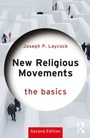
Joseph P. Laycock
New Religious Movements: The Basics
Book
approx. 09/2026
2nd Edition
Routledge
€25.00
Not yet published
Joseph P. Laycock
New Religious Movements: The Basics
Book
approx. 09/2026
2nd Edition
Routledge
€191.50
Not yet published
Person
Joseph P. Laycock is a Professor of Religious Studies at Texas State University, United States. He is the author of several books and is a co-general editor for the journal Nova Religio.
Content
1. What Are New Religious Movements? 2. How To Research NRMs 3. Beyond Brainwashing: Affiliation and Disaffiliation 4. Charisma, Leadership, and Authority 5. Millennialism, Prophecy, and Failed Prophecy 6. NRMs and Violence 7. NRMs, Gender, and Sexuality 8. NRMs, Social Media, and AI
