

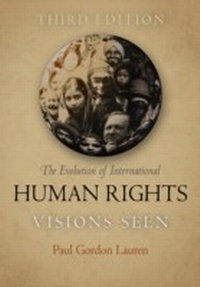
The Evolution of International Human Rights
Visions Seen
3rd Edition
Published on 22. August 2013
432 pages
978-0-8122-0991-4 (ISBN)
Description

This widely acclaimed and highly regarded book, used extensively by students, scholars, policymakers, and activists, now appears in a new third edition. Focusing on the theme of visions seen by those who dreamed of what might be, Lauren explores the dramatic transformation of a world patterned by centuries of human rights abuses into a global community that now boldly proclaims that the way governments treat their own people is a matter of international concern-and sets the goal of human rights "for all peoples and all nations." He reveals the truly universal nature of this movement, places contemporary events within their broader historical contexts, and explains the relationship between individual cases and larger issues of human rights with insight.
This new edition incorporates material from recently declassified documents and the most recent scholarship relating to the creation of the new Human Rights Council and its Universal Periodic Review, the International Criminal Court, the Responsibility to Protect (R2P), terrorism and torture, the impact of globalization and modern technology, and activists in NGOs devoted to human rights. It provides perceptive assessments of the process of change, the power of visions and visionaries, politics and political will, and the evolving meanings of sovereignty, security, and human rights themselves.
This new edition incorporates material from recently declassified documents and the most recent scholarship relating to the creation of the new Human Rights Council and its Universal Periodic Review, the International Criminal Court, the Responsibility to Protect (R2P), terrorism and torture, the impact of globalization and modern technology, and activists in NGOs devoted to human rights. It provides perceptive assessments of the process of change, the power of visions and visionaries, politics and political will, and the evolving meanings of sovereignty, security, and human rights themselves.
Reviews / Votes
"Perhaps the most significant contribution to the historiography of human rights. . . . [A] beautiful historical tapestry . . . [in which] colorful threads converge to create complications that only an astute scholar-author could sift through without being lost in analytical mazes or leaving behind bewildered readers." (Human Rights Quarterly) "Beautifully written and meticulously researched history of the idea of human rights. . . . To read in this book how far we have come and how far we still have to go is an inspiration to the activist and a challenge to the idle." (American Journal of International Law) "An indispensable reference source for scholars and students of human rights." (Political Science Quarterly) "Paul Gordon Lauren has skillfully combined a detailed history of the legal documents with the political, philosophical, and social context in which they developed." (American Historical Review)More details
Series
Edition
Third Edition
Language
English
Place of publication
Pennsylvania
United States
Target group
College/higher education
Edition type
New edition
Illustrations
16 illus.
16 illus.
File size
3,88 MB
ISBN-13
978-0-8122-0991-4 (9780812209914)
Copyright in bibliographic data and cover images is held by Nielsen Book Services Limited or by the publishers or by their respective licensors: all rights reserved.
Schweitzer Classification
Other editions
Additional editions
Book
04/2011
3rd Edition
University of Pennsylvania Press
€42.00
Shipment within 10-20 days
Person
Paul Gordon Lauren is Regents Professor at the University of Montana. He is the author of a number of books, including the award-winning Power and Prejudice: The Politics and Diplomacy of Racial Discrimination.
Content
Acknowledgments
Introduction: Visions and Visionaries
1. My Brother's and Sister's Keeper: Visions and the Origins of Human Rights
Religious Visions
Philosophical Visions
Traditional Practices and Ideas of a Very Different Sort
Visions-and Reality
2. To Protect Humanity and Defend Justice: Early International Efforts
To Free the Enslaved
To Assist the Exploited
To Care for the Wounded
To Protect the Persecuted
3. Entering the Twentieth Century: Visions, War, Revolutions, and Peacemaking
Modernization, Internationalization, and Visions of Rights
War, Revolutions, and Rights
Peacemaking and Human Rights
The Covenant: Rights Proclaimed and Rights Rejected
4. Opportunities and Challenges: Visions and Rights Between the Wars
A Flourishing of Visions
Opportunities for New Departures
Persistent Problems and Challenges
The Gathering Storm
5. A "People's War": The Crusade of World War II
War, Genocide, and Self-Reflections
Crusaders, Visions, and Proposals
Human Rights Versus National Sovereignty in Postwar Planning
Opposition from the Great Powers
6. A "People's Peace": Peace and a Charter with Human Rights
Insisting on a Peace with Rights
Politics and Diplomacy at the San Francisco Conference
The Charter of the United Nations
Differing Reactions and Assessments
7. Proclaiming a Vision: The Universal Declaration of Human Rights
The Revolution Begins
Challenging Questions of Philosophy
Difficult Problems of Politics
The Universal Declaration of Human Rights
8. Transforming Visions into Reality: The First Fifty Years of the Universal Declaration
Extending Rights and Setting Standards
Protecting Rights Through Implementation
Promoting Rights
Expanding Activities and Enhancing Rights
9. The Continuing Evolution
International Law, the Responsibility to Protect, and Challenges to Sovereignty
Globalization, Development, Terrorism-and Torture
New Human Rights Institutions and Organizations
Technology and Political Will
10. Toward the Future
The Nature and Power of Visions
People of Vision and Action
Forces and Events of Consequence
Process, Politics, and Perspective
The Universal Declaration of Human Rights
Notes
Selected Bibliography
Index
About the Author
Introduction: Visions and Visionaries
1. My Brother's and Sister's Keeper: Visions and the Origins of Human Rights
Religious Visions
Philosophical Visions
Traditional Practices and Ideas of a Very Different Sort
Visions-and Reality
2. To Protect Humanity and Defend Justice: Early International Efforts
To Free the Enslaved
To Assist the Exploited
To Care for the Wounded
To Protect the Persecuted
3. Entering the Twentieth Century: Visions, War, Revolutions, and Peacemaking
Modernization, Internationalization, and Visions of Rights
War, Revolutions, and Rights
Peacemaking and Human Rights
The Covenant: Rights Proclaimed and Rights Rejected
4. Opportunities and Challenges: Visions and Rights Between the Wars
A Flourishing of Visions
Opportunities for New Departures
Persistent Problems and Challenges
The Gathering Storm
5. A "People's War": The Crusade of World War II
War, Genocide, and Self-Reflections
Crusaders, Visions, and Proposals
Human Rights Versus National Sovereignty in Postwar Planning
Opposition from the Great Powers
6. A "People's Peace": Peace and a Charter with Human Rights
Insisting on a Peace with Rights
Politics and Diplomacy at the San Francisco Conference
The Charter of the United Nations
Differing Reactions and Assessments
7. Proclaiming a Vision: The Universal Declaration of Human Rights
The Revolution Begins
Challenging Questions of Philosophy
Difficult Problems of Politics
The Universal Declaration of Human Rights
8. Transforming Visions into Reality: The First Fifty Years of the Universal Declaration
Extending Rights and Setting Standards
Protecting Rights Through Implementation
Promoting Rights
Expanding Activities and Enhancing Rights
9. The Continuing Evolution
International Law, the Responsibility to Protect, and Challenges to Sovereignty
Globalization, Development, Terrorism-and Torture
New Human Rights Institutions and Organizations
Technology and Political Will
10. Toward the Future
The Nature and Power of Visions
People of Vision and Action
Forces and Events of Consequence
Process, Politics, and Perspective
The Universal Declaration of Human Rights
Notes
Selected Bibliography
Index
About the Author
