

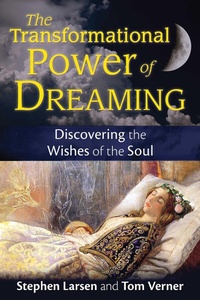
The Transformational Power of Dreaming
Discovering the Wishes of the Soul
Published on 15. August 2017
360 pages
978-1-62055-515-6 (ISBN)
Description

An exploration of dreaming history, science, traditions, and practices from prehistory to today
• Examines ancient dream traditions from around the world, shamanic dreaming, and the profound role of dreaming in Native American and African-American cultures
• Investigates dream psychology and the neuroscience of the dreaming brain
• Explores the practice of dream incubation, lucid dreaming, and telepathic dreaming with tips on remembering your dreams and working with them
We have been dreaming for all of our 3 million or more years of existence. Dreams provide an extraordinary way to process the day's events and uncover new perspectives. Many cultural creatives credit their world-changing creations to their dreams, and science now believes that dreams helped evolve the very process of thought itself.
In this book, Stephen Larsen and Tom Verner examine dream traditions from around the world, beginning with the oldest records from ancient Egypt, India, Greece, and Australia and expanding to shamanic and indigenous societies. The authors investigate the psychology of dreaming, the neuroscience behind the dreaming brain, the Jungian perspective, and the intersections of yoga and modern dream research. They show how dreams and myth are related in the timeless world of the Archetypal Imagination and how dreams often reveal the wishes of the soul. They explore the practice of dream incubation, an age-old tradition for seeding the unconscious mind to help solve problems and gain deep insights. They examine the profound role that dreams have played in the survival of exploited and persecuted cultures, such as the Native Americans, African slaves, and the Jews during the Holocaust, and share inspirational dream stories from exceptional woman dreamers such as Hildegard von Bingen, Joan of Arc, and Harriet Tubman.
Drawing on their more than 50 years' experience keeping dream journals, the authors offer techniques to help you remember your dreams and begin to work with them. They also explore the clairvoyant and telepathic dimensions of dreaming and the practices of lucid dreaming and shamanic dreaming. Revealing how the alchemical cauldron of dreaming can bring inspiration, healing, and discovery, the authors show how dreams unite us with each other and the past and future dreamers of our world.
• Examines ancient dream traditions from around the world, shamanic dreaming, and the profound role of dreaming in Native American and African-American cultures
• Investigates dream psychology and the neuroscience of the dreaming brain
• Explores the practice of dream incubation, lucid dreaming, and telepathic dreaming with tips on remembering your dreams and working with them
We have been dreaming for all of our 3 million or more years of existence. Dreams provide an extraordinary way to process the day's events and uncover new perspectives. Many cultural creatives credit their world-changing creations to their dreams, and science now believes that dreams helped evolve the very process of thought itself.
In this book, Stephen Larsen and Tom Verner examine dream traditions from around the world, beginning with the oldest records from ancient Egypt, India, Greece, and Australia and expanding to shamanic and indigenous societies. The authors investigate the psychology of dreaming, the neuroscience behind the dreaming brain, the Jungian perspective, and the intersections of yoga and modern dream research. They show how dreams and myth are related in the timeless world of the Archetypal Imagination and how dreams often reveal the wishes of the soul. They explore the practice of dream incubation, an age-old tradition for seeding the unconscious mind to help solve problems and gain deep insights. They examine the profound role that dreams have played in the survival of exploited and persecuted cultures, such as the Native Americans, African slaves, and the Jews during the Holocaust, and share inspirational dream stories from exceptional woman dreamers such as Hildegard von Bingen, Joan of Arc, and Harriet Tubman.
Drawing on their more than 50 years' experience keeping dream journals, the authors offer techniques to help you remember your dreams and begin to work with them. They also explore the clairvoyant and telepathic dimensions of dreaming and the practices of lucid dreaming and shamanic dreaming. Revealing how the alchemical cauldron of dreaming can bring inspiration, healing, and discovery, the authors show how dreams unite us with each other and the past and future dreamers of our world.
More details
Other editions
Additional editions
Stephen Larsen | Tom Verner
The Transformational Power of Dreaming
Discovering the Wishes of the Soul
Book
09/2017
Inner Traditions Bear and Company
€19.00
Article exhausted; check different version
Persons
Stephen Larsen, Ph.D., is professor emeritus of psychology at SUNY Ulster and the author of several books, including The Healing Power of Neurofeedback and Joseph Campbell: A Fire in the Mind. The founder and director of Stone Mountain Center, he lives in New Paltz, New York. Tom Verner is a practicing psychotherapist and professional magician and was a professor of psychology at Burlington College for 35 years. The founder, with his wife Janet, of Magicians Without Borders, he lives in Lincoln, Vermont.
Content
Foreword by Edward Tick, Ph.D.
Introduction
Big Dreams, Little Dreams
Part One
Dreams, Past and Present, Open Us to Meaning and Healing
1 Ancient Dreaming
The Many Faces of Morpheus
2 The Dreaming Brain
3 Remembering Our Dreams
(And a Few Tips for Beginning to Work with Them)
4 What Makes for a Big Dream?
5 Standing Naked Before the Dream
6 Archaeologist of Morning, a Digger of First Things
Part Two
Dreams Unite and Inspire Us
7 Precognition, Telepathy, and Synchronicity in Dreams
8 Dream Incubation
Seeding the Unconscious
9 The Cauldron of Inexhaustible Gifts
10 Dreaming While Awake, Waking in the Dream
11 Dreams and the Poetic Imagination
Epilogue
What Dreams May Come . . .
Appendix
The Dream Portal Method Notes
Bibliography
Index
Introduction
Big Dreams, Little Dreams
Part One
Dreams, Past and Present, Open Us to Meaning and Healing
1 Ancient Dreaming
The Many Faces of Morpheus
2 The Dreaming Brain
3 Remembering Our Dreams
(And a Few Tips for Beginning to Work with Them)
4 What Makes for a Big Dream?
5 Standing Naked Before the Dream
6 Archaeologist of Morning, a Digger of First Things
Part Two
Dreams Unite and Inspire Us
7 Precognition, Telepathy, and Synchronicity in Dreams
8 Dream Incubation
Seeding the Unconscious
9 The Cauldron of Inexhaustible Gifts
10 Dreaming While Awake, Waking in the Dream
11 Dreams and the Poetic Imagination
Epilogue
What Dreams May Come . . .
Appendix
The Dream Portal Method Notes
Bibliography
Index
