

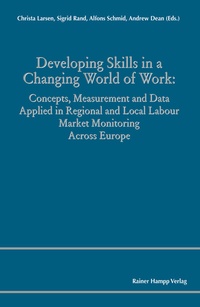
Developing Skills in a Changing World of Work
Concepts, Measurement and Data Applied in Regional and Local Labour Market Monitoring Across Europe
1st Edition
Published on 25. July 2018
487 pages
978-3-95710-315-4 (ISBN)
Description

The world of work is changing fundamentally and quickly as a result of technological transformation, demographic development and globalisation. The contributions in the anthology show for ten European countries that not only do the degree and speed vary significantly between occupations, sectors and firm types - the changes take on diverse forms in different geographical locations. Labour market actors at regional and local level need to know which skills, competences and know-how are required from the labour force so that they can set up their strategies in line with the future developments. Regional and local labour market observatories, which are established in over 550 regions and localities in Europe already, can provide significant support in these processes as they have far-reaching experiences with applying a wide variety of methods to collecting, analysing and combining data. Furthermore, they are embedded in regional/local networks of labour market actors and actively contribute to shaping regional strategy processes evidence-based labour market policies. The contributions demonstrate from different perspectives the approaches to skills and competence monitoring applied in various European regions and localities. In particular, the authors focus on the methods and sources of data and information, implemented instruments, resulting strategy-building and role of observatories in these processes. The compilation of approaches offers an overview of the state-of-the art in labour market monitoring, which can be used for building up skills and competence monitoring frameworks at regional and local level.
More details
Other editions
Additional editions
Christa Larsen | Sigrid Rand | Alfons Schmid
Developing Skills in a Changing World of Work
Concepts, Measurement and Data Applied in Regional and Local Labour Market Monitoring Across Europe
Book
07/2018
1st Edition
Edition Rainer Hampp
€42.80
Shipment within 10-20 days
Content
1 - Christa Larsen, Sigrid Rand, Alfons Schmid, Andrew Dean (Eds.): Developing Skills in a Changing World of Work: Concepts, Measurement and Data Applied in Regional and Local Labour Market Monitoring Across Europe [Seite 2]
2 - Foreword [Seite 6]
3 - TABLE OF CONTENTS [Seite 8]
4 - Christa Larsen and Sigrid Rand: Introduction [Seite 12]
5 - 1. RELEVANCE OF SKILLS AND COMPETENCES IN A CHANGING WORLD OF WORK [Seite 26]
5.1 - Renato Fontana, Carmine Piscopo and Erika Nemmo: Cross-?cutting Competences and Soft Skills in Digital Professions: Knowledge-sharing and Social Stratification in the World of Tomorrow [Seite 26]
5.2 - Patrizio Di Nicola, Alessia Cremonini, Michela Cossu and Stefano Scravaglieri: Smart Working and Organisation: Which Managerial Skills to Lead and Manage Cultural Change? [Seite 52]
5.3 - Carsten Kampe, Daniel Porep and Anja Walter: Changing Needs for Soft Skills and Competencies Through Digitalisation: Results of Two Business Surveys in the Federal State of Brandenburg [Seite 86]
5.4 - Eugenia Atin, Raquel Serrano and Ibon Zugasti: 50 Strategies for 2050: Work and the Digital Revolution in Spain [Seite 104]
6 - 2. DIFFERENT AVENUES TO SKILLS AND COMPETENCES IMPLEMENTED IN REGIONAL AND LOCAL LABOUR MARKET OBSERVATORIES [Seite 122]
6.1 - 2.1. Demand for Skills und Competences in Sectors, Occupations and Enterprises [Seite 122]
6.1.1 - Piotr Maleszyk: Occupational Barometer as a Tool for Identifying Shortage and Surplus Occupations on Local LabourMarkets: Evidence from Poland [Seite 122]
6.1.2 - Claudia Plaimauer: Monitoring Changing Needs in skills, competencesand qualifications in Austria [Seite 168]
6.1.3 - Marta Marzena Sosnowska: Current and Future Demand for Professions,Competences and Qualifications in the Context ofthe Sectoral Development of the Regional Economy:The Case of Podlaskie Voivodeship, Poland [Seite 180]
6.1.4 - Pierre André Gericke and Alfons Schmid: Professional Qualification Mismatches in Preceding Occupations: Comparison of Persons Entering Unemployment in East and West Germany [Seite 196]
6.1.5 - Dan Restuccia and Bledi Taska: Different Skills, Different Gaps: Measuring andClosing the Skills Gap [Seite 208]
6.1.6 - Moreno Baruffini: Analysing Demand-oriented Skills in theCommercial Sector: The Swiss Case [Seite 228]
6.1.7 - Aleksandra Webb and Ronald McQuaid: Utilising Skills Demand Opportunities to Overcomethe Low Professional Status and Attractiveness of aSector: The Early Learning and Childcare Sector inScotland [Seite 242]
6.1.8 - Mario Mezzanzanica, Fabio Mercorio and Emilio Colombo: Digitalisation and Automation: Insights from theOnline Labour Market [Seite 260]
6.2 - 2.2. Supply of Skills and Competences and Their Evolution in Different Target Groups of the Labour Market [Seite 284]
6.2.1 - Ciprian Panzaru and Alina Iotu: Generation Z versus the Labour Market: SkillsExpectations in a New Era [Seite 284]
6.2.2 - Patrizio Di Nicola and Mariaroberta Cioce: Motherhood as Period of Professional Growth [Seite 302]
6.2.3 - Eugenia Atin and Raquel Serrano: Replay-VET: Up-skilling People with Low Qualifications to Improve Their Employability and Cover Future Replacement Positions [Seite 316]
6.2.4 - Rolf Keil and Bettina Splittgerber: How to Survive in the Precarious Labour Market:New Skills for the Unemployed and Employers: A Mutual Approach [Seite 330]
6.3 - 2.3. Regions and Localities as Contextual Frame-works for Skills, Competence and Knowledge [Seite 348]
6.3.1 - Andrew Dean and Ben Neild: A New Regional Labour Market Intervention: The Creation and Delivery of a "Data Analytics SkillsEscalator" in the Exeter SUB-?region of SW England [Seite 348]
6.3.2 - Nina Oding: Innovative Economy in St. Petersburg and theDevelopment of Competencies [Seite 366]
7 - 3. TAXONOMIES AND FURTHER DEMAND FOR DEVELOPMENT [Seite 386]
7.1 - Vyacheslav Bobkov, Vadim Kvachev and Irina Novikova: International Systems of Labour Skills Monitoring inthe Digital Economy [Seite 386]
7.2 - Tjasa Zakelj: Monitoring Skill and Competence Needs in Slovenia [Seite 396]
7.3 - Jyldyz Djumalieva and Cath Sleeman: An Open and Data-driven Taxonomy of SkillsExtracted from Online Job Adverts [Seite 426]
7.4 - Anna Grochowska: Changing Need for Qualifications andCompetencies: Assessment in Mazovian RegionalLabour Market Monitoring [Seite 456]
8 - INFORMATION ON THE AUTHORS [Seite 466]
2 - Foreword [Seite 6]
3 - TABLE OF CONTENTS [Seite 8]
4 - Christa Larsen and Sigrid Rand: Introduction [Seite 12]
5 - 1. RELEVANCE OF SKILLS AND COMPETENCES IN A CHANGING WORLD OF WORK [Seite 26]
5.1 - Renato Fontana, Carmine Piscopo and Erika Nemmo: Cross-?cutting Competences and Soft Skills in Digital Professions: Knowledge-sharing and Social Stratification in the World of Tomorrow [Seite 26]
5.2 - Patrizio Di Nicola, Alessia Cremonini, Michela Cossu and Stefano Scravaglieri: Smart Working and Organisation: Which Managerial Skills to Lead and Manage Cultural Change? [Seite 52]
5.3 - Carsten Kampe, Daniel Porep and Anja Walter: Changing Needs for Soft Skills and Competencies Through Digitalisation: Results of Two Business Surveys in the Federal State of Brandenburg [Seite 86]
5.4 - Eugenia Atin, Raquel Serrano and Ibon Zugasti: 50 Strategies for 2050: Work and the Digital Revolution in Spain [Seite 104]
6 - 2. DIFFERENT AVENUES TO SKILLS AND COMPETENCES IMPLEMENTED IN REGIONAL AND LOCAL LABOUR MARKET OBSERVATORIES [Seite 122]
6.1 - 2.1. Demand for Skills und Competences in Sectors, Occupations and Enterprises [Seite 122]
6.1.1 - Piotr Maleszyk: Occupational Barometer as a Tool for Identifying Shortage and Surplus Occupations on Local LabourMarkets: Evidence from Poland [Seite 122]
6.1.2 - Claudia Plaimauer: Monitoring Changing Needs in skills, competencesand qualifications in Austria [Seite 168]
6.1.3 - Marta Marzena Sosnowska: Current and Future Demand for Professions,Competences and Qualifications in the Context ofthe Sectoral Development of the Regional Economy:The Case of Podlaskie Voivodeship, Poland [Seite 180]
6.1.4 - Pierre André Gericke and Alfons Schmid: Professional Qualification Mismatches in Preceding Occupations: Comparison of Persons Entering Unemployment in East and West Germany [Seite 196]
6.1.5 - Dan Restuccia and Bledi Taska: Different Skills, Different Gaps: Measuring andClosing the Skills Gap [Seite 208]
6.1.6 - Moreno Baruffini: Analysing Demand-oriented Skills in theCommercial Sector: The Swiss Case [Seite 228]
6.1.7 - Aleksandra Webb and Ronald McQuaid: Utilising Skills Demand Opportunities to Overcomethe Low Professional Status and Attractiveness of aSector: The Early Learning and Childcare Sector inScotland [Seite 242]
6.1.8 - Mario Mezzanzanica, Fabio Mercorio and Emilio Colombo: Digitalisation and Automation: Insights from theOnline Labour Market [Seite 260]
6.2 - 2.2. Supply of Skills and Competences and Their Evolution in Different Target Groups of the Labour Market [Seite 284]
6.2.1 - Ciprian Panzaru and Alina Iotu: Generation Z versus the Labour Market: SkillsExpectations in a New Era [Seite 284]
6.2.2 - Patrizio Di Nicola and Mariaroberta Cioce: Motherhood as Period of Professional Growth [Seite 302]
6.2.3 - Eugenia Atin and Raquel Serrano: Replay-VET: Up-skilling People with Low Qualifications to Improve Their Employability and Cover Future Replacement Positions [Seite 316]
6.2.4 - Rolf Keil and Bettina Splittgerber: How to Survive in the Precarious Labour Market:New Skills for the Unemployed and Employers: A Mutual Approach [Seite 330]
6.3 - 2.3. Regions and Localities as Contextual Frame-works for Skills, Competence and Knowledge [Seite 348]
6.3.1 - Andrew Dean and Ben Neild: A New Regional Labour Market Intervention: The Creation and Delivery of a "Data Analytics SkillsEscalator" in the Exeter SUB-?region of SW England [Seite 348]
6.3.2 - Nina Oding: Innovative Economy in St. Petersburg and theDevelopment of Competencies [Seite 366]
7 - 3. TAXONOMIES AND FURTHER DEMAND FOR DEVELOPMENT [Seite 386]
7.1 - Vyacheslav Bobkov, Vadim Kvachev and Irina Novikova: International Systems of Labour Skills Monitoring inthe Digital Economy [Seite 386]
7.2 - Tjasa Zakelj: Monitoring Skill and Competence Needs in Slovenia [Seite 396]
7.3 - Jyldyz Djumalieva and Cath Sleeman: An Open and Data-driven Taxonomy of SkillsExtracted from Online Job Adverts [Seite 426]
7.4 - Anna Grochowska: Changing Need for Qualifications andCompetencies: Assessment in Mazovian RegionalLabour Market Monitoring [Seite 456]
8 - INFORMATION ON THE AUTHORS [Seite 466]
