

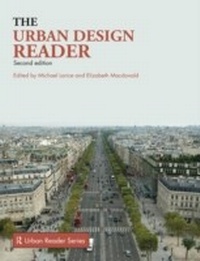
The Urban Design Reader
2nd Edition
Published on 7. May 2013
680 pages
978-1-136-20566-8 (ISBN)
Description

The second edition of The Urban Design Reader draws together the very best of classic and contemporary writings to illuminate and expand the theory and practice of urban design. Nearly 50 generous selections include seminal contributions from Howard, Le Corbusier, Lynch, and Jacobs to more recent writings by Waldheim, Koolhaas, and Sorkin. Following the widespread success of the first edition of The Urban Design Reader, this updated edition continues to provide the most important historical material of the urban design field, but also introduces new topics and selections that address the myriad challenges facing designers today.
The six part structure of the second edition guides the reader through the history, theory and practice of urban design. The reader is initially introduced to those classic writings that provide the historical precedents for city-making into the twentieth century. Part Two introduces the voices and ideas that were instrumental in establishing the foundations of the urban design field from the late 1950s up to the mid-1990s. These authors present a critical reading of the design professions and offer an alternative urban design agenda focused on vital and lively places. The authors in Part Three provide a range of urban design rationales and strategies for reinforcing local physical identity and the creation of memorable places. These selections are largely describing the outcomes of mid-century urban design and voicing concerns over the placeless quality of contemporary urbanism. The fourth part of the Reader explores key issues in urban design and development. Ideas about sprawl, density, community health, public space and everyday life are the primary focus here. Several new selections in this part of the book also highlight important international development trends in the Middle East and China. Part Five presents environmental challenges faced by the built environment professions today, including recent material on landscape urbanism, sustainability, and urban resiliency. The final part examines professional practice and current debates in the field: where urban designers work, what they do, their roles, their fields of knowledge and their educational development. The section concludes with several position pieces and debates on the future of urban design practice.
This book provides an essential resource for students and practitioners of urban design, drawing together important but widely dispersed writings. Part and section introductions are provided to assist readers in understanding the context of the material, summary messages, impacts of the writing, and how they fit into the larger picture of the urban design field.
The six part structure of the second edition guides the reader through the history, theory and practice of urban design. The reader is initially introduced to those classic writings that provide the historical precedents for city-making into the twentieth century. Part Two introduces the voices and ideas that were instrumental in establishing the foundations of the urban design field from the late 1950s up to the mid-1990s. These authors present a critical reading of the design professions and offer an alternative urban design agenda focused on vital and lively places. The authors in Part Three provide a range of urban design rationales and strategies for reinforcing local physical identity and the creation of memorable places. These selections are largely describing the outcomes of mid-century urban design and voicing concerns over the placeless quality of contemporary urbanism. The fourth part of the Reader explores key issues in urban design and development. Ideas about sprawl, density, community health, public space and everyday life are the primary focus here. Several new selections in this part of the book also highlight important international development trends in the Middle East and China. Part Five presents environmental challenges faced by the built environment professions today, including recent material on landscape urbanism, sustainability, and urban resiliency. The final part examines professional practice and current debates in the field: where urban designers work, what they do, their roles, their fields of knowledge and their educational development. The section concludes with several position pieces and debates on the future of urban design practice.
This book provides an essential resource for students and practitioners of urban design, drawing together important but widely dispersed writings. Part and section introductions are provided to assist readers in understanding the context of the material, summary messages, impacts of the writing, and how they fit into the larger picture of the urban design field.
Reviews / Votes
"Every practitioner of "everyday urbanism" should keep the Urban Design Reader close at hand. It renews inspiration; it offers fresh insights; it clarifies the essential principles of urban design. I see it as the foundation text for all that we do in shaping our cities. It is simply invaluable." Larry Beasley, Distinguished Practice Professor of Planning, SCARP, University of British Columbia, Canada."Selecting a list of key texts in urban design from amongst the host of possibilities available will never be an easy task; but in this carefully chosen selection, Larice and Macdonald balance the foundational classics of the discipline with valuable contemporary contributions that demonstrate the continuing evolution and vitality of urban design." Matthew Carmona, Professor of Planning and Urban Design, The Bartlett Scool, University College London.
More details
Series
Edition
2nd edition
Language
English
Place of publication
London
United Kingdom
Publishing group
Taylor & Francis Ltd
Target group
College/higher education
Edition type
Revised edition
Illustrations
51 s/w Abbildungen, 13 s/w Photographien bzw. Rasterbilder, 38 s/w Zeichnungen
38 Line drawings, black and white; 13 Halftones, black and white; 51 Illustrations, black and white
File size
14,93 MB
ISBN-13
978-1-136-20566-8 (9781136205668)
Copyright in bibliographic data and cover images is held by Nielsen Book Services Limited or by the publishers or by their respective licensors: all rights reserved.
Schweitzer Classification
Other editions
Additional editions
Michael Larice | Elizabeth MacDonald
The Urban Design Reader
Book
11/2012
2nd Edition
Routledge
€230.18
Shipment within 15-20 days
Michael Larice | Elizabeth MacDonald
The Urban Design Reader
Book
11/2012
2nd Edition
Routledge
€125.10
Shipment within 15-20 days
Persons
Michael Larice is Associate Professor of Urban Design and City Planning at the University of Utah - College of Architecture and Planning. He is a licensed architect, planner, and urban designer.
Elizabeth Macdonald is Associate Professor of Urban Design in the Departments of City and Regional Planning and Landscape Architecture and Environmental Planning in the University of California at Berkeley's College of Environmental Design. She is a licensed architect and a principal in the San Francisco-based firm Jacobs Macdonald: Cityworks.
Elizabeth Macdonald is Associate Professor of Urban Design in the Departments of City and Regional Planning and Landscape Architecture and Environmental Planning in the University of California at Berkeley's College of Environmental Design. She is a licensed architect and a principal in the San Francisco-based firm Jacobs Macdonald: Cityworks.
Content
Part 1: Historic Precedents in Urban Design Introduction Upsurge of the Renaissance Edmund N. Bacon The Islamic City: Historic Myths, Islamic Essence, and Contemporary Relevance Janet Abu-Lughod The Family of Eyes and Mire of the Macadam Marshall Berman Public Parks and the Enlargement of Towns Frederick Law Olmsted The Meager and Unimaginative Character of Modern City Plans and Artistic Limitations of Modern City Planning Camillo Sitte Author's Introduction and The Town-Country Magnet Ebenezer Howard Ideology and Aesthetics William H. Wilson The Neighborhood Unit Clarence Perry The Pack-Donkey's Way and Man's Way and A Contemporary City Le Corbusier Part 2: Foundations of the Field Introduction Josep Lluis Sert's Urban Design Legacy Richard Marshall Introduction to The Concise Townscape Gordon Cullen The Image of the Environment and The City Image and Its Elements Kevin Lynch Author's Introduction and The Uses of Sidewalks: Contact Jane Jacobs A City is Not a Tree Christopher Alexander The Significance for A&P Parking Lots, or Learning from Las Vegas Robert Venturi and Denise Scott Brown Collage City Colin Rowe and Fred Koetter Introduction, The Life of Plazas, Sitting Space, and Sun, Wind, Trees, and Water William H. Whyte Conclusion: Great Streets and City Planning Allan B. Jacobs Toward an Urban Design Manifesto Allan B. Jacobs and Donald Appleyard Dimensions of Performance Kevin Lynch A Catholic Approach to Organizing What Urban Designers Should Know Anne Vernez Moudon Part 3: Growth of a Place Agenda Introduction Prospects for Places Edward Relph The Phenomenon of Place Christian Norberg-Schulz The Problem of Place in America Ray Oldenburg Critical Regionalism: An Architecture of Place Douglas Kelbaugh A Crisis in the Urban Landscape, The Origins and Theory of Type, and Legitimacy and Control Brenda Case Scheer Charter of the New Urbanism Congress for the New Urbanism Themes of Postmodern Urbanism Nan Ellin Introduction, Preface: The Current State of Everyday Urbanism, and Blurring the Boundaries: Public Space and Public Life Margaret Crawford Whatever Happened to Urbanism? and The Generic City Rem Koolhaas Part 4: Design Issues in Urban Development Introduction What is Sprawl? Oliver Gilham Density in Communities, or the Most Important Factor in Building Urbanity Eduardo Lozano Introduction, Physical Activity and Public Health and Urban Design Characteristics Lawrence Frank, Peter Engelke and Thomas Schmid Introduction, The Changing Nature of Public Space in City Centres and Whose Public Space? Ali Madanipour Profit and Place Ian Bentley Urban Dualities in the Arab World Yasser Elsheshtawy The Urbanism of Ambition and China Reinvents the City Thomas Campanella Part 5: Addressing Environmental Challenges Introduction An Ecological Method for Landscape Architecture Ian McHarg Principles for Regional Design Michael Hough Landscape as Urbanism Charles Waldheim Discourses for Landscape and Urbanization, The Production of Waste Landscapes and Drosscape Explained Alan Berger Planning for Sustainability in European Cities: A Review of Practice in Leading Cities Timothy Beatley Urban Resilience: Cities of Hope and Fear Peter Newman, Timothy Beatley, and Heather Boyer Part 6: Urban Design Practice Now and Tomorrow Introduction Where and How Does Urban Design Happen? Alex Krieger Designing the Urban Design Studio Elizabeth Macdonald Design Guidelines in American Cities: Conclusions John Punter The End(s) of Urban Design Michael Sorkin A Third Way for Urban Design Kenneth Greenberg
