

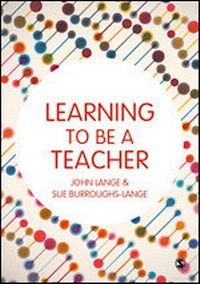
Learning to be a Teacher
1st Edition
Published on 27. February 2017
248 pages
978-1-5264-1297-3 (ISBN)
Description

Being a successful teacher means constantly examining your own development to identify blind spots and ensure you engage on a meaningful level with teaching and learning. This book discusses theoretical and conceptual ideas, linked to direct strategies for the classroom, that guide students towards becoming proactive and effective learners, giving them the confidence to take charge of their professional future in teaching.
Built around a series of 'contributing ideas', this book includes a conceptual framework for critically analysing and thinking about the teaching and learning environment. Examples throughout explore how to make the most of professional learning opportunities so students can take personal control of their learning, through self-regulation and self-monitoring. Strategies for making practical use of these ideas for classroom planning and preparation for learning are also included.
Built around a series of 'contributing ideas', this book includes a conceptual framework for critically analysing and thinking about the teaching and learning environment. Examples throughout explore how to make the most of professional learning opportunities so students can take personal control of their learning, through self-regulation and self-monitoring. Strategies for making practical use of these ideas for classroom planning and preparation for learning are also included.
Reviews / Votes
In an educational landscape of increasing accountability and reduced professional development, it has never been more important for teachers to self-regulate their learning. Lange and Burroughs-Lange clearly set out a process for taking control of your classroom practice and professional learning which facilitates the sustainable progress required to excel in the teaching profession. -- Chris Baker When writing a programme of Initial Teacher Training one of the most difficult aspects is getting the trainee to take control of their own learning. The school based route allows trainees to investigate approaches and strategies to teaching which work. We often expect trainees to understand how to make insightful and meaningful observations without any guidance or training. This book will be helpful for trainees, new teachers and indeed their mentors/teacher educators to generate cognitive change through enquiry based methods. The book is also a reminder of how 'one size' in teaching does not fit all and that sometimes we can get so bogged down in the national and local agendas that we forget what actually works in the classroom and how we need more faith in our abilities to influence learner progress. I particularly like the REACT mode; and the PLA approach to professional growth - the examples at the end of this section are clear and concise. I would recommend this as pre course reading for trainees and mentors/tutors. -- Susan Marbe This book captures the concept of the teacher as a professional learner and identifies how practice and research-based knowledge are reciprocal in developing an understanding of the complex classroom. Teachers are encouraged to be critical inquirers within self-generating frameworks and while there are many different approaches to transformational learning, for this to be effective and meaningful they need to be underpinned by both an understanding of research and experiential learning. Working with both trainee and experienced teachers on a daily basis, I stress the need for them to recognise themselves as evolving learners and that reflective practice, self- evaluation and a culture of enquiry and participation is central to the cognitive change that all teachers undergo through their professional career. This book encourages teachers to make sense of the classroom by asking them to question what is happening, why it is happening and how do I become a better teacher based on this evolving understanding. -- Martin HusbandsAll prices
More details
Edition
First Edition
Language
English
Place of publication
London
United Kingdom
Target group
College/higher education
ISBN-13
978-1-5264-1297-3 (9781526412973)
Copyright in bibliographic data and cover images is held by Nielsen Book Services Limited or by the publishers or by their respective licensors: all rights reserved.
Schweitzer Classification
Other editions
Additional editions
John Lange | Sue Burroughs-Lange
Learning to be a Teacher
Book
04/2017
1st Edition
SAGE Publications Ltd
€141.60
Shipment within 15-20 days
John Lange | Sue Burroughs-Lange
Learning to be a Teacher
Book
04/2017
1st Edition
SAGE Publications Ltd
€76.50
Shipment within 15-20 days
Persons
Content
Section 1: A learning perspective on teacher development
Chapter 1: Your professional learning consciousness
Chapter 2: Becoming a self-regulating, autonomous professional
Section 2: Professional learning strategies
Chapter 3 Self-monitoring teaching and learning
Chapter 4: The self-regulation of professional learning - the professional learning agenda
Chapter 5: Advancing your professional learning
Chapter 6 Refining professional learning through review and interpretation
Chapter 7: The planning process
Chapter 1: Your professional learning consciousness
Chapter 2: Becoming a self-regulating, autonomous professional
Section 2: Professional learning strategies
Chapter 3 Self-monitoring teaching and learning
Chapter 4: The self-regulation of professional learning - the professional learning agenda
Chapter 5: Advancing your professional learning
Chapter 6 Refining professional learning through review and interpretation
Chapter 7: The planning process
