

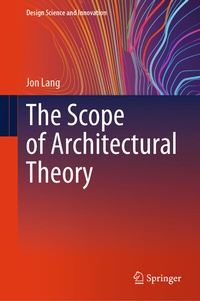
The Scope of Architectural Theory
Description

This book comprehensively lays out the knowledge base required for architectural practice and education at a time when artificial intelligence (AI) algorithms are shaping the way architects think. Architects with a desire to retain their creative role in the design of buildings and urban spaces must understand and articulate the theoretical bases of their work and what it can achieve. This book provides a clear structure and outline of both the functional and procedural theoretical base for architects to employ in their work. It offers an intellectually rigorous basis that allows architects to understand the evolution of architecture through history as well as the advocacies of individual architects. It provides them with the scope of architectural theory necessary for designing for the future. The book can be a valuable reference for researchers and professionals interested in architectural theory and allied fields.
More details
Other editions
Additional editions
Person
Jon Lang is an international consultant on architecture and urban design and is an emeritus professor of architecture at the University of New South Wales. Jon was educated in India, England, South Africa, and the USA. He was formerly a director of ERG, Inc., in Philadelphia, Pennsylvania, and headed the joint MArch/MCP program at the University of Pennsylvania. He has served as a juror, including as chief juror, on international architectural competitions. He has authored books on architectural and urban design theory and practice and modern architecture in India. In 2010, he received the Reed and Malik Medal from the Institution of Civil Engineers in London.
Content
Prologue: The Domain of Architecture and the Scope of Architectural Theory.- Part One: Procedural and Substantive Declarative Theory: The Way Things Are.- Chapter 1: The Built Environment: The Nature of Behavior Settings and the Nature of Objects.- Chapter 2: Procedural Theory: The Nature of the Design Process.- Chapter 3: Functional Theory: The Purposes That the Built Environment Can Serve.- Chapter 4: Types and Typologies: The Basis for Much Design Thinking.- Part Two: Prescriptive Theories: The Way Things Ought to Be.- Chapter 5: Ends and Means: A Prolegomenon to the Study of Prescriptive Theories of Architecture.- Chapter 6: Prescriptive Theories in Changing Contexts: An Outline of the History of Architecture.- Chapter 7: Designing Ends and Means: Prescriptions for the Design Process.- Part Three: Architects, Their Prescriptive Theories, and Their Designs.- Chapter 8: Understanding Architects' Prescriptions and Their Designs.- Epilogue: Some Current Issues.- References and Bibliography.- Credits.- Index.
