

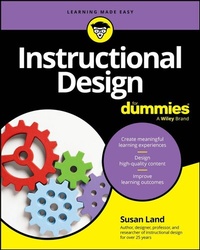
Instructional Design For Dummies
Description

The streamlined, simplified, beginner-friendly introduction to instructional design
Instructional Design For Dummies will teach you how to design and build learning content to create effective, engaging learning experiences that lead to improved learning outcomes and skill development. This book breaks down the instructional design process into bite-sized pieces, so you can learn techniques and best practices without getting bogged down in theory. Learn about various instructional design models and frameworks, then discover the different options for designing learning experiences. Take into account learning foundations, goals, and contexts, then create stellar lessons for in-person or virtual delivery. This Dummies guide is your starting place for creating impactful courses, without the technical jargon.
- Learn the basics of instructional design so you can create meaningful learning experiences
- Discover techniques that will help you design high-quality content for any context
- Improve learning outcomes and deliver training content with greater efficiency
- Skip the complex theories and technical jargon and focus on the info you need to know
This book is perfect for anyone who needs to develop a course, design a curriculum or training program, or provide educational content without being formally trained in instructional design. It's also a great supplement to college-level instructional design courses. Whatever you're teaching, Instructional Design For Dummies will help you teach it better.
More details
Other editions
Additional editions
Person
Dr. Susan Land is a professor in the Learning, Design, and Technology Program at Penn State and co-author of Theoretical Foundations of Learning Environments. She has published over 95 manuscripts on instructional design and technology. Susan has been identified by Google Scholar as the most cited researcher in the area of instructional design and technology.
Content
Introduction 1
Part 1: Getting Started with Instructional Design 7
Chapter 1: Introducing Instructional Design 9
Chapter 2: Looking at Learning and Design Foundations 27
Part 2: The Analysis Phase 47
Chapter 3: Analyzing Learners, Contexts, and Instructional Needs 49
Chapter 4: Analyzing Tasks, Goals, and Outcomes 75
Part 3: Designing Engaging and Effective Instruction 97
Chapter 5: Creating Instructional Goals and Objectives 99
Chapter 6: Introducing Instructional Design Frameworks 117
Chapter 7: Open-ended Design Frameworks 139
Part 4: Developing, Implementing, and Evaluating Instruction and Technology 157
Chapter 8: Using Technology to Deliver Instruction 159
Chapter 9: Developing Effective Instructional Materials 183
Chapter 10: Show Time! Implementing Your Instruction Successfully 211
Chapter 11: Evaluating Instructional Materials 231
Part 5: The Part of Tens 247
Chapter 12: Ten Best Practices for Creating Engaging Instruction 249
Chapter 13: Ten Questions to Ask Before Selecting Technologies for Your Instruction 257
Chapter 14: Ten Ways to Put Your Instructional Design Knowledge to Work 265
Part 6: Appendix 273
Appendix: Example Questions, Checklists, and Worksheets 275
Index 283
