

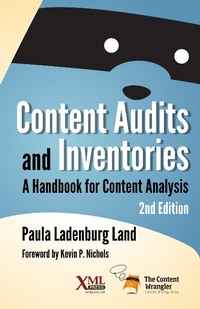
Content Audits and Inventories
Description

The second edition of Content Audits and Inventories, by veteran content strategist Paula Land, updates and expands the first edition, focusing on the importance of the strategic, as well as the tactical, aspects of the content audit. This edition includes expanded chapters on planning and preparation, building a business case, getting buy-in from your organization, working with teams, selecting and defining audit criteria, incorporating audits as part of ongoing governance, and much more.
New in this edition are chapters on auditing social media channels, apps, brand/messaging, content structure, and accessibility. Also new in this edition are case studies from industry professionals who share their audit experiences and outcomes.
Successful content strategy projects start with a thorough assessment of the current state of all content assets: their quantity, type, and quality. The audit process begins with a data-rich inventory and layers in a qualitative assessment, empowering content owners and business stakeholders to make informed decisions.
This practical, tactic-filled handbook walks you through setting up and running an inventory using an automated tool, setting the stage for a successful audit. Specific audit tactics addressed include auditing for content quality, performance, global considerations, and legal and regulatory issues. You will also learn how to do a competitive audit and incorporate personas into an audit. Tips on presenting audit results to stakeholders will help you deliver effective strategies.
Content Audits and Inventories: A Handbook for Content Analysis is a must-read for content professionals seeking to improve their content management strategy.
More details
Other editions
Additional editions
Person
Paula Land is a content strategy consultant and technology entrepreneur. As founder and principal consultant at Strategic Content, she develops content strategies and implementation plans for private clients ranging from nonprofits to large e-commerce sites. Paula has also worked as a Senior Content Strategist at NASA's Earth Science Data Systems (ESDS) group. As co-founder of Content Insight, she was the impetus behind the development of CAT, the Content Analysis Tool, which was designed to create automated content inventories.
Before founding her own businesses, Paula was a user experience and content strategy lead for Razorfish, a leading digital agency, where she led the content strategy on the development of enterprise-level websites, redesigns, and CMS implementations.
Paula has worked for over thirty years in content-related roles, spanning all aspects of the content lifecycle, with a focus on delivering large-scale, complex websites.
Paula is a frequent speaker at conferences and presents workshops and webinars on the topic of content inventories, audits, and analyses. She contributed the essay on the term content inventory to the book The Language of Content Strategy
Content
- Foreword
- Preface
- Setting the Context
- Planning Your Audit Project
- When Do You Inventory and Audit
- Building the Business Case
- Planning an Inventory and Audit Project
- Ready, Set, Audit!
- Building the Audit
- Preparing for a Content Audit
- Creating a Content Inventory
- Selecting and Defining Audit Criteria
- Selecting Tools and Templates
- Onboarding the Team
- Conducting a Pilot
- Conducting the Audit
- Getting Started
- The Qualitative Audit
- Auditing for Content Effectiveness
- Auditing Content Structure--NEW
- The Multichannel Audit
- Auditing for Brand and Messaging--NEW
- Auditing Competitor Sites
- Auditing for Accessibility Issues--NEW
- Auditing for Legal or Regulatory Issues
- Auditing Social Media--NEW
- Auditing for Global Issues
- Auditing Apps and Single-Page Sites--NEW
- Using Personas and Customer Journeys in Audits
- Turning Analysis into Insights
- Delivering Your Audit
- Achieving Long-Term Change
- Conclusion
- Inventory and Audit Resources
- Appendix A: Sample Content Inventory
- Appendix B: Stakeholder Interview Template
- Appendix C: Content Audit Checklist
- Appendix D: Competitive Audit Scorecard
- Appendix E: Defining Audit Criteria
- Appendix F: Customer Journey Map
- Appendix G: Sample Gap Map
- Appendix H: Content Audit Report Template
- Additional Reading
- Glossary
- Index
