

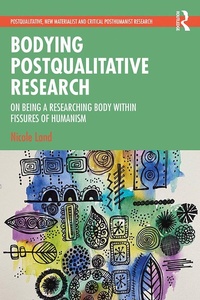
Bodying Postqualitative Research
On Being a Researching Body within Fissures of Humanism
1st Edition
Published on 21. September 2023
94 pages
978-1-000-96128-7 (ISBN)
Description

Bodying Postqualitative Research posits the question of what happens when lived, fleshy human bodies engage in postqualitative research in education. It takes as its central concern research propositions aimed at dismantling the structures of humanism that typically govern research in education and uses postqualitative conceptions of data, methodology, and clarity in conjunction with insights from feminist science studies scholars to imagine how we might 'body' postqualitative work.
This book uses the provocations offered by postqualitative research and takes these touchpoints to dismantle dominant logics of research, born of neoliberalism and ongoing settler colonialism to offer alternative perspectives. Importantly, this book stays near to the body by proposing caffeine shakes, antipsychotic medications, and scars as moments to take seriously how bodies do researching practices. After each chapter, the book turns to poetry as a "fracture" or a moment of disruption to the rhythm of the text that incites readers to reconsider the previous chapter otherwise. It concludes by asking what bodying postqualitative research might mean for pedagogy and for propositions toward future inquiry. Drawing together the work of feminist science and education scholars oriented toward the biosciences and whose work has not yet been immersed into postqualitative scholarship in a sustained way, this book brings together a vein of feminist science studies theorizing that both deepens and troubles postqualitative scholarship through its focus on the politics of science and the possibilities of doing bodies with biology, culture, and life.
The volume is suitable for students and scholars interested in postqualitative and embodied research methods in education, and feminist and gender studies.
This book uses the provocations offered by postqualitative research and takes these touchpoints to dismantle dominant logics of research, born of neoliberalism and ongoing settler colonialism to offer alternative perspectives. Importantly, this book stays near to the body by proposing caffeine shakes, antipsychotic medications, and scars as moments to take seriously how bodies do researching practices. After each chapter, the book turns to poetry as a "fracture" or a moment of disruption to the rhythm of the text that incites readers to reconsider the previous chapter otherwise. It concludes by asking what bodying postqualitative research might mean for pedagogy and for propositions toward future inquiry. Drawing together the work of feminist science and education scholars oriented toward the biosciences and whose work has not yet been immersed into postqualitative scholarship in a sustained way, this book brings together a vein of feminist science studies theorizing that both deepens and troubles postqualitative scholarship through its focus on the politics of science and the possibilities of doing bodies with biology, culture, and life.
The volume is suitable for students and scholars interested in postqualitative and embodied research methods in education, and feminist and gender studies.
More details
Series
Edition
1. Auflage
Language
English
Place of publication
London
United Kingdom
Publishing group
Taylor & Francis Ltd
Target group
College/higher education
Professional and scholarly
ISBN-13
978-1-000-96128-7 (9781000961287)
Copyright in bibliographic data and cover images is held by Nielsen Book Services Limited or by the publishers or by their respective licensors: all rights reserved.
Schweitzer Classification
Other editions
Additional editions
Book
09/2023
1st Edition
Routledge
€205.40
Shipment within 10-20 days
Book
09/2023
1st Edition
Routledge
€60.10
Shipment within 10-20 days
Person
Nicole Land is Assistant Professor, School of Early Childhood Studies, Toronto Metropolitan University, Canada.
Content
Introduction to the Series
Written by Dr. Simone Fullagar, Series Co-editor
Introduction
Where we are Headed
Four Critical Moves to Hold Near
Bodying
Fissures and Fractures
Physiologies
Postqualitative Provocations
Moving into the Body of the Book
Chapter One: Biocultural Creatures, Postqualitative Data, and Caffeine Shakes
Biocultural Creatures
Composite-in-Tension
Postqualitative Data
Bodying Postqualitative Research: Caffeine Shakes
Fracture One: Minnows
Chapter Two: Biomedical Imaginaries, Methodology, and Antipsychotic Medications
Biomedical Imaginaries
Neurobiological Bodies
Postqualitative Methodologies
Bodying Postqualitative Research: Antipsychotic Medications
Fracture Two: Turing Test_Love
Chapter Three: Biopossibility, Clarity, and Scars
Biopossibility
A Topological Sense of Biopolitics
Postqualitative Clarity
Bodying Postqualitative Research: Scars
Fracture Three: Fermentation
Chapter Four: Pedagogical Inquiry Work, Proprioception, and a Sweaty Quad
Proprioception
A Sweaty Quad
Fracture Four: Childless Offspring
Conclusion: Bodying Postqualitative Research
Proposition One: Imagine how postqualitative relations with the biosciences might proceed
Proposition Two: Build otherwise imaginaries and lexicons for doing bodies with postqualitative proposals
Proposition Three: Craft ways to intentionally, but not anthropocentrically, body postqualitative research
Final Gesture: On Education Research
References
Written by Dr. Simone Fullagar, Series Co-editor
Introduction
Where we are Headed
Four Critical Moves to Hold Near
Bodying
Fissures and Fractures
Physiologies
Postqualitative Provocations
Moving into the Body of the Book
Chapter One: Biocultural Creatures, Postqualitative Data, and Caffeine Shakes
Biocultural Creatures
Composite-in-Tension
Postqualitative Data
Bodying Postqualitative Research: Caffeine Shakes
Fracture One: Minnows
Chapter Two: Biomedical Imaginaries, Methodology, and Antipsychotic Medications
Biomedical Imaginaries
Neurobiological Bodies
Postqualitative Methodologies
Bodying Postqualitative Research: Antipsychotic Medications
Fracture Two: Turing Test_Love
Chapter Three: Biopossibility, Clarity, and Scars
Biopossibility
A Topological Sense of Biopolitics
Postqualitative Clarity
Bodying Postqualitative Research: Scars
Fracture Three: Fermentation
Chapter Four: Pedagogical Inquiry Work, Proprioception, and a Sweaty Quad
Proprioception
A Sweaty Quad
Fracture Four: Childless Offspring
Conclusion: Bodying Postqualitative Research
Proposition One: Imagine how postqualitative relations with the biosciences might proceed
Proposition Two: Build otherwise imaginaries and lexicons for doing bodies with postqualitative proposals
Proposition Three: Craft ways to intentionally, but not anthropocentrically, body postqualitative research
Final Gesture: On Education Research
References
