


The Role of the Learner in Task-Based Language Teaching
Theory and Research Methods
1st Edition
Published on 3. May 2023
238 pages
978-1-000-87429-7 (ISBN)
Description

This comprehensive, forward-looking text is the first holistic research overview and practical methods guide for researching the role that affective and conative factors play in second language learners' task performance and language acquisition. It provides a long overdue update on the role of the learner in task-based language teaching (TBLT).
The book brings together theoretical background and major constructs, established and innovative methodological and technological tools, cutting-edge findings, and illuminating suggestions for future work. A group of expert scholars from around the world synthesize the state of the art, detail how to design and conduct empirical studies, and authoritatively set the agenda for future work in this critical, emerging area of language learning and instructional design.
With a variety of helpful features like suggested research, discussion questions, and recommended further readings, this will be an invaluable resource to advanced students and researchers of second language acquisition, applied linguistics, psychology, education, and related areas.
The book brings together theoretical background and major constructs, established and innovative methodological and technological tools, cutting-edge findings, and illuminating suggestions for future work. A group of expert scholars from around the world synthesize the state of the art, detail how to design and conduct empirical studies, and authoritatively set the agenda for future work in this critical, emerging area of language learning and instructional design.
With a variety of helpful features like suggested research, discussion questions, and recommended further readings, this will be an invaluable resource to advanced students and researchers of second language acquisition, applied linguistics, psychology, education, and related areas.
Reviews / Votes
"In The Role of the Learner in Task-Based Language Teaching the editors Lambert, Aubrey, and Bui draw skillfully on diverse research perspectives to integrate the 'affective turn' in language education with the vibrant area of task-based language teaching. The result is a compelling and timely contribution to an exciting field!"Bonny Norton, The University of British Columbia, Canada
"The Role of the Learner in Task-Based Language Teaching is a much-needed addition to the growing body of work on task-based teaching. It draws on the expertise of leading authors in the field to provide a comprehensive and readable account of how affective factors influence the way learners perform tasks both negatively and positively. It will become a must-read for anyone interested in the development of task-based teaching."
Rod Ellis, Curtin University, Australia
"The Role of the Learner in Task-Based Language Teaching offers a wide variety of perspectives on recent conceptualizations and research on the role of affective factors in second language learning. This pioneering volume provides language teachers and researchers with novel insights into how learners' engagement with language learning tasks can be enhanced."
Judit Kormos, Lancaster University, UK
More details
Series
Edition
1. Auflage
Language
English
Place of publication
London
United Kingdom
Publishing group
Taylor & Francis Ltd
Target group
College/higher education
Illustrations
25 Tables, black and white; 7 Line drawings, black and white; 7 Illustrations, black and white
ISBN-13
978-1-000-87429-7 (9781000874297)
Copyright in bibliographic data and cover images is held by Nielsen Book Services Limited or by the publishers or by their respective licensors: all rights reserved.
Schweitzer Classification
Other editions
Additional editions
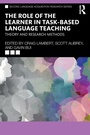
Craig Lambert | Scott Aubrey | Gavin Bui
The Role of the Learner in Task-Based Language Teaching
Theory and Research Methods
Book
05/2023
1st Edition
Routledge
€61.20
Shipment within 10-20 days
Craig Lambert | Scott Aubrey | Gavin Bui
The Role of the Learner in Task-Based Language Teaching
Theory and Research Methods
Book
05/2023
1st Edition
Routledge
€196.20
Shipment within 10-20 days
Persons
Craig Lambert is Associate Professor of Applied Linguistics and TESOL at Curtin University in Perth, Australia.
Scott Aubrey is Assistant Professor in the Department of Curriculum and Instruction, Faculty of Education, at The Chinese University of Hong Kong.
Gavin Bui is Associate Professor of Applied Linguistics at The Hang Seng University of Hong Kong. He also serves as Co-Editor of the Asian Journal of English Language Teaching.
Scott Aubrey is Assistant Professor in the Department of Curriculum and Instruction, Faculty of Education, at The Chinese University of Hong Kong.
Gavin Bui is Associate Professor of Applied Linguistics at The Hang Seng University of Hong Kong. He also serves as Co-Editor of the Asian Journal of English Language Teaching.
Content
List of Contributors
Foreword
Jean-Marc Dewaele
Introduction
1. The Role of the Learner in Task-Based Language Teaching
Craig Lambert, Scott Aubrey and Gavin Bui
Part 1: Theory
2. Personal Investment in TBLT
Craig Lambert
3. Willingness to Communicate in TBLT
Scott Aubrey and Tomoko Yashima
4. Emotions in TBLT
Haydab Almukhaild and Jim King
5. Engagement in TBLT
Phil Hiver and Janice Wu
6. Engagement in Technology-Mediated TBLT
George Fredrik Smith and Nicole Ziegler
Part 2: Research Methods
7. Discourse Analytic Methods
Craig Lambert and Scott Aubrey
8. The Idiodynamic Method
Peter D. MacIntyre
9. Non-Verbal Behavioural Methods
Tammy Gregersen
10. Psychophysiological Methods
Craig Lambert
11. Measuring Affective Working Memory
Zhisheng (Edward) Wen, Mark Feng Teng and Lili Han
Conclusion
12. Future Research on the Role of the Learner in TBLT
Scott Aubrey, Craig Lambert and Gavin Bui
Afterword
Peter Skehan
Index
Foreword
Jean-Marc Dewaele
Introduction
1. The Role of the Learner in Task-Based Language Teaching
Craig Lambert, Scott Aubrey and Gavin Bui
Part 1: Theory
2. Personal Investment in TBLT
Craig Lambert
3. Willingness to Communicate in TBLT
Scott Aubrey and Tomoko Yashima
4. Emotions in TBLT
Haydab Almukhaild and Jim King
5. Engagement in TBLT
Phil Hiver and Janice Wu
6. Engagement in Technology-Mediated TBLT
George Fredrik Smith and Nicole Ziegler
Part 2: Research Methods
7. Discourse Analytic Methods
Craig Lambert and Scott Aubrey
8. The Idiodynamic Method
Peter D. MacIntyre
9. Non-Verbal Behavioural Methods
Tammy Gregersen
10. Psychophysiological Methods
Craig Lambert
11. Measuring Affective Working Memory
Zhisheng (Edward) Wen, Mark Feng Teng and Lili Han
Conclusion
12. Future Research on the Role of the Learner in TBLT
Scott Aubrey, Craig Lambert and Gavin Bui
Afterword
Peter Skehan
Index
