

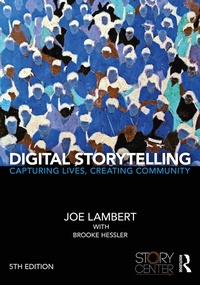
Digital Storytelling
Capturing Lives, Creating Community
5th Edition
Published on 4. May 2018
234 pages
978-1-351-26634-5 (ISBN)
Description

In this revised and updated edition of the StoryCenter's popular guide to digital storytelling, StoryCenter founder Joe Lambert offers budding storytellers the skills and tools they need to craft compelling digital stories. Using a "Seven Steps" approach, Lambert helps storytellers identify the fundamentals of dynamic digital storytelling - from conceiving a story, to seeing, assembling, and sharing it. Readers will also find new explorations of the global applications of digital storytelling in education and other fields, as well as additional information about copyright, ethics, and distribution. The book is filled with resources about past and present projects on the grassroots and institutional level, including new chapters specifically for students and a discussion of the latest tools and projects in mobile device-based media. This accessible guide's meaningful examples and inviting tone makes this an essential for any student learning the steps toward digital storytelling.
Reviews / Votes
"Our innermost and deepest stories often lie buried inside of us. Digital Storytelling is an artistic and technical guide to learning how to find those stories and tell them in the digital age. Hundreds of my students have used this deeply beautiful book to guide their own search and then assist community storytellers in creating stories of their own." -Nina Shapiro-Perl, American University"Digital Storytelling is not your typical text for writing courses-it is a truly engaging history about storytelling that helps students connect to why we even tell stories. Storytelling is an art, and Lambert's text reflects this. I enjoy using Digital Storytelling to not only teach my students how to become comfortable with telling stories, but to also inspire me on how I approach my storytelling instruction.
The text covers the essential elements of storytelling via a storytelling circle that creates a safe environment for the most timid of students to participate in class. There are also plenty of astute examples and references for the students. For a book that averages about 200 pages, this is quite a feat. My students tell me this is a text they enjoy reading and applying the techniques the text offers them in order to help them craft stories with a enhanced sense of creativity and a can-do spirit. This is one of a small collection of texts that students typically do not sell back, instead they share and re-read their text when they need to rejuvenate future stories-some of which have gone on to win awards or shaped capstone texts and films at UHCL.
This text is a must for any storytelling course. Your students will thank you for making this their primary text for your course. This new edition updates some of the content to ensure the text remains contextually relevant to the field of storytelling and its related topics in the dynamic academic landscape of digital media communication.
Since 2002, Lambert has paid attention to our field and I now consider Lambert a formative researcher and instructor whose text is the go-to text to use when one wants to instruct an engaging course that promotes storytelling in a proactive and humanist manner. Additionally, students take note that the text has been in print since before the advent of digital media and has adapted to remain a text that stays true to the essential aspects of excellent storytelling instruction. Just read the interviews and examples and you will be hooked!" -Debra E. Menconi Clark, University of Houston Clear Lake
More details
Edition
5th edition
Language
English
Place of publication
London
United Kingdom
Publishing group
Taylor & Francis Ltd
Target group
College/higher education
Product notice
Reflowable
File size
2,17 MB
ISBN-13
978-1-351-26634-5 (9781351266345)
Copyright in bibliographic data and cover images is held by Nielsen Book Services Limited or by the publishers or by their respective licensors: all rights reserved.
Schweitzer Classification
Other editions
Additional editions
Book
05/2018
5th Edition
Routledge
€65.80
Shipment within 10-20 days
Book
05/2018
5th Edition
Routledge
€205.00
Shipment within 10-20 days
Persons
Joe Lambert founded the Center for Digital Storytelling (now StoryCenter) in 1994. He and his colleagues developed a computer training and arts program known as the digital storytelling workshop. Joe and his staff have traveled the world to spread the practice of digital storytelling, to all 50 U.S. states and some 48 countries. Lambert is author ofSeven Stages: Story and the Human Experience (Digital Diner Press). In 2017, he celebrated his 34th year as an Executive Director of StoryCentre, having evolved his work in the 1980s in the performing arts to work in digital storytelling and media education in the 1990s.
Brooke Hessler is Director of Learning Resources at California College of the Arts, where she teaches multimodal inquiry and writing. Her scholarship has appeared in the International Journal of the Scholarship of Teaching and Learning, Community Literacy Journal, Writing Groups Inside and Outside the Classroom, A Guide to Composition Pedagogies, and Digital Storytelling in Higher Education: International Perspectives, among other journals and collections. An award-winning instructor of media arts-integrated courses, her digital story work has included long-term collaborations with K-16 educators, community arts activists, museums, and survivors of natural disasters and domestic terrorism.
Brooke Hessler is Director of Learning Resources at California College of the Arts, where she teaches multimodal inquiry and writing. Her scholarship has appeared in the International Journal of the Scholarship of Teaching and Learning, Community Literacy Journal, Writing Groups Inside and Outside the Classroom, A Guide to Composition Pedagogies, and Digital Storytelling in Higher Education: International Perspectives, among other journals and collections. An award-winning instructor of media arts-integrated courses, her digital story work has included long-term collaborations with K-16 educators, community arts activists, museums, and survivors of natural disasters and domestic terrorism.
Content
Chapter 1 - The Work of Story
Chapter 2 - Stories of Our Lives
Interlude 1: The Legacy of Tanya
Chapter 3 - A Road Traveled: The Evolution of the Digital Storytelling Practice
Chapter 4 - The World of Digital Storytelling
Interlude 2: Wynne's Story
Chapter 5 - Seven Steps of Digital Storytelling
Chapter 6 - The Story Circle
Chapter 7 - To Students: Getting Started in Digital Story Work: Mindsets and Methods
Interlude 3: Ilmiye's Story by Burcu Simsek
Chapter 8 - Approaches to the Scripting Process: Prompts and Processes
Chapter 9 - The Walking Story Circle: Rethinking Digital Storytelling in the Era of Mobile Devices
Interlude 4: Areej's Story by Nikoline Lohmann
Chapter 10 - Storyboarding
Chapter 11 - Designing in Digital: Working With Digital Imaging, Audio, and Video
Interlude 5: Nellie's Story by Rani Sanderson
Chapter 12 - Distribution, Ethics, and the Politics of Engagement
Chapter 13 - Applications of Digital Storytelling
Interlude 6: Zahid's Story
Chapter 14 - Silence Speaks: Interview With Amy Hill
Chapter 15 - Listening To Change: Stories From Alaska's Native Health Communities: Interview With Laura Revels
Chapter 16 - Humanizing Healthcare: A Conversation With Dr. Pip Hardy and Tony Sumner
Chapter 17 - Transforming Education Through Story Work: A Conversation With Dr. Brooke Hessler
Addendum: Silence Speaks: Guidelines for Ethical Practice
Chapter 2 - Stories of Our Lives
Interlude 1: The Legacy of Tanya
Chapter 3 - A Road Traveled: The Evolution of the Digital Storytelling Practice
Chapter 4 - The World of Digital Storytelling
Interlude 2: Wynne's Story
Chapter 5 - Seven Steps of Digital Storytelling
Chapter 6 - The Story Circle
Chapter 7 - To Students: Getting Started in Digital Story Work: Mindsets and Methods
Interlude 3: Ilmiye's Story by Burcu Simsek
Chapter 8 - Approaches to the Scripting Process: Prompts and Processes
Chapter 9 - The Walking Story Circle: Rethinking Digital Storytelling in the Era of Mobile Devices
Interlude 4: Areej's Story by Nikoline Lohmann
Chapter 10 - Storyboarding
Chapter 11 - Designing in Digital: Working With Digital Imaging, Audio, and Video
Interlude 5: Nellie's Story by Rani Sanderson
Chapter 12 - Distribution, Ethics, and the Politics of Engagement
Chapter 13 - Applications of Digital Storytelling
Interlude 6: Zahid's Story
Chapter 14 - Silence Speaks: Interview With Amy Hill
Chapter 15 - Listening To Change: Stories From Alaska's Native Health Communities: Interview With Laura Revels
Chapter 16 - Humanizing Healthcare: A Conversation With Dr. Pip Hardy and Tony Sumner
Chapter 17 - Transforming Education Through Story Work: A Conversation With Dr. Brooke Hessler
Addendum: Silence Speaks: Guidelines for Ethical Practice
