


Following in the Buddha's Footsteps
Published on 15. October 2019
552 pages
978-1-61429-626-3 (ISBN)
Description

The newest volume in the bestselling series from the Dalai Lama.
Delve into the substance of spiritual practice in this fourth volume of the Dalai Lama's definitive series on the path to awakening, Following in the Buddha's Footsteps. You'll first hear His Holiness's explanation of the Buddha, Dharma, and Sangha, why they are reliable guides on the path, and how to relate to them. His Holiness then describes the three essential trainings common to all Buddhist traditions: the higher trainings in ethical conduct, concentration, and wisdom. These chapters show us how to live a life free of harm to self or others and give us detailed instructions on how to develop single-pointed concentration as well as the higher states of concentration available to an earnest practitioner. In addition, the chapters on wisdom contain in-depth teachings on the noble eightfold path and the four establishments of mindfulness for developing greater awareness and understanding of our body, feelings, mind, and other phenomena. Together, these topics form the core of Buddhist practice.
This is a book to treasure and refer to repeatedly as you begin the path, progress on it, and near the final goal of nirvana.
Delve into the substance of spiritual practice in this fourth volume of the Dalai Lama's definitive series on the path to awakening, Following in the Buddha's Footsteps. You'll first hear His Holiness's explanation of the Buddha, Dharma, and Sangha, why they are reliable guides on the path, and how to relate to them. His Holiness then describes the three essential trainings common to all Buddhist traditions: the higher trainings in ethical conduct, concentration, and wisdom. These chapters show us how to live a life free of harm to self or others and give us detailed instructions on how to develop single-pointed concentration as well as the higher states of concentration available to an earnest practitioner. In addition, the chapters on wisdom contain in-depth teachings on the noble eightfold path and the four establishments of mindfulness for developing greater awareness and understanding of our body, feelings, mind, and other phenomena. Together, these topics form the core of Buddhist practice.
This is a book to treasure and refer to repeatedly as you begin the path, progress on it, and near the final goal of nirvana.
More details
Other editions
Additional editions
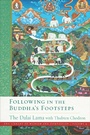
His Holiness the Dalai Lama | Thubten Chodron
Following in the Buddha's Footsteps
The Library of Wisdom and Compassion. Volume 4
Book
02/2020
Wisdom Publications,U.S.
€28.50
Shipment within 3-4 weeks
Persons
His Holiness the Dalai Lama is the spiritual leader of the Tibetan people, a Nobel Peace Prize recipient, and a beacon of inspiration for Buddhists and non-Buddhists alike. He has persistently reached out across religious and political lines and has engaged in dialogue with scientists in his mission to advance peace and understanding in the world. In doing so, he embodies his motto: "My religion is kindness."
Content
- Intro
- Title Page
- Publisher's Acknowledgment
- Contents
- Preface by Bhik?u?i Thubten Chodron
- Abbreviations
- 1. Trustworthy Spiritual Guidance
- The Entrance to the Buddhist Path
- Reasons for Taking Refuge in the Three Jewels
- The Mind's Potential and the Existence of the Three Jewels
- The Three Jewels according to the Fundamental Vehicle
- The Three Jewels according to the Perfection Vehicle
- Eight Excellent Qualities of the Buddha Jewel
- Eight Excellent Qualities of the Dharma Jewel
- Eight Excellent Qualities of the Sa?gha Jewel
- Final and Provisional Refuges
- The Three Jewels according to the Vajra Vehicle
- 2. Qualities of the Buddha, Dharma, and Sa?gha
- The Four Kinds of Self-Confidence
- The Ten Powers of the Tathagata
- The Eighteen Unique Qualities of a Buddha
- Qualities of the Buddha's Body, Speech, and Mind
- The Buddha as a Reliable Guide
- Recollection of the Buddha, Dharma, and Sa?gha
- Distinguishing Features of the Three Jewels
- Causal and Resultant Refuge
- 3. Heartfelt Connection to the Three Jewels
- Formally Taking Refuge
- Deepening Our Refuge
- Maintaining Proper Refuge
- Bodhisattvas' Refuge
- 4. The Higher Training in Ethical Conduct
- The Three Higher Trainings
- The Importance of Ethical Conduct
- The Pratimok?a Ethical Code
- Vinaya Schools
- The Benefits of Practicing the Pratimok?a Ethical Conduct
- Intoxicants
- Why Celibacy?
- Bodhisattva and Tantric Ethical Codes
- Making Mistakes and Rectifying Them
- 5. Sa?gha: The Monastic Community
- The Value of the Monastic Community
- The Flourishing of the Dharma and the Existence of the Dharma
- The Intent and Purpose of Monastic Life
- Maintaining the Purity of the Sa?gha
- Tibetan Monastics and Monastic Institutions
- Challenges for Western Monastics
- Full Ordination for Women
- Advice for Monastics
- The Joy of Monastic Discipline
- 6. The Higher Training in Concentration and the Perfection of Meditative Stability
- Concentration and Serenity
- The Importance of Developing Serenity
- Conditions Conducive to the Development of Serenity
- Observed Objects
- Choosing Our Meditation Object
- Structuring the Meditation Session
- Working with the Body
- 7. Obstacles and Antidotes
- The Five Hindrances
- Taming the Five Hindrances
- Overcoming Hindrances
- The Five Faults and Eight Antidotes
- The Nine Stages of Sustained Attention
- Mental and Physical Pliancy and the Bliss of Physical and Mental Pliancy
- A Diagram Illustrating the Process of Attaining Serenity
- 8. The Meditative Absorptions
- Cultivating Mundane Insight
- Meditative Absorptions of the Form Realm
- Meditative Absorptions of the Formless Realm
- Meditative Absorptions on the Four Truths
- The Eight Liberations
- The Nine Serial Absorptions
- The Superknowledges
- The Value of the Superknowledges for Bodhisattvas
- Serenity in Buddhist Practice
- Words of Advice
- 9. Concentration in the Pali Tradition
- Objects of Meditation
- The Four Dhyanas
- The Four Formless Absorptions
- Four Kinds of Development of Samadhi
- Samadhi and Insight
- 10. The Practice of Serenity in Chinese Buddhism
- Meditation
- Creating Balance at the Beginning and End of a Meditation Session
- Cultivating Serenity and Insight in Sitting Meditation
- Cultivating Serenity and Insight while Interacting with the Environment
- Deviant Meditation and Correct Meditation
- Counteracting the Work of Mara
- 11. Higher Training in Wisdom: The Role of Mindfulness and Introspective Awareness
- Introduction to the Thirty-Seven Harmonies with Awakening
- The Importance of Mindfulness and Introspective Awareness
- Mindfulness
- Introspective Awareness
- Mindfulness and Introspective Awareness Working in Tandem
- Mindfulness in Modernity
- The Thirty-Seven Harmonies with Awakening
- 12. The Four Establishments of Mindfulness: Body, Feelings, and Mind
- Introduction to the Four Establishments of Mindfulness
- Shared and Specific Characteristics
- Mindfulness of the Body (kayasm?ti, kayagatasati)
- Mindfulness of Feelings
- Mindfulness of the Mind
- 13. The Four Establishments of Mindfulness: Phenomena
- Mindfulness of Phenomena
- Mindfulness of the Five Hindrances
- Mindfulness of the Five Aggregates
- Mindfulness of the Six Sources
- Mindfulness of the Seven Awakening Factors
- Mindfulness of the Four Truths
- Mindfulness in Vajrayana
- Bodhisattvas' Practice of the Four Establishments of Mindfulness
- The Selflessness of Phenomena and the Four Establishments of Mindfulness
- The Benefits of the Four Establishments of Mindfulness
- 14. The Thirty-Seven Harmonies with Awakening
- The Four Supreme Strivings
- The Four Bases of Spiritual Power
- The Five Faculties and Five Powers
- The Seven Awakening Factors
- The Aryas' Eightfold Path
- Relationships among the Thirty-Seven Harmonies with Awakening
- The Thirty-Seven Harmonies and the Five Paths
- Conventional and Ultimate Thirty-Seven Harmonies
- The Thirty-Seven Harmonies for Fundamental Vehicle and Mahayana Practitioners
- The Thirty-Seven Harmonies in Tibetan Buddhism
- Notes
- Glossary
- Further Reading
- Index
- About the Authors
- Copyright
