

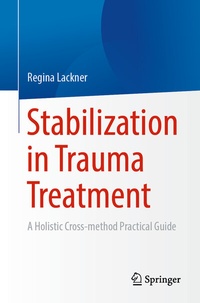
Stabilization in Trauma Treatment
Description

Stabilization is considered the first of the three stages of trauma treatment and a prerequisite for successful trauma confrontation. But what does stabilization mean, what effect does it have and, above all, what variety of stabilizing interventions are available?
This practical guide presents various approaches and a wealth of different interventions and exercises that have proven themselves in practice. In addition, it clearly shows that stabilization can achieve much more than one might expect: it brings with it a variety of other effects, so that it contributes to a comprehensive strengthening and healing of our clients. Thus, it facilitates, accelerates and expands the process of trauma treatment. A large repertoire of interventions, exercises and suggestions, as well as numerous examples, illustrate its implementation in practice. The book is intended for psychotherapists, psychologists, physicians, and members of other helping professions.
Content:
- Necessity, importance and effect of stabilization
- Basics relevant to practice
- Safety and resources
- Various interventions and exercises
- Suggestions and examples from practice
More details
Other editions
Additional editions
Person
Dr. Regina Lackner is a clinical and health psychologist as well as a psychotherapist in private practice in Vienna, Austria. For more than twenty years she has worked with traumatized people and held workshops and lectures on stabilization and other trauma-specific topics. www.trauma-training.at
