

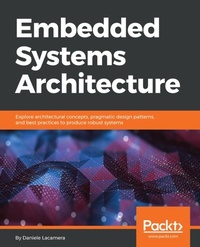
Embedded Systems Architecture
Explore architectural concepts, pragmatic design patterns, and best practices to produce robust systems
Published on 23. September 2024
324 pages
978-1-78883-028-7 (ISBN)
Description

Learn embedded systems development with practical design patterns, essential workflows, and memory-safe techniques to build secure, reliable, and energy-efficient devices
Key Features
Tackle real-world challenges in embedded development, from boot-up to distributed IoT systems
Apply memory management, peripheral integration, and power optimization techniques
Build robust, secure, and scalable solutions with practical guidance on RTOS and task scheduling
Book DescriptionEmbedded systems are self-contained devices with a dedicated purpose. We come across a variety of fields of applications for embedded systems in industries such as automotive, telecommunications, healthcare and consumer electronics, just to name a few. Embedded Systems Architecture begins with a bird's eye view of embedded development and how it differs from the other systems that you may be familiar with. You will first be guided to set up an optimal development environment, then move on to software tools and methodologies to improve the work flow. You will explore the boot-up mechanisms and the memory management strategies typical of a real-time embedded system. Through the analysis of the programming interface of the reference microcontroller, you'll look at the implementation of the features and the device drivers. Next, you'll learn about the techniques used to reduce power consumption. Then you will be introduced to the technologies, protocols and security aspects related to integrating the system into IoT solutions. By the end of the book, you will have explored various aspects of embedded architecture, including task synchronization in a multi-threading environment, and the safety models adopted by modern real-time operating systems.What you will learn
Participate in the design and definition phase of an embedded product
Get to grips with writing code for ARM Cortex-M microcontrollers
Build an embedded development lab and optimize the workflow
Write memory-safe code
Understand the architecture behind the communication interfaces
Understand the design and development patterns for connected and distributed devices in the IoT
Master multitask parallel execution patterns and real-time operating systems
Who this book is forThis book is for software developers and designers seeking a practical introduction to embedded programming, as well as early-career embedded engineers wanting to deepen their understanding of architecture, workflows, and real-world system design. Readers interested in STM32, memory and power management, RTOS, and IoT solutions will benefit most from this comprehensive guide.
Key Features
Tackle real-world challenges in embedded development, from boot-up to distributed IoT systems
Apply memory management, peripheral integration, and power optimization techniques
Build robust, secure, and scalable solutions with practical guidance on RTOS and task scheduling
Book DescriptionEmbedded systems are self-contained devices with a dedicated purpose. We come across a variety of fields of applications for embedded systems in industries such as automotive, telecommunications, healthcare and consumer electronics, just to name a few. Embedded Systems Architecture begins with a bird's eye view of embedded development and how it differs from the other systems that you may be familiar with. You will first be guided to set up an optimal development environment, then move on to software tools and methodologies to improve the work flow. You will explore the boot-up mechanisms and the memory management strategies typical of a real-time embedded system. Through the analysis of the programming interface of the reference microcontroller, you'll look at the implementation of the features and the device drivers. Next, you'll learn about the techniques used to reduce power consumption. Then you will be introduced to the technologies, protocols and security aspects related to integrating the system into IoT solutions. By the end of the book, you will have explored various aspects of embedded architecture, including task synchronization in a multi-threading environment, and the safety models adopted by modern real-time operating systems.What you will learn
Participate in the design and definition phase of an embedded product
Get to grips with writing code for ARM Cortex-M microcontrollers
Build an embedded development lab and optimize the workflow
Write memory-safe code
Understand the architecture behind the communication interfaces
Understand the design and development patterns for connected and distributed devices in the IoT
Master multitask parallel execution patterns and real-time operating systems
Who this book is forThis book is for software developers and designers seeking a practical introduction to embedded programming, as well as early-career embedded engineers wanting to deepen their understanding of architecture, workflows, and real-world system design. Readers interested in STM32, memory and power management, RTOS, and IoT solutions will benefit most from this comprehensive guide.
More details
Edition
Digital original
Language
English
Place of publication
Birmingham
United Kingdom
Target group
Professional and scholarly
US School Grade: College Graduate Student
Edition type
Digital original
File size
1,61 MB
ISBN-13
978-1-78883-028-7 (9781788830287)
Copyright in bibliographic data and cover images is held by Nielsen Book Services Limited or by the publishers or by their respective licensors: all rights reserved.
Schweitzer Classification
Other editions
New editions
Daniele Lacamera
Embedded Systems Architecture
Design and write software for embedded devices to build safe and connected systems
E-Book
09/2024
2nd Edition
Packt Publishing
from
€32.39
Available for download
Additional editions
Daniele Lacamera
Embedded Systems Architecture
Explore architectural concepts, pragmatic design patterns, and best practices to produce robust systems
Book
05/2018
Packt Publishing
€68.20
Shipment within 3-4 weeks
Person
Lacamera Daniele :
Daniele Lacamera is a software technologist and researcher with vast experience in software design and development on embedded systems for different industries, currently working as freelance software developer and trainer. He is a worldwide expert in TCP/IP and transport protocol design and optimization, with more than 20 academic publications on the topic. He supports free software by contributing to several projects, including the Linux kernel, and his involvement within a number of communities and organizations that promote the use of free and open source software in the IoT.
Daniele Lacamera is a software technologist and researcher with vast experience in software design and development on embedded systems for different industries, currently working as freelance software developer and trainer. He is a worldwide expert in TCP/IP and transport protocol design and optimization, with more than 20 academic publications on the topic. He supports free software by contributing to several projects, including the Linux kernel, and his involvement within a number of communities and organizations that promote the use of free and open source software in the IoT.
Content
Table of Contents
Embedded systems: A pragmatic approach
Work environment and work flow optimization
Architectural patterns
The boot-up procedure
Memory management
General purpose peripherals
Local bus interfaces communication
Power Management and energy saving
Distributed systems and IoT architecture
Parallel tasks and scheduling
Real Time Operating Systems
Embedded systems: A pragmatic approach
Work environment and work flow optimization
Architectural patterns
The boot-up procedure
Memory management
General purpose peripherals
Local bus interfaces communication
Power Management and energy saving
Distributed systems and IoT architecture
Parallel tasks and scheduling
Real Time Operating Systems
