

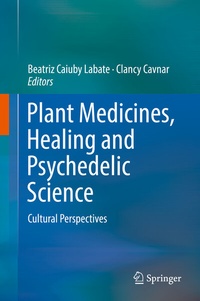
Plant Medicines, Healing and Psychedelic Science
Description

The intended audience of the volume is large and diverse: neuroscientists, biologists, medical doctors, psychiatrists, psychologists; mental health professionals interested in the therapeutic application of psychedelic substances, or who work with substance abuse, depression, anxiety, and PTSD; patients and practitioners of complementary and alternative medicine; ethnobotanists and ethnopharmacologists; lawyers, criminologists, and other specialists in international law working on matters related to drug policy and human rights, as well as scholars of religious studies, anthropologists, sociologists, and historians; social scientists concerned both with the history of science, medicine, and technology, and concepts of health, illness, and healing. It has a potentially large international audience, especially considering the increasing interest in "psychedelic science" and the growing spread of the use of traditional psychoactives in the West.
Reviews / Votes
"Readers ranging from medical doctors, anthropologists, ethnobotanists, patients and practitioners of complementary and alternative medicine to those who work in law, drug policy, and human rights will find utility in this work. . Plant Medicines is a fascinating and timely work on the topic of current cultural research associated with psychedelic plants and fungi. It's engaging, accessible to a broad audience, and appropriate for both enthusiasts and professionals who are looking for new information about these intriguing and engaging organisms." (Esther Jackson, Economic Botany, Vol. 73 (1), 2019)More details
Other editions
Additional editions
Persons
Clancy Cavnar has a doctorate inclinical psychology (Psy.D.) from John F. Kennedy University in Pleasant Hill, CA. She currently works in private practice in San Francisco, and is an associate editor at Chacruna (http://chacruna.net), a venue for publication of high-quality academic short texts on plant medicines. She is also a research associate of the Interdisciplinary Group for Psychoactive Studies (NEIP). She combines an eclectic array of interests and activities as clinical psychologist, artist, and researcher. She has a master of fine arts in painting from the San Francisco Art Institute, a master's in counseling from San Francisco State University, and she completed the Certificate in Psychedelic-Assisted Therapy program at the California Institute of Integral Studies. She is author and co-author of articles in several peer-reviewed journals and co-editor, with Beatriz Caiuby Labate, of eight books. For more information see: http://neip.info/pesquisadore/clancy-cavnar
