

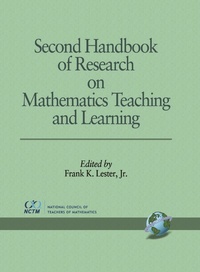
Second Handbook of Research on Mathematics Teaching and Learning
A Project of the National Council of Teachers of Mathematics
1st Edition
Published on 1. February 2007
725 pages
978-1-60752-709-1 (ISBN)
Description

The audience remains much the same as for the 1992 Handbook, namely, mathematics education researchers and other scholars conducting work in mathematics education. This group includes college and university faculty, graduate students, investigators in research and development centers, and staff members at federal, state, and local agencies that conduct and use research within the discipline of mathematics. The intent of the authors of this volume is to provide useful perspectives as well as pertinent information for conducting investigations that are informed by previous work. The Handbook should also be a useful textbook for graduate research seminars. In addition to the audience mentioned above, the present Handbook contains chapters that should be relevant to four other groups: teacher educators, curriculum developers, state and national policy makers, and test developers and others involved with assessment. Taken as a whole, the chapters reflects the mathematics education research community's willingness to accept the challenge of helping the public understand what mathematics education research is all about and what the relevance of their research fi ndings might be for those outside their immediate community.
More details
Other editions
Additional editions
Book
06/2007
Information Age Publishing
€395.16
Article exhausted; check different version
Content
1 - Cover [Seite 1]
2 - Contents [Seite 7]
3 - Preface [Seite 11]
4 - Part I - Foundations [Seite 15]
4.1 - Chapter 1. Putting Philosophy to Work: Coping with Multiple Theoretical Perspectives [Seite 17]
4.2 - Chapter 2. Theory in Mathematics Education Scholarship [Seite 53]
4.3 - Chapter 3. Method [Seite 83]
5 - Part II - Teachers and Teaching [Seite 123]
5.1 - Chapter 4. Assessing Teachers' Mathematical Knowledge: What Knowledge Matters and What Evidence Counts? [Seite 125]
5.2 - Chapter 5. The Mathematical Education and Development of Teachers [Seite 171]
5.3 - Chapter 6. Mathematics Teaching and Classroom Practice [Seite 239]
5.4 - Chapter 7. Mathematics Teachers' Beliefs and Affect [Seite 271]
6 - Part III - Influences on Student Outcomes [Seite 331]
6.1 - Chapter 8. How Curriculum Influences Student Learning [Seite 333]
6.2 - Chapter 9. The Effects of Classroom Mathematics Teaching on Student' Learning [Seite 385]
6.3 - Chapter 10. Culture, Race, Power and Mathematics Education: Diversity in Mathematics Education Center for Learning and Teaching [Seite 419]
6.4 - Chapter 11. The Role of Culture in Teaching and Learning Mathematics [Seite 449]
7 - Part IV - Study and Learning [Seite 473]
7.1 - Chapter 12. Early Childhood Mathematics Learning [Seite 475]
7.2 - Chapter 13. Whole Number Concepts and Operations [Seite 571]
7.3 - Chapter 14. Rational Numbers and Proportional Reasoning: Toward a Theoretical Framework for Research [Seite 643]
8 - Part IV - Students and Learning [Seite 683]
8.1 - Chapter 15. Early Algebra and Algebraic Reasoning [Seite 683]
8.2 - Chapter 16. Learning and Teaching Algebra at the Middle School Through College Levels: Building Meaning for Symbols and Their Manipulation [Seite 721]
8.3 - Chapter 17. Problem Solving and Modeling [Seite 777]
8.4 - Chapter 18. Toward Comprehensive Perspectives on the Learning and Teaching of Proof [Seite 819]
8.5 - Chapter 19. The Development of Geometric and Spatial Thinking? [Seite 857]
8.6 - Chapter 20. Research in Probability: Responding to Classroom Realities [Seite 923]
8.7 - Chapter 21. Research on Statistics Leearning and Reasoning [Seite 971]
8.8 - Chapter 22. Mathematics Thinking and Learning at Post-Secondary Level [Seite 1025]
9 - Part V - Assessment [Seite 1065]
9.1 - Chapter 23. Keeping Learning on Track: Classroom Assessment and the Regulation of Learning [Seite 1067]
9.2 - Chapter 24. High-Stakes Testing in Mathematics [Seite 1113]
9.3 - Chapter 25. Large-Scale Assessment and Mathematics Education [Seite 1125]
10 - Part VI - Issues and Perspectives [Seite 1157]
10.1 - Chapter 26. Issues in Access and Equity in Mathematics Education [Seite 1159]
10.2 - Chapter 27. Research on Technology in Mathematics Education: A Perspective of Constructs [Seite 1183]
10.3 - Chapter 28. Engineering Change in Mathematics Education: Research, Policy, and Practice [Seite 1223]
10.4 - Chapter 29. Educational Policy Research and Mathematics Education [Seite 1261]
10.5 - Chapter 30. Mathematics Content Specification in the Age of Assessment [Seite 1295]
10.6 - Chapter 31. Reflections on the State of Research and Trends in Research on Mathematics Teaching and Learning: From Here to Utopia [Seite 1307]
11 - About the Contributors [Seite 1327]
12 - Author Index [Seite 1339]
13 - Subject Index [Seite 1365]
2 - Contents [Seite 7]
3 - Preface [Seite 11]
4 - Part I - Foundations [Seite 15]
4.1 - Chapter 1. Putting Philosophy to Work: Coping with Multiple Theoretical Perspectives [Seite 17]
4.2 - Chapter 2. Theory in Mathematics Education Scholarship [Seite 53]
4.3 - Chapter 3. Method [Seite 83]
5 - Part II - Teachers and Teaching [Seite 123]
5.1 - Chapter 4. Assessing Teachers' Mathematical Knowledge: What Knowledge Matters and What Evidence Counts? [Seite 125]
5.2 - Chapter 5. The Mathematical Education and Development of Teachers [Seite 171]
5.3 - Chapter 6. Mathematics Teaching and Classroom Practice [Seite 239]
5.4 - Chapter 7. Mathematics Teachers' Beliefs and Affect [Seite 271]
6 - Part III - Influences on Student Outcomes [Seite 331]
6.1 - Chapter 8. How Curriculum Influences Student Learning [Seite 333]
6.2 - Chapter 9. The Effects of Classroom Mathematics Teaching on Student' Learning [Seite 385]
6.3 - Chapter 10. Culture, Race, Power and Mathematics Education: Diversity in Mathematics Education Center for Learning and Teaching [Seite 419]
6.4 - Chapter 11. The Role of Culture in Teaching and Learning Mathematics [Seite 449]
7 - Part IV - Study and Learning [Seite 473]
7.1 - Chapter 12. Early Childhood Mathematics Learning [Seite 475]
7.2 - Chapter 13. Whole Number Concepts and Operations [Seite 571]
7.3 - Chapter 14. Rational Numbers and Proportional Reasoning: Toward a Theoretical Framework for Research [Seite 643]
8 - Part IV - Students and Learning [Seite 683]
8.1 - Chapter 15. Early Algebra and Algebraic Reasoning [Seite 683]
8.2 - Chapter 16. Learning and Teaching Algebra at the Middle School Through College Levels: Building Meaning for Symbols and Their Manipulation [Seite 721]
8.3 - Chapter 17. Problem Solving and Modeling [Seite 777]
8.4 - Chapter 18. Toward Comprehensive Perspectives on the Learning and Teaching of Proof [Seite 819]
8.5 - Chapter 19. The Development of Geometric and Spatial Thinking? [Seite 857]
8.6 - Chapter 20. Research in Probability: Responding to Classroom Realities [Seite 923]
8.7 - Chapter 21. Research on Statistics Leearning and Reasoning [Seite 971]
8.8 - Chapter 22. Mathematics Thinking and Learning at Post-Secondary Level [Seite 1025]
9 - Part V - Assessment [Seite 1065]
9.1 - Chapter 23. Keeping Learning on Track: Classroom Assessment and the Regulation of Learning [Seite 1067]
9.2 - Chapter 24. High-Stakes Testing in Mathematics [Seite 1113]
9.3 - Chapter 25. Large-Scale Assessment and Mathematics Education [Seite 1125]
10 - Part VI - Issues and Perspectives [Seite 1157]
10.1 - Chapter 26. Issues in Access and Equity in Mathematics Education [Seite 1159]
10.2 - Chapter 27. Research on Technology in Mathematics Education: A Perspective of Constructs [Seite 1183]
10.3 - Chapter 28. Engineering Change in Mathematics Education: Research, Policy, and Practice [Seite 1223]
10.4 - Chapter 29. Educational Policy Research and Mathematics Education [Seite 1261]
10.5 - Chapter 30. Mathematics Content Specification in the Age of Assessment [Seite 1295]
10.6 - Chapter 31. Reflections on the State of Research and Trends in Research on Mathematics Teaching and Learning: From Here to Utopia [Seite 1307]
11 - About the Contributors [Seite 1327]
12 - Author Index [Seite 1339]
13 - Subject Index [Seite 1365]
