


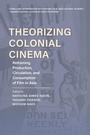
Theorizing Colonial Cinema
Description

Theorizing Colonial Cinema is a millennial retrospective on the entangled intimacy between film and colonialism from film's global inception to contemporary legacies in and of Asia.
The volume engages new perspectives by asking how prior discussions on film form, theory, history, and ideology may be challenged by centering the colonial question rather than relegating it to the periphery. To that end, contributors begin by excavating little-known archives and perspectives from the colonies as a departure from a prevailing focus on Europe's imperial histories and archives about the colonies. The collection pinpoints various forms of devaluation and misrecognition both in and beyond the region that continue to relegate local voices to the margins.
This pathbreaking study on global film history advances prior scholarship by bringing together an array of established and new interdisciplinary voices from film studies, Asian studies, and postcolonial studies to consider how the present is continually haunted by the colonial past.
Winner of the SCMS Best Edited Collection Award!
More details
Other editions
Additional editions
Persons
Nayoung Aimee Kwon is Associate Professor in the Department of Asian and Middle Eastern Studies and Program in Cinematic Arts at Duke University. She is the Founding Director of Duke's Asian American and Diaspora Studies Program and Co-director of the Andrew Mellon Games and Culture Humanities Lab. Her most recent monograph is Intimate Empire. Takushi Odagiri is Associate Professor of Ethics and Philosophy in the Institute of Liberal Arts and Science and in the School of Social Innovation Studies at Kanazawa University. His publications appear in positions: asia critique, boundary 2, Journal of Religion, and Tetsugaku, among other venues. Moonim Baek is Professor of Korean Language amd Literature at Yonsei University. She is the author of Chum A-ut: Hankuk Yonghwa ui Chongch'ihak (Zoom-Out: Politics of Korean Cinema), Hyongon: Munhakkwa yonghwa ui wonkunpop (Figural Images: Perspectives on Literature and Film), Wolha ui Yokoksong: Yokwiro Ponun Hankuk Kongpoyonghwasa (Scream under the Moon: Korean Horror Film History through Female Ghosts), and Im Hwa ui Yonghwa (Im Hwa's Cinema).
Content
Acknowledgments
On Romanization, Naming and Translation
Introduction, by Nayoung Aimee Kwon and Takushi Odagiri
Part I: "Time and Racialized Other: Colonial Modernity and Early Cinema"
1. Time, Race, and the Asynchronous in the Colonial Documentaries of Malaya, by Nadine Chan
2. Facing Malcontent Colonial Korean Comrades: A Typology of Colonial Cinema in Asia's Socialist Alliances, by Moonim Baek
3. Colonial-Era Film Theory, Spectatorship, and the Problem of Internalization, by Aaron Gerow
4. Chinese Cinema's Other: Wrangling over "China-humiliating" Films (ruHua pian), by Yiman Wang
5. World Export: Melodramas of Colonial Conquest, by Jane Marie Gaines
Part II: "Divided Mis-en-Scène: Colonial Cinema and Cold War Afterimages"
6. Tarzan/Taishan and Other Orphans: Taiwan's Melodrama of Decolonization, by Zhang Zhen
7. What Is an Auteur? Ho Yong/Hinatsu Eitaro/Huyung Between (Post)Colonial Indonesia, Japan, and Korea, by Thomas A. C. Barker and Nikki J. Y. Lee
Part III: "Millennial Hauntings: Rising Global Asian Cinemas"
8. Cinema's Coloniality, by Takushi Odagiri
9. A Hallucinatory History of the Philippine-American War: Khavn's Balangiga: Howling Wilderness, by José B. Capino
10. Millennial Vengeance: Park Chan-Wook's Agassi (The Handmaiden) and the Return of Postcolonial Japonisme, by Nayoung Aimee Kwon
Index
