

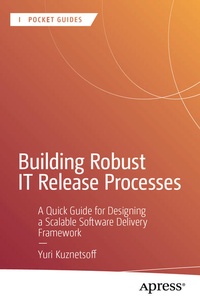
Building Robust IT Release Processes
Description

Building Robust IT Release Processes is a quick and practical guide for designing and implementing reliable release, deployment, and disaster-recovery processes across modern software environments.
This pocket guide explores an array of release methodologies-from traditional, scope-driven release cycles to continuous delivery and hybrid models that support both legacy systems and modern cloud-native applications. You will get up to speed on release structures, how to create release plans, implement consistent versioning, coordinate multi-team deliveries, run staging exercises, and execute production deployments with proper authorization, verification, and rollback readiness, all in a clear and concise manner, giving you everything you need to build a scalable, auditable, and resilient release process for your organisation that consistently delivers high-quality software and infrastructure changes.
You Will Learn:
- How to create, integrate and enhance traditional release process, continuous delivery, and hybrid release models
- How to implement field-tested governance frameworks - including release plans, acceptance criteria, staging exercises, and multi-team coordination that reduce risk and operational cost
- How to build unified continuous delivery and infrastructure release pipelines that support automated deployment, verification, rollback, and cross-environment consistency
- How to integrate security, performance, and compliance requirements (SOC 2, ISO, NIST) directly into the release lifecycle to ensure audit-ready change delivery
- How to prepare for operational failures by designing disaster recovery procedures, failover decision trees, and runbooks that strengthen organizational resilience
This Book is for:
Release Managers, DevOps Leads, SREs, and Technical Program Managers.
More details
Other editions
Additional editions
Person
Yuri Kuznetsoff is a seasoned IT professional with over two decades of experience spanning software design, solution development, build automation, and enterprise release management. His career journey-from hands-on coding to orchestrating complex release pipelines-has given him a unique perspective on the challenges of modern software delivery. Yuri specializes in creating scalable, reliable, and repeatable release processes that bridge traditional methodologies with agile frameworks. He currently resides in Canada and is passionate about helping organizations mature their IT operations through practical, real-world strategies.
Content
1: Traditional Release Processes.- 2: Continuous Delivery Processes.- 3: Infrastructure Release Processes.- 4: Disaster Recovery Procedures.-5: Conclusion.- Appendix A: General Recommendations.- Appendix B: Procedure Checkpoints: A Quick Reference.
