

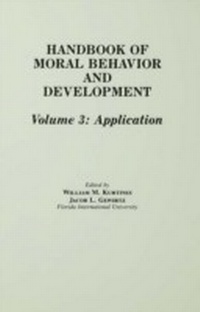
Handbook of Moral Behavior and Development
Volume 3: Application
1st Edition
Published on 15. April 2013
368 pages
978-1-134-99281-2 (ISBN)
Description

The publication of this unique three-volume set represents the culmination of years of work by a large number of scholars, researchers, and professionals in the field of moral development. The literature on moral behavior and development has grown to the point where it is no longer possible to capture the "state of the art" in a single volume. This comprehensive multi-volume Handbook marks an important transition because it provides evidence that the field has emerged as an area of scholarly activity in its own right. Spanning many professional domains, there is a striking variety of issues and topics surveyed: anthropology, biology, economics, education, philosophy, psychology, psychiatry, sociology, social work, and more.
By bringing together work on diverse topics, the editors have fostered a mutually-beneficial exchange not only between alternative approaches and perspectives, but also between "applied" and "pure" research interests.
The Theory volume presents current and ongoing theoretical advances focusing on new developments or substantive refinements and revisions to existing theoretical frameworks. The Research volume summarizes and interprets the findings of specific, theory-driven, research programs; reviews research in areas that have generated substantial empirical findings; describes recent developments in research methodology/techniques; and reports research on new and emerging issues. The Application volume describes a diverse array of intervention projects - educational, clinical, organizational, and the like. Each chapter includes a summary report of results and findings, conceptual developments, and emerging issues or topics. Since the contributors to this publication are active theorists, researchers, and practitioners, it may serve to define directions that will shape the emerging literature in the field.
By bringing together work on diverse topics, the editors have fostered a mutually-beneficial exchange not only between alternative approaches and perspectives, but also between "applied" and "pure" research interests.
The Theory volume presents current and ongoing theoretical advances focusing on new developments or substantive refinements and revisions to existing theoretical frameworks. The Research volume summarizes and interprets the findings of specific, theory-driven, research programs; reviews research in areas that have generated substantial empirical findings; describes recent developments in research methodology/techniques; and reports research on new and emerging issues. The Application volume describes a diverse array of intervention projects - educational, clinical, organizational, and the like. Each chapter includes a summary report of results and findings, conceptual developments, and emerging issues or topics. Since the contributors to this publication are active theorists, researchers, and practitioners, it may serve to define directions that will shape the emerging literature in the field.
Reviews / Votes
"Faithfully reflected in this handbook,the literature on morality within psychology is concentrated largely on tracing the development course of moral reasoning."-Psychological Science
"Faithfully reflected in this handbook,the literature on morality within psychology is concentrated largely on tracing the development course of moral reasoning."
-Psychological Science
"This is a very complete survey of the present status of moral development theory and research....the strengths of this three-volume work are numerous....this is a very fine collection of current materials that should be in most college and university libraries."
-Journal of Psychology and Christianity
"This is a very complete survey of the present status of moral development theory and research....the strengths of this three-volume work are numerous....this is a very fine collection of current materials that should be in most college and university libraries."
-Journal of Psychology and Christianity
"...these volumes open up many new perspectives of post-Kohlbergian theorizing and research."
-Contemporary Psychology
"...these volumes open up many new perspectives of post-Kohlbergian theorizing and research."
-Contemporary Psychology
More details
Language
English
Place of publication
London
United Kingdom
Publishing group
Taylor & Francis Ltd
Target group
Professional and scholarly
File size
6,27 MB
ISBN-13
978-1-134-99281-2 (9781134992812)
Copyright in bibliographic data and cover images is held by Nielsen Book Services Limited or by the publishers or by their respective licensors: all rights reserved.
Schweitzer Classification
Other editions
Additional editions
William M. Kurtines | Jacob Gewirtz | Jacob L. Lamb
Handbook of Moral Behavior and Development
Volume 3: Application
Book
09/1991
Psychology Press
€146.10
Shipment within 10-20 days
Persons
Jacob L. Lamb, William M. Kurtines, Jacob Gewirtz
Content
Volume I: Theory.Contents:Prologue to Volume 1.A Tribute to the Life and Work of Lawrence Kohlberg: Philosopher, Psychologist, and Educator. J.L. Gewirtz, Lawrence Kohlberg's Life and Work from the Vantage of a Long-Time Friend and Colleague: A Memoir. R. DeVries, The Cognitive Developmental Paradigm. W. Edelstein, A Few Words in Commemoration of Lawrence Kohlberg. L. Kuhmerker, The Kohlberg Legacy to Friends. G. Noam, M. Wolf, Lawrence Kohlberg: 1927-1987. C. Power, Lawrence Kohlberg: The Vocation of an Educator. Part I. A. Higgins,Lawrence Kohlberg: The Vocation of Moral Psychologist and Educator.Part I:.Chapters.A. Bandura, Social Cognitive Theory of Moral Thought and Action. P. Davidson, J. Youniss, Which Comes First, Morality or Identity. R. Enright, The Moral Development of Forgiveness. J.L. Gewirtz, M. Palaez-Nogueras, The Place of Rules in Moral Action. J. Gibbs, Toward an Integration of Kohlberg's and Hoffman's Theories of Morality. H. Haste, J. Baddeley, Moral Theory and Culture: The Case of Gender. N. Haan, Moral Development and Action from a Social Constructivist Perspective. M. Hoffman, Empathy Development, Moral Principles, and Action. W.M. Kurtines, G. Carlo, T. Lanza, E. Mayock, S. Pollard, Moral Behavior and Development from the Perspective of Psychosocial Theory. M. Packer, E. Richardson, Analytic Hermeneutics and the Study of Morality in Action. B. Puka, Toward the Redevelopment of Kohlberg's Theory: Preserving Essential Structure, Removing Controversial Content. J. Snarey, K. Keljo, In a Gemeinschaft Voice: The Cross- Cultural Expansion of Moral Development Theory. E. Staub, Psychological and Cultural Origins of Extreme Destructiveness and Extreme Altruism.
Volume II: ResearchContents: Y.B. Tal, D.B. Tal, Decision Making Models of Helping Behavior: Content and Process. L. Brown, M. Tappen, E. Debold, C. Gilligan, Reading Narrative of Conflict and Choice for Self and Moral Voice: A Relational Method. N. Eisenberg, C.L. Shea, G. Carlo, G.P. Knight, Empathy-Related Responding and Cognition: A "Chicken and the Egg" Dilemma. M. Keller, W. Edelstein, The Development of Socio-Moral Meaning Making. M. Killen, Social and Moral Development in Early Childhood. D.L. Krebs, S.C.A. Vermeulen, J.I. Carpendale, K. Denton, Structural and Situational Influences on Moral Judgment: The Interaction Between Stage and Dilemma. F. Oser, Professional Morality: A Discourse Approach. J. Rest, D. Narvaez, The College Experience and Moral Development. T.R. Schultz, J.M. Darley, An Information-Processing Model of Retributive Moral Judgments Based on "Legal Reasoning." J. Snarey, Faith Development, Moral Development, and Nontheistic Judaism: A Construct Validity Study. E. Turiel, J. Smetana, M. Killen, Social Contexts in Social Cognitive Development. L.J. Walker, Sex Differences in Moral Development.
Volume III: ApplicationContents: V. Battistch, M. Watson, D. Solomon, E. Schaps, J. Solomon, The Child Development Project: A Comprehensive Program for the Development of Prosocial Character. M.W. Berkowitz, N. Guerra, L. Nucci, Sociomoral Development and Drug and Alcohol Abuse. S. Ellenwood, K. Ryan, Literature and Morality: An Experimental Curriculum. N. Emler, R. Hogan, Moral Psychology and Public Policy. J. Gibbs, Sociomoral Developmental Delay and Cognitive Distortion: Implications for the Treatment of Antisocial Youth. A. Higgins, The Just Community Approach to Moral Education: Evolution of the Idea and Recent Findings. T. Lickona, Moral Development in the Elementary School Classroom. D. Misgeld, Moral Education and Critical Theory: From the First World to the Third World. M. Nakkula, R. Selman, How People "Treat" Each Other: Pair Therapy as a Context for the Development of Interpersonal Ethics. M. Nisan, The Moral Balance Model: Theory and Research Extending Our Understanding of Moral Choice and Deviation. L. Nucci, E.K. Weber, The Domain Approach to Values Education: From Theory to Practice. F. Ohnishi, T. Furuhata, The Role of Planning in Moral Development. S. Pollard, E. Mayock, M. Dancs, W.M. Kurtines, G. Carlo, Moral Education From the Perspective of Psychosocial Theory. C. Power, Democratic Schools and the Problem of Moral Authority.
Volume II: ResearchContents: Y.B. Tal, D.B. Tal, Decision Making Models of Helping Behavior: Content and Process. L. Brown, M. Tappen, E. Debold, C. Gilligan, Reading Narrative of Conflict and Choice for Self and Moral Voice: A Relational Method. N. Eisenberg, C.L. Shea, G. Carlo, G.P. Knight, Empathy-Related Responding and Cognition: A "Chicken and the Egg" Dilemma. M. Keller, W. Edelstein, The Development of Socio-Moral Meaning Making. M. Killen, Social and Moral Development in Early Childhood. D.L. Krebs, S.C.A. Vermeulen, J.I. Carpendale, K. Denton, Structural and Situational Influences on Moral Judgment: The Interaction Between Stage and Dilemma. F. Oser, Professional Morality: A Discourse Approach. J. Rest, D. Narvaez, The College Experience and Moral Development. T.R. Schultz, J.M. Darley, An Information-Processing Model of Retributive Moral Judgments Based on "Legal Reasoning." J. Snarey, Faith Development, Moral Development, and Nontheistic Judaism: A Construct Validity Study. E. Turiel, J. Smetana, M. Killen, Social Contexts in Social Cognitive Development. L.J. Walker, Sex Differences in Moral Development.
Volume III: ApplicationContents: V. Battistch, M. Watson, D. Solomon, E. Schaps, J. Solomon, The Child Development Project: A Comprehensive Program for the Development of Prosocial Character. M.W. Berkowitz, N. Guerra, L. Nucci, Sociomoral Development and Drug and Alcohol Abuse. S. Ellenwood, K. Ryan, Literature and Morality: An Experimental Curriculum. N. Emler, R. Hogan, Moral Psychology and Public Policy. J. Gibbs, Sociomoral Developmental Delay and Cognitive Distortion: Implications for the Treatment of Antisocial Youth. A. Higgins, The Just Community Approach to Moral Education: Evolution of the Idea and Recent Findings. T. Lickona, Moral Development in the Elementary School Classroom. D. Misgeld, Moral Education and Critical Theory: From the First World to the Third World. M. Nakkula, R. Selman, How People "Treat" Each Other: Pair Therapy as a Context for the Development of Interpersonal Ethics. M. Nisan, The Moral Balance Model: Theory and Research Extending Our Understanding of Moral Choice and Deviation. L. Nucci, E.K. Weber, The Domain Approach to Values Education: From Theory to Practice. F. Ohnishi, T. Furuhata, The Role of Planning in Moral Development. S. Pollard, E. Mayock, M. Dancs, W.M. Kurtines, G. Carlo, Moral Education From the Perspective of Psychosocial Theory. C. Power, Democratic Schools and the Problem of Moral Authority.
