

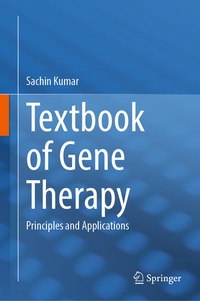
Textbook of Gene Therapy
Description

This textbook explores the revolutionary field of gene therapy, examining its potential to treat and cure a wide range of genetic and acquired diseases. It introduces key concepts in cellular and molecular biology relevant to gene therapy, including gene transfer methods, genome editing, and nucleic acid-based vaccines. Special attention is given to the clinical relevance and practical applications of these technologies.
The chapters cover topics such as the design and use of viral and non-viral vectors, genome editing tools like CRISPR, transgenic animal models, and therapeutic strategies for hereditary and non-hereditary conditions, including cancer. It provides case studies of groundbreaking therapies that have reached clinical trials and highlights the successes and challenges faced by researchers and healthcare professionals in this rapidly evolving field. Additionally, the book addresses the regulatory landscape and future implications of gene therapy for personalized medicine.
This textbook is designed for undergraduate and postgraduate students in biotechnology, molecular biology, and medical sciences, as well as healthcare professionals and researchers working in biomedical fields. It is also valuable for policy advisors and readers interested in understanding the future of precision medicine and therapeutic innovation.
More details
Other editions
Additional editions
Person
Dr. Sachin Kumar is a Professor in the Department of Biosciences and Bioengineering at the Indian Institute of Technology Guwahati. He earned a Ph.D. in Molecular Virology from the University of Maryland, USA, and a Master's degree in Veterinary Science from the Indian Veterinary Research Institute. His research focuses on viral vaccines and diagnostics. He is a member of scientific societies such as the National Academy of Sciences, the American Society for Microbiology, and the American Society for Virology. He has received awards including the Indian Association for the Advancement of Veterinary Research Excellence Award (2019), the NASI SCOPUS Young Scientist Award (2016), the Young Scientist Research Award (2012), and the Richard B. Rimler Memorial Paper Award. He has published over 180 scientific papers and holds ten patents.
Content
Chapter 1: Introduction of Gene therapy.- Chapter 2: Different types of gene therapy.- Chapter 3: Viral Vectors.- Chapter 4: Non-viral vectors.- Chapter 5: Nucleic acid Vaccines.- Chapter 6: Genome editing tools.- Chapter 7: Transgenic animal models.- Chapter 8: Gene therapy against hereditary diseases.- Chapter 9: Gene therapy against non-hereditary diseases.- Chapter 10: Cancer gene therapy.- Chapter 11: Recent advancements in gene therapy.- Chapter 12: Ethical issues in gene therapy.
