

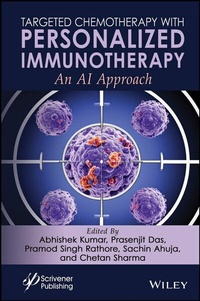
Targeted Chemotherapy with Personalized Immunotherapy
Description

Targeted Chemotherapy with Personalized Immunotherapy: An AI Approach is an essential guide for healthcare teams, offering groundbreaking insights into novel immunotherapies and personalized treatments to improve cancer patient care and quality of life.
In the last 20 years, there have been significant leaps forward in the treatment of cancer. We now have a far better understanding of how our cells interact with one another, how cancer suppresses and hides from the immune system, and how to support the body in reacting to stop the spread of cancer. Nevertheless, there is still a great deal more to learn in this field. Researchers are working to develop methods that will help pinpoint the most effective treatment for patients. Through this research, they have discovered that, for certain patients, the best results may be reached by combining precisely targeted chemotherapy with personalized immunotherapy.
Instead of treating patients with medications that are detrimental to the body as a whole, researchers now aim to identify the molecules that play an essential part in the communication that takes place between cells. This study will help pave the way for the development of novel immunotherapies that will help the body in its fight against cancer. In order to accurately plan cancer treatment, participation from a number of different members of the healthcare team is essential. This book is a comprehensive guide for all members of this team, providing insights into groundbreaking new treatments to cure more patients and improve quality of life.
More details
Other editions
Additional editions
Persons
Abhishek Kumar, PhD is an associate professor and Assistant Director in the Computer Science and Engineering Department at Chandigarh University with over 11 years of experience. He has over 100 publications in reputed, national and international journals, books, and conferences. His research interests include artificial intelligence, renewable energy image processing, computer vision, data mining, and machine learning.
Prasenjit Das, PhD is a professor in the Department of Computer Science and Engineering at Chandigarh University with over 19 years of experience. He has published two books, over 20 research papers, and 25 patents, three of which have been granted. His research interests include data mining, machine learning, image processing, and natural language processing.
Pramod Singh Rathore, PhD is an Assistant Professor in the Department of Computer and Communication Engineering at Manipal University Jaipur with over 12 years of teaching experience. He has published over 85 papers in peer-reviewed national and international journals, books, and conferences. His research interests include networking, image processing, and machine learning.
Sachin Ahuja, PhD has an illustrious academic and research career, marked by numerous impactful contributions. An accomplished editor, he has contributed to numerous high-quality academic books and served as a guest editor for special issues in reputed international journals, showcasing his expertise in emerging research domains. Additionally, he has successfully led several funded projects in advanced areas, including artificial intelligence, machine learning, and data mining, driving innovation and practical solutions.
Chetan Sharma is the Program Manager at the upGrad Campus for upGradEducation Private Limited. He has published one book, over 40 research articles in national and international journals and conferences, and 30 patents, eight of which have been granted. His research interests include natural language processing, machine learning, and management.
Content
Foreword xxi
Preface xxiii
1 Assessing Predictive Accuracy: Model Validation in Cancer Diagnostics 1
M. Sudha, Arun Elias, G. Gurumoorthy, S. Rajalakshmi and S. K. Muthusundar
1.1 Introduction 2
1.1.1 Conventional Cancer Diagnosis 3
1.1.2 Machine Learning in Cancer Diagnosis 3
1.1.3 Types of Cancer in Focus 4
1.1.3.1 Breast Cancer 4
1.1.3.2 Lung Cancer 4
1.1.3.3 Skin Cancer 4
1.1.4 Objectives of Study 4
1.1.5 Study Scope 5
1.1.6 Performance Metrics 6
1.1.7 Limitations and Future Directions 6
1.2 Literature Review 7
1.3 Methodology 9
1.3.1 Data Acquisition 9
1.3.2 Data Preprocessing 10
1.3.2.1 Dealing with Missing Data 10
1.3.2.2 Normalization and Standardization 10
1.3.2.3 Feature Selection and Dimensionality Reduction 11
1.3.3 Machine Learning Models 11
1.3.3.1 Support Vector Machine (SVM) 11
1.3.3.2 Random Forest (RF) 12
1.3.3.3 k-Nearest Neighbors (k-NN) 12
1.3.3.4 Logistic Regression (LR) 12
1.3.3.5 Hyperparameter Tuning 13
1.3.4 Performance Metrics 13
1.4 Analysis of Results 14
1.4.1 The Overall Performance of Each Model on the Breast Cancer Dataset 14
1.4.2 Models' Performance for Lung Cancer Dataset 16
1.4.3 Model Performance on Skin Cancer Dataset 17
1.4.4 Analysis of Inter-Cancer Type Performance Comparison 18
1.5 Discussion of Results 19
1.6 Conclusion 20
References 21
2 Applying Transfer Learning to Accelerate Cancer Classification and Prediction 23
T. Ravi, Shashidhar Gurav, Nandhini, Vijayaraj and S. K. Muthusundar
2.1 Introduction 24
2.1.1 Background on Cancer Classification 24
2.1.2 Transfer Learning in Medical Imaging 25
2.1.3 Model Development 26
2.2 Literature Review 27
2.2.1 Application of Transfer Learning in Breast Cancer Diagnosis 27
2.3 Methodology 30
2.3.1 Introduction 30
2.3.2 Data Preparation 31
2.3.2.1 Data Source 31
2.3.2.2 Data Collection 31
2.3.2.3 Data Preprocessing 31
2.3.2.4 Normalization 31
2.3.2.5 Handling Missing Values 32
2.3.2.6 Feature Selection 32
2.3.2.7 Data Partitioning 32
2.3.3 Model Design 33
2.3.3.1 Transfer Learning Approach 33
2.3.4 Implementation Tools 35
2.4 Results 36
2.4.1 Data Distribution 36
2.4.2 Accuracy, Precision, Recall, and F1-Score 37
2.4.3 Confusion Matrix 37
2.4.4 ROC Curve Analysis 39
2.4.5 Comparison on Traditional Machine Learning Models 39
2.5 Discussion of Results 40
2.5.1 Model Strengths 40
2.5.2 Areas for Improvement 40
2.6 Conclusion 41
References 43
3 Artificial Intelligence in Cancer Screening: Innovations in Early Detection 45
Arun Elias, V. Vaithianathan, S.K. Rajesh Kanna, G.M. Raja and S.K. Muthusundar
3.1 Introduction 46
3.1.1 Background on Cancer Screening 46
3.1.2 Role of Artificial Intelligence 47
3.1.3 Research Methodology 47
3.1.4 AI in Medical Imaging 48
3.1.5 Challenges and Ethical Considerations 48
3.2 Literature Review 50
3.3 Methodology 53
3.3.1 Dataset Collection 53
3.3.2 Data Preprocessing 54
3.3.3 Architecture Model Design 55
3.3.4 Training and Validation 56
3.3.5 Metrics to Measure 57
3.4 Results 58
3.4.1 Model Performance Metrics 58
3.4.2 Confusion Matrix Analysis 59
3.4.3 Receiver Operating Characteristic Curve 60
3.4.4 Comparison with Existing Models 61
3.4.5 Error Analysis 62
3.5 Future Directions 62
3.6 Conclusion 63
References 64
4 Comprehensive Approaches to Survival Analysis and Prognostic Modeling in Cancer Research: Integrating Statistical Techniques, and Clinical Variables 67
B. Sriman, J. Maria Arockia Dass, R. Seetha and Ashish Kumar
4.1 Introduction 68
4.1.1 Objectives 70
4.2 Literature Review 71
4.3 Methodology 74
4.3.1 Collection and Preprocessing 75
4.3.2 Cox Proportional Hazards Model 76
4.3.3 Random Survival Forest (RSF) 76
4.3.4 DeepSurv: Neural Network-Based Survival Model 77
4.3.5 Model Evaluation and Comparison 78
4.4 Results 79
4.4.1 General Comparison of Ability 79
4.4.2 Results of Cox Proportional Hazards (CPH) Model 79
4.4.3 RSF Results 82
4.4.4 Results on DeepSurv 82
4.4.5 Model Comparison and Discussion 84
4.4.6 Impact on Personalized Medicine 86
4.5 Conclusion 86
References 87
5 Exploring Cancer Therapeutics: A Collection of Case Studies 89
L. Selvam, Annie Silviya S. H., Singaravelan M. and Ira Aditi
5.1 Introduction 90
5.1.1 Conventional Cancer Therapies: Limitations and Challenges 90
5.1.2 The New Era of Targeted Therapies 91
5.1.3 Immunotherapy 91
5.1.4 Case Study: Targeted Therapy in HER2-Positive Breast Cancer 92
5.1.5 Case Study: Immunotherapy in Advanced Melanoma 93
5.2 Literature Review 93
5.3 Methodology 96
5.3.1 Research Design 97
5.3.2 Patient Selection 97
5.3.2.1 Case Study: HER2-Positive Breast Cancer (Trastuzumab) 98
5.3.2.2 Advanced Melanoma Case Study (Pembrolizumab) 98
5.3.3 Treatment Protocols 98
5.3.3.1 Trastuzumab Protocol for HER2-Positive Breast Cancer 99
5.3.4 Data Collection 99
5.3.4.1 Clinical and Imaging Data 100
5.3.4.2 Immune and Genetic Markers 100
5.3.5 Statistical Analysis 100
5.4 Results 101
5.4.1 Tumor Response 101
5.4.2 Survival Analysis 103
5.4.3 Recurrence Rate and Disease Control 105
5.4.4 Immune-Related Adverse Events and Safety Profile 106
5.5 Conclusion 109
References 109
6 Predicting Cancer Outcomes Using Transfer Learning: Harnessing Pre-Trained Models and Cross-Domain Knowledge for Enhanced Prognosis and Personalized Treatment Strategies 111
R. Ramachandran, V. Vaissnave, Vijayaraj and S. K. Muthusundar
6.1 Introduction 112
6.1.1 Background 112
6.1.2 Objectives 113
6.2 Literature Review 114
6.3 Methodology 119
6.3.1 Data Collection 119
6.3.2 Preprocessing the Data 120
6.3.3 Modeling 121
6.3.4 Model Assessment 122
6.3.5 Implementation of the Integrated Model 122
6.4 Results 123
6.4.1 Model Performance Metrics 123
6.4.2 Baseline Model Comparisons 125
6.4.3 Feature Importance Analysis 125
6.4.4 Clinical Validation Results 127
6.5 Conclusion 128
References 129
7 Predicting Cancer Outcomes with RNNs: A Time Series Approach 133
M. Mahalakshmi, Annie Silviya S. H., Kumud Sachdeva and Rajan Sachdeva
7.1 Introduction 134
7.1.1 Background 134
7.1.2 Significance of Ensemble Learning 134
7.1.3 Objectives 135
7.1.4 Significance of the Study 136
7.2 Literature Review 136
7.3 Methodology 137
7.3.1 Objective 137
7.3.2 Data Collection 137
7.3.2.1 Dataset 137
7.3.3 Preprocessing 138
7.3.3.1 Data Drawing 138
7.3.3.2 Normalization Numerical Features 138
7.3.3.3 Point Selection 139
7.3.4 Feature Selection 139
7.3.5 Ensemble Learning Techniques 140
7.3.6 Model Evaluation Metrics 142
7.3.7 Cross-Validation 143
7.4 Results 143
7.4.1 Model Performance 143
7.5 Results 149
7.5.1 Cross-Validation Results 149
7.5.2 Model Comparison 149
7.6 Conclusion 151
References 151
8 AI in Cancer Screening and Early Detection 153
Priya Batta and Soumen Sardar
8.1 Introduction 153
8.2 Literature Review 157
8.3 Methodology 160
8.4 Results 162
8.5 Conclusion and Future Scope 163
References 164
9 Challenges and Limitations of AI in Oncology 167
Priya Batta
9.1 Introduction 167
9.2 Literature Review 170
9.3 Methodology 172
9.4 Results 174
9.5 Conclusion and Future Scope 174
References 175
10 Predictive Models for Cancer-Related Lymphedema: Enhancing Telerehabilitation and Physiotherapy Management 177
Madhusmita Jena, Charu Chhabra, Huma Parveen, Sahar Zaidi, Noor Fatima and Habiba Sundus
10.1 Introduction 178
10.1.1 Prevalence of Lymphedema 179
10.1.2 Diagnostic Technique for Lymphedema 180
10.1.3 Commonly Used Scales for Diagnosis of Lymphedema 181
10.2 Lymphedema's Impact on Cancer Survivors 181
10.3 Current Challenges in Lymphedema Management 182
10.4 Role of AI in Lymphedema Management 183
10.4.1 Customizing Physiotherapy Regimens Based on AI Predictions 184
10.4.2 Integrating Telerehabilitation for Effective Lymphedema Management 185
10.5 Conclusion 186
References 186
11 Role of AI in the Prediction of Leukemia and AI-Driven Predictive Models for Rehabilitation Outcomes in Acute Lymphoblastic Leukemia 189
Huma Parveen, Charu Chhabra, Sahar Zaidi, Noor Fatima, Madhusmita Jena and Amaan Ali Khan
11.1 Acute Lymphoblastic Leukemia 190
11.2 Importance of Early Prediction and Rehabilitation in ALL 191
11.3 Role of AI in Healthcare 193
11.4 AI in Leukemia Prediction 194
11.5 AI-Driven Predictive Rehabilitation Outcomes in ALL 196
11.6 Data Privacy and Security in Healthcare Models 199
11.7 Framework for Protecting Data Privacy 200
11.7.1 Acts and Policies 200
11.7.2 National Policies 200
11.7.3 AI Models-Based Privacy Protection 201
11.8 Ethical Concerns in AI Healthcare 202
References 203
12 Data Privacy and Ethical Challenges in AI-Driven Cancer Care 207
Firdaus Jawed, Rabia Aziz, Sumbul Ansari, Shahnawaz Anwar and Sohrab Ahmad Khan
12.1 Introduction to Data Privacy and Ethics in AI-Driven Cancer Care 208
12.2 Types of Sensitive Data in AI-Driven Cancer Care 209
12.3 Ethical Frameworks and Guidelines for Data Privacy 212
12.4 Data Security and Protection Techniques 214
12.5 Bias, Fairness, and Algorithmic Transparency in AI-Driven Cancer Care 216
12.6 Regulatory and Compliance Challenges 219
12.7 Emerging Technologies and Innovations in Privacy 221
12.8 Future Directions in Ethical AI for Cancer Care 222
12.9 Conclusions 224
References 224
13 Cancer Rehabilitation in the Era of Targeted Chemotherapy and Personalized Immunotherapy 229
Rabia Aziz, Firdaus Jawed, Sumbul Ansari, Shahnawaz Anwar and Sohrab Ahmad Khan
13.1 Evolving Landscape of Cancer Treatment 230
13.2 Importance of Cancer Rehabilitation 231
13.3 Integrating Rehabilitation Into AI-Powered Cancer Rehabilitation 232
13.3.1 The Role of Data in Rehabilitation 238
13.3.2 Machine Learning and Predictive Analytics 239
13.3.3 Real-Time Monitoring and Feedback 239
13.3.4 Outcomes Measurement and Continuous Improvement 240
13.3.5 The Rationale for Integration 241
13.3.6 Utilizing Biomarkers in Rehabilitation 241
13.3.7 Multidisciplinary Collaboration 242
13.3.8 Early Intervention Strategies 242
13.3.9 Leveraging Technology for Monitoring and Feedback 243
13.4 Leveraging Data Analytics and AI for Adaptive Rehabilitation 243
13.4.1 The Role of Data Analytics in Rehabilitation 244
13.4.2 AI-Driven Personalization of Rehabilitation Programs 244
13.4.3 Integration of Wearable Technology and Telehealth 245
13.4.4 Virtual Reality (VR) and Augmented Reality (AR) Applications 245
13.5 Tailoring Rehabilitation Strategies for Targeted Therapies 246
13.5.1 Understanding Targeted Therapies and Their Implications 246
13.5.2 Personalized Assessment and Planning 247
13.5.3 Integrating Evidence-Based Interventions 247
13.5.3.1 Physical Therapy 247
13.5.3.2 Occupational Therapy 248
13.5.3.3 Psychosocial Support 249
13.5.3.4 Nutritional Counseling 249
13.5.4 Utilizing Technology for Enhanced Rehabilitation 250
13.6 Future Directions and Emerging Trends 251
13.7 Summary 251
References 252
14 Role of AI in Cancer Screening and Its Detection 257
Muskan, Shweta Sharma, Parul Sharma, Manoj Malik and Jaspreet Kaur
14.1 Introduction 258
14.2 Cancer Mechanisms and Various Pathologies 258
14.3 Conventional Methods of Cancer Screening 260
14.3.1 Mammography 260
14.3.2 Ultrasound 262
14.3.3 Magnetic Resonance Imaging 262
14.3.4 Liquid Biopsies 262
14.3.5 Pap Smear (Papanicolaou Test) 263
14.3.6 Barium X-Ray (Barium Swallow or Enema) 263
14.3.7 Photoacoustic Tomography (PAT) 263
14.3.8 SPECT (Single-Photon Emission Computed Tomography) and PET (Positron Emission Tomography) 263
14.4 Overview of AI (Artificial Intelligence) in Cancer Detection 264
14.5 AI Applications in Cancer Screening Using Deep Learning and Machine Learning 266
14.5.1 AI Models for Breast Cancer 266
14.5.2 AI Models for Lung Cancer 266
14.5.3 AI Models for Skin Cancer 267
14.5.4 AI Models for Gastric Cancers 267
14.5.5 AI Models for Prostate Cancers 269
14.6 Challenges in AI Adoption for Cancer Screening 270
14.7 Proposed Strategies for AI Implementation for Cancer Detection 271
14.8 Conclusion 272
14.9 Future Directions 273
References 274
15 Automated 3D U-Net Framework for Brain Tumor Segmentation and Classification with Insights Into AI-Driven Cancer Research Applications 279
S. Usharani, P. Manju Bala, T. Ananth kumar and G. Glorindal Selvam
15.1 Introduction 280
15.2 Literature Review 283
15.2.1 Brain Tumor MRI Image Segmentation 283
15.2.1.1 Methods for Manual Segmentation 283
15.2.1.2 Methods for Partly-Automated Segmentation 283
15.2.1.3 Methods for Absolutely Automated Segmentation 284
15.2.2 Brain Tumor MRI Classification 285
15.3 Materials and Methods 290
15.3.1 Materials 290
15.3.2 Methods 291
15.3.2.1 System Model 291
15.3.2.2 Multi Scale Feature Extraction Network 293
15.3.2.3 Incremental Feature Improvement 294
15.3.2.4 Loss Function 295
15.4 Experimental Setup 296
15.4.1 Experimental Analysis 296
15.5 Conclusion 301
References 302
16 Early Prediction of Bone Cancer: Integrating Deep Learning Models 309
R. Dhinesh, T. Ananth kumar, P. Kanimozhi and Sunday Adeola Ajagbe
16.1 Introduction 310
16.2 Related Works 311
16.3 Proposed Methodology 313
16.4 Results and Discussion 318
16.5 Conclusion 321
References 322
17 Machine Learning Techniques for Predicting Epileptic Seizures: A Data-Driven Analysis Using EEG Signals 325
Preeti Narooka, Ankit Vishnoi and Jatin Verma
17.1 Introduction 326
17.1.1 Background 326
17.1.2 Objective 326
17.2 Literature Survey 327
17.2.1 Study 1: Feature Extraction Techniques in EEG-Based Seizure Detection 327
17.2.2 Study 2: Application of Deep Learning in Neurological Disorders 327
17.2.3 Study 3: Comparative Analysis of ML Algorithms 328
17.2.4 Study 4: Transfer Learning in EEG Analysis 328
17.2.5 Study 5: Real-Time Seizure Prediction Systems 328
17.2.6 Study 6: Explainable Artificial Intelligence in Seizure Detection 328
17.2.7 Study 7: Challenges in EEG-Based Seizure Detection 329
17.2.8 Study 8: Multimodal Learning Approaches 329
17.3 Methodology 329
17.3.1 Dataset 329
17.3.2 Preprocessing 330
17.3.3 Feature Extraction 330
17.3.4 Model Architecture 331
17.4 Results and Discussion 332
17.4.1 Model Performance 332
17.4.2 Discussion 333
17.4.3 Implications for Healthcare Applications 334
17.5 Conclusion 334
References 334
18 Transfer Learning in Cancer Research 337
Mamta and Nitin
18.1 Definition and Overview of Transfer Learning 338
18.1.1 Transfer Learning Typically Involves the Following Components 338
18.1.2 Importance of Transfer Learning in Cancer Research 339
18.1.3 Challenges in Traditional Cancer Research Approaches 341
18.2 How Transfer Learning Works 344
18.2.1 Types of Transfer Learning 345
18.2.2 Transductive Transfer Learning 346
18.3 Applications of Transfer Learning in Cancer Research 346
18.4 Challenges in Transfer Learning for Cancer 348
18.4.1 Data Scarcity and Domain Adaptation 348
18.4.2 Model Interpretability 349
18.5 Future Directions: Personalized Medicine and Drug Discovery 351
18.5.1 Personalized Medicine: Tailoring Treatment to the Individual 352
18.6 Drug Discovery: Accelerating the Path to New Therapies 353
18.7 Challenges and Ethical Considerations 354
18.8 Conclusion 354
References 355
19 Machine Learning Approaches for Early Detection of Cervical Cancer: A Comparative Study of Classification Models 359
Inam Ul Haq, Janvi Malhotra, Vanshika Rawat, Jyoti Kumari and Gagandeep Kaur
19.1 Introduction 360
19.2 Literature Review of Some Research Papers 364
19.3 Methodology 368
19.4 Results 369
19.5 Conclusion and Future Scope 370
References 370
20 Interactive Data Management for Cancer Care: Leveraging Electronic Health Records and Proteomic Data 375
M. Rohini, S. Oswalt Manoj, J. P. Ananth and D. Surendran
20.1 Introduction 376
20.1.1 Need of Electronic Health Record Maintenance 376
20.1.2 Message Passing Protocol for Cancer EHR Updates 377
20.1.3 Reliable Messaging for Critical Data 379
20.1.4 Microservice-Oriented Cancer Data Staging and Deployment 380
20.2 HER Data Processing 382
20.2.1 Staging Service 382
20.2.1.1 Autoscaling Based on Criticality of EHR System 382
20.2.2 Internal Working of the Staging Service 383
20.2.2.1 Validate and Fetch Dashboard Details 383
20.2.2.2 Execute Stored Procedure 385
20.2.2.3 High-Availability Deployment Phase 386
20.3 Conclusion 388
References 389
21 Artificial Intelligence-Driven Personalized Cancer Treatment 391
Gurwinder Singh, Sarthak Sharma and Aastha Anand
21.1 Introduction: The Dawn of Artificial Intelligence-Powered Cancer Screening 392
21.2 Role of AI in Cancer Screening 395
21.3 Role of AI in Early Detection 399
21.4 Case Studies and Real-World Implementation 401
21.5 Benefits and Opportunities 404
21.6 Conclusion 406
21.7 Future Scope 407
References 408
22 Revolutionizing Breast Cancer Detection: Emerging Trends and Future Technologies 411
Gurmeet Kaur Saini, Inderdeep Kaur and Kanwaldeep Kaur
22.1 Overview 412
22.2 Risk Assessment Types 413
22.3 Risk Elements 413
22.4 Risk Factors for Hormones and Reproduction 413
22.5 Additional Risk Factors 414
22.6 Risk of Breast Cancer Over Time 414
22.6.1 Risk Assessment by Family History 414
22.7 Models for Risk Estimate 415
22.7.1 The Gail Model 415
22.7.2 Claus-Mammary Carcinoma Risk Assessment Model 416
22.7.3 The BRCAPRO Model 418
22.7.4 Tools for Risk Calculation 418
22.8 Clinical Breast Imaging Techniques 418
22.8.1 Mammography 418
22.8.2 Ultrasonic 420
22.8.3 Magnetic Resonance Imaging 420
22.9 Measurement Systems and Techniques for Microwave Breast Imaging 421
22.9.1 Tomography Using Microwaves 421
22.9.2 Microwave Imaging Using Radar Technology 421
22.9.3 Breast Cancer Detection Using Biosensors 422
22.9.4 Use of Thermography to Find Breast Cancer 422
22.10 Discussion 423
22.11 Present Developments and Prospects for Breast Cancer Screening Methods 423
22.12 Conclusion 426
References 426
23 Future of Neurological Research: Leveraging Artificial Intelligence for Precision and Discovery 431
Hemlata and Utsav Krishan Murari
23.1 Introduction 431
23.2 AI in Neuroimaging: A Revolution in Neurological Research 435
23.3 Computational Neuroscience and Modeling: Transforming Understanding of Neural Mechanisms through AI 438
23.4 AI and BCIs: Transforming Accessibility and Real-Time Neural Interaction 441
23.5 Ethics in the Integration of AI Into Neurological Research 445
23.6 Conclusion 448
References 449
24 Cervical Cancer Detection Using Machine Learning 451
Saranya. A., S. Ravi, Harsha Latha. P., T. Kalaichelvi and A. Anbarasi
24.1 Introduction 452
24.1.1 Overview of Medical Image Analysis 454
24.2 ml Techniques for Cervical Cancer Diagnosis 459
24.2.1 ml Algorithms 459
24.2.2 Methodology of ML Classification of Images 460
24.2.3 Cervical Cancer Image Dataset 462
24.3 Related Work 462
24.3.1 Cervical Cancer Detection Using ml 463
24.4 Findings 466
24.5 Performance Metrics in ml 470
24.6 Conclusion 471
References 472
25 Deep Learning Techniques-Based Medical Image Segmentation in Cervical Cancer 477
Saranya. A., S. Ravi, Harsha Latha. P. and T. Kalaichelvi
25.1 Introduction 478
25.2 Motivation of Computer-Aided Diagnosis 480
25.3 History of DL in Medical Imaging 482
25.4 Deep Learning Application of Cervical Cancer 482
25.5 Cervical Cancer Detection Based on DL Techniques for Medical Image Segmentation 483
25.5.1 Deep Learning in Image Segmentation 483
25.5.2 Deep Learning in Classification Task 487
25.6 Frameworks Used in Detecting Cervical Cancer 488
25.6.1 Comparison Between DL Segmentation and Classification 489
25.7 Performance Metrics 494
25.8 Conclusion 495
References 495
Index 499
Preface
This book is organized into 25 chapters. Chapter 1 determines the validation of predictive accuracy for machine learning models on three unique cancer datasets: Breast Cancer, Lung Cancer, and Skin Cancer. The methodology involved in this paper is SVM and RF models with preprocessing of data wherein missing data imputation and feature scaling ensured optimal performance. Those models were evaluated in terms of the measures mentioned above: accuracy, precision, recall, F1 score, and ROC-AUC.
In Chapter 2, transfer learning is used for the classification and prediction of cancer, leveraging the knowledge of the pre-trained InceptionV3 model. After using the Cancer Genome Atlas (TCGA) dataset to extensively preprocess the data and select features in an effort to get ready the data for analysis, the model was adapted to provide a new classification layer so it could be applied to a variety of cancer types.
In Chapter 3, a novel application of AI technology for the early detection of cancer screening is discussed, especially using advanced image-classifying techniques and early detection in images. A complete dataset consisting of different types of medical images of cancers was carefully collected and preprocessed for increasing performance through a CNN that uses transfer learning via a pre-trained VGG16 model. In addition to this, the corresponding accuracy of 88.3% was observed for the test set, with precision and recall rates as high as 86.7% and 85.9%, respectively.
Chapter 4 contributes to a much more holistic approach by integrating the traditional statistical method with more advanced ML algorithms to improve the prediction of survival outcomes. Using clinical variables, genetic data, and history of treatment from The Cancer Genome Atlas (TCGA), we build three models with Cox Proportional Hazards (CPH), Random Survival Forests (RSF), and DeepSurv, the survival model based on a neural network.
Chapter 5 explores the impact of targeted therapies and immunotherapies in cancer treatment, presenting two case studies that analyze the clinical efficacy of these modern therapeutic approaches. The first case study evaluates the use of trastuzumab, a HER2-targeted monoclonal antibody, in HER2-positive breast cancer patients. Results demonstrated a significant improvement in tumor reduction, overall survival, and lower recurrence rates compared to standard chemotherapy. The second case study focuses on the efficacy of pembrolizumab, an immune checkpoint inhibitor, in advanced melanoma patients.
In Chapter 6, we discuss how transfer learning may be applied in terms of cross-domain, pre-trained models to enhance the predictions of cancer outcomes. We used a diverse pool of data from multiple clinical, genomic, and imaging sources for various cancer types. We used the latest models like ResNet50, InceptionV3, and BERT and adopted a transfer learning strategy to fine-tune them for specific prognostic tasks.
In Chapter 7, this chapter propose a new RNN-grounded frame that incorporates clinical, genomic, and imaging data to enhance vaticination delicacy and give precious perceptivity for individualized treatment planning. Clinical data, similar as patient demographics, medical history, and laboratory results, offer a comprehensive overview of the case's overall health and complaint status. Genomic data, including gene expression biographies and inheritable mutations, give perceptivity into the underpinning natural mechanisms of cancer development and progression. Imaging data, similar to X-rays, CT reviews, and MRIs, offer visual information about the excrescence's size, position, and morphological features.
Chapter 8 shows that AI technology in Cancer Screening, with its improved accuracy and early detection capabilities, has completely changed the diagnostic procedure. With the advancement in genetic data analysis, Deep Learning, and Image Recognition algorithms have extended the treatment plans for individual and also has improved accuracy dramatically in the last ten years. Risk analysis and risk assessments are made possible by integrating AI with Electronic Health Records.
Chapter 9 analyzes the development of Artificial Intelligence (AI) in oncology, illustrating its role in the diagnosis of cancer, cancer treatment planning, and advanced patient care. Despite these interesting advancements, AI faces various limitations such as data quality issues, bias, integration challenges, and regulatory and ethical concerns. Addressing these issues requires an approach that integrates technological developments with strategic actions to ensure the AI effectiveness in oncology.
In Chapter 10, lymphedema is defined as a disorder in which there is a disproportionate buildup of protein-rich fluid in the body due to issues within the lymphatic system that significantly affect the quality of life (QOL), leading to problems such as pain, swelling in the upper or lower limb, and a feeling of heaviness in the limbs. Breast tumors are the leading cause of secondary lymphedema in patients given their high prevalence. Additionally, approximately one in six individuals with a history of melanoma, sarcoma, or gynecologic and genitourinary cancers may experience lymphedema.
In Chapter 11, the user explains the process of acute lymphoblastic leukemia (ALL), which is common in children and frequently has a favorable prognosis, primarily affecting leukocytes. These tumors develop from stem cells that impair the immune system by interfering with the normal synthesis of blood cells. Although the etiopathogenesis of this disease is complicated and involves both genetic and environmental factors, it is not well understood. Studies show that these patients are 1.9 times more likely to experience functional limitations and 8.5 times more likely to experience musculoskeletal problems.
Chapter 12 shows that the integration of artificial intelligence (AI) in oncology has transformed cancer care, offering personalized treatment pathways, improved diagnostics, and advanced predictive modelling. However, these advancements have significant data privacy and ethical challenges that must be addressed to ensure patient trust, regulatory compliance, and the equitable application of AI-driven solutions. This chapter examines core privacy issues associated with handling sensitive patient data, including genomic, clinical, and personal information.
Chapter 13 covers the evolving background of cancer treatment such as chemotherapies and personalized immunotherapies using advances in genomics, proteomics, and artificial intelligence, providing insights into the effects of rehabilitation on side effects and functional impairments caused by cancer therapies, thereby improving the quality of life and longterm outcomes. This chapter will cover the evolving background of cancer treatment, such as chemotherapies and personalized immunotherapies, using advances in genomics, proteomics, and artificial intelligence, providing insights into the effects of rehabilitation on the side effects and functional impairments caused by cancer therapies, thereby improving quality of life and long-term outcomes.
In Chapter 14, the potential to significantly enhance the precision, effectiveness, and personalization of oncological care, artificial intelligence (AI) is an unprecedented advancement in cancer screening and detection. Although effective, traditional cancer detection methods frequently rely on static, standardized protocols that may fail to recognize subtle or unusual signs of cancer. Artificial intelligence (AI), particularly through machine learning (ML) and deep learning (DL) approaches, bypasses these constraints by employing large multimodal datasets to recognize intricate trends and offer insights that are invisible to the human eye.
Chapter 15 introduces a distinctive multi-task deep learning model that delineates and categorizes tumors in 3D-ABM images. The architecture employed in this context comprises two distinct networks: a recurrent neural network that performs up- and down-sampling for segmentation, and a multi-scale feature extraction network that is efficient and uncomplicated for classification. Our approach utilizes an iterative training process to enhance the feature maps by incorporating probabilistic maps obtained from earlier rounds. This enables the accurate identification of tumors with ambiguous boundaries in 3D-ABM images. The empirical findings suggest that a multitask deep learning model outperforms single-task learning models in both tumor segmentation and classification.
Chapter 16 discusses bone cancer as a severe and uncommon illness; thus, early detection significantly enhances patient survival rates and recovery outcomes. This project presents an enhanced deep learning model utilizing CNN-EfficientNet B0 for early prediction and detection of bone cancer via medical imaging. The proposed method addresses image preprocessing, feature extraction, and classification techniques in relation to data augmentation to enhance the robustness. Preprocessing occurs during the loading phase, which involves minimal image preparation for analysis. This dataset is divided into training, validation, and testing sets subsequent to the advanced feature extraction technique that identifies pertinent patterns.
Chapter 17 explains the purpose of epileptic seizures, which are neurological disorders characterized by abnormal brain activity, significantly affecting patients' quality of life. Rapid and precise detection of the beginning of seizures is necessary for successful intervention and management of seizures. Using...
