

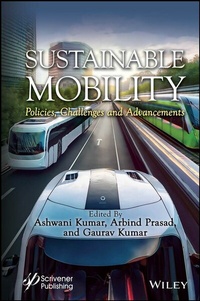
Sustainable Mobility
Description

This book is essential for anyone interested in understanding and implementing sustainable transportation practices, as it provides comprehensive insights into the challenges, advancements, and policies related to sustainable mobility.
Sustainable transportation refers to any means of transportation that is "green" and has a low impact on the environment. The goal of sustainable transportation is to balance our current and future needs. As per the United Nations Brundtland Commission (WCED, 1987), sustainable mobility can be defined as "mobility that satisfies the needs of present generations without compromising future generations", but in the modern era, we are compromising the needs of the next generation in terms of pollution, depletion of fossil fuels, global warming, poor air quality, and hazardous gases. The three main pillars of sustainability, economics, environment, and social issues, are crushed by modern development, so there is a need to shift from traditional means of transportation to sustainable transportation.
Under the vision of sustainable mobility, better infrastructure and services will be provided to support the movement of goods and people. This outcome will be achieved only if four goals are pursued simultaneously: developing the right policy, building awareness, developing intelligent transportation, and creating green vehicles. Sustainable Mobility: Policies, Challenges and Advancements will discuss transitions from conventional to sustainable mobility, infrastructure development challenges in this transition period, new vehicle policies, and the latest autonomous vehicles for intelligent transportation. The main highlights of the book are energy efficient technologies for transportation, accessibility and safety of the transport system, environmental footprint, health impacts, economic development, and social growth. Sustainable mobility is essential to economic and social development.
The environmental impacts of transport can be reduced by reducing the weight of vehicles, creating sustainable styles of driving, reducing the friction of tires, encouraging electric and hybrid vehicles, improving the walking and cycling environment in cities, and enhancing the role of public transport, especially electric vehicles. Going green and sustainable is not only beneficial for the company, but it also maximizes the benefits of an environmental focus in the long term.
More details
Other editions
Additional editions
Persons
Ashwani Kumar, PhD, is a senior lecturer teaching Mechanical Engineering in the Technical Education Department, Uttar Pradesh, India. He has 12 years of research and academic experience in mechanical and materials engineering. Additionally, he has published 90 research articles in various journals, book chapters, and conferences and has authored, co-authored, or edited 16 books. He has participated as an invited speaker and served on the advisory and review boards for various international conferences, webinars, and workshops.
Arbind Prasad, PhD, is an assistant professor and department head in the Department of Science and Technology, Katihar Engineering College, Katihar, Bihar, India. He has filed four patents, as well as written ten international journal papers and edited four books, 11 book chapters, and 15 reputed conference papers. He has been invited to deliver talks at various organizations of repute and coordinated various faculty development programs, short term courses, symposiums, national seminars, workshops, and completed research projects sponsored by various government organizations in India.
Gaurav Kumar, PhD, is an assistant professor and department head in the Department of Mechatronics Engineering, Indian Institute of Information Technology, Bhagalpur, India. His current research interests include electric vehicles, rotor dynamics, and vibration analysis of electrical machines, particularly active magnetic bearings, induction machines, and switched reluctance motors. He has filed three Indian patents and published eight peer-reviewed journals and nine conference articles.
Content
Aim and Scope xv
Preface xvii
Acknowledgement xxi
1 Sustainable Mobility: Clean Energy Integration with Electric Vehicle Technology 1
Pranjal Barman, Lachit Dutta, Sushanta Bordoloi, Manash Pratim Sarma, Anamika Kalita, Swapna Bharali and Brian Azzopardi
1.1 Introduction 2
1.2 Transportation and Carbon Emission 3
1.3 Transportation Electrification 4
1.4 Electric Vehicle Integration with Renewable Sources 9
1.5 Solar Energy 12
1.6 Wind Energy 13
1.7 Integration with the Grid 15
1.8 State-of-the-Art Methods 17
1.9 Opportunities and Challenges 22
1.10 Conclusion 22
Acknowledgement 23
References 23
2 Sustainable Mobility Policies in Developed and Developing Countries 29
Reetu Gour and Nikki Baliyan
2.1 Introduction 29
2.2 Pollution by Air and Effect of Greenhouse Gases 31
2.3 Promotion of Cycling and Walking 32
2.4 Sustainable Trade and Global Governance 34
2.4.1 Socioeconomic Impacts 35
2.4.2 Technology Aspects 36
2.4.3 Role of Smart Connectivity in Sustainable Mobility 36
2.5 Discussion 37
2.6 Conclusion 38
References 39
3 Transitions from IC Engine to EV and HEV: Current Status of EV in India 45
Puneet Kumar and Apurva Goyal
3.1 Introduction 46
3.2 Changing Electric Vehicles Trend 47
3.3 Case Study: Maruti Suzuki and EV Market 49
3.4 Numerous Downsides to Electric Cars 50
3.4.1 Ultra Expensive 50
3.4.2 Transport Not a Considerable Contributor to Emissions 51
3.4.3 Batteries as the Major Emitter 52
3.4.4 Need of Societal Change 52
3.5 Zero Emissions is a Myth 52
3.6 Prolonged Charging Time 52
3.7 Carbon Footprints 53
3.8 Degrading Battery Performance from Fast Charging 53
3.9 Underdeveloped Charging Infrastructure 54
3.10 Impractical for Inner-City Inhabitants and Lack of Resale Value 54
3.11 Reasons Behind Slow Adoption of Electric Vehicles in India 56
3.12 Conclusion 57
References 57
4 Alternative Source Systems of In-Vehicle Electricity Production 61
Dinesh Kumar Patel, Sachin Kumar, Vipin Kumar Sharma, Hari Om Sharma and Arbind Prasad
4.1 Introduction 62
4.2 Electric Vehicles (EVs) 63
4.3 Passenger Electric Vehicle 64
4.3.1 Plug-In Battery Electric Vehicle (PBEV) 65
4.3.2 Plug-In Hybrid Electric Vehicle (PHEV) 65
4.3.3 Hybrid Electric Vehicles (HEV) 65
4.3.4 Commercial Electric Vehicle 66
4.3.4.1 Plug-In Battery Electric Vehicles 66
4.3.4.2 Plug-In Hybrid Electric Vehicles 67
4.3.4.3 Hydraulic Hybrid Electric Vehicle 68
4.4 Integration of Different Renewable Energy Resources with Power System of In-Vehicle Electricity Production 68
4.4.1 Fuel Cell Electric Vehicles (FCEVs) 68
4.4.2 Electric Vehicle Integration with Wind Energy 68
4.4.3 Electric Vehicle Integration with Solar Energy 69
4.4.4 Distribution Grid Management with Electrical Network 70
4.5 Factors Affecting Adoption of Alternative Fuel Vehicles 71
4.6 Conclusion on Market Penetration of Alternative Fuel Vehicles 71
References 72
5 Autonomous Navigation of Unmanned Aerial Vehicle Using Reinforcement Learning 79
Payal Bansal, Jyotsna Joshi, Surender Hans and Ashwani Kumar
5.1 Introduction 80
5.2 Literature Review 80
5.3 Technology Used 81
5.3.1 System Architecture Overview 81
5.3.2 Reinforcement Learning and Control 82
5.3.3 Elements of Reinforcement Learning 83
5.4 Markov Decision Process (MDP) 83
5.4.1 Value Function and Action-Value Function 84
5.4.2 Q-Learning Algorithm 85
5.4.3 SARSA Algorithm 88
5.4.4 Robot Operating System (ROS) 89
5.5 Implementation: Flow of the Project Flow 90
5.6 Controller Design of Unmanned Aerial Vehicle (UAV) 92
5.6.1 Controller Design 93
5.6.2 Training Procedure of UAV 94
5.7 Results and Discussion 95
5.7.1 Experimental Results 96
5.8 Conclusion and Future Scope 98
References 99
6 IoT-Based Automatic Vehicle Accident & Rash Driving Alert System 105
Payal Bansal
6.1 Introduction 106
6.2 Problem and Necessity 107
6.3 Need for the System 108
6.3.1 IoT Architecture 108
6.3.2 Sonar Sensor 111
6.3.3 Data Processing and Analysis 113
6.4 User Interface and Reporting 115
6.4.1 Results and Impact 116
6.4.2 Challenges and Limitations 117
6.4.3 Future Enhancements 119
6.4.4 Architectural Design of the Work 120
6.6 Implementation: Tools for Controlling & Processing 123
6.7 Hardware Setup 124
6.7.1 Result 126
6.7.2 Conclusion 128
6.8 Applications 128
Bibliography 129
7 Mobile Edge Communication, Computing and Caching (MEC3) in Vehicle Communication 131
Payal Bansal
7.1 Introduction to MEC3 in Vehicle Communication 132
7.2 What is Mobile EDGE? 132
7.2.1 Advantages of Mobile EDGE Computing 133
7.3 Mobile Edge Communication (MEC) 133
7.3.1 How We Can Use MEC 134
7.3.2 Opportunities in Mobile Edge Computing 135
7.3.3 Challenges of Mobile Edge Computing 136
7.3.4 Mobile Edge Computing Uses 136
7.3.5 Multi-Access vs. Mobile Edge Computing 137
7.3.6 Mobile Edge Computing Importance 138
7.4 Mobile Edge Caching 139
7.4.1 The Architecture of Mobile Edge Caching 139
7.5 Technology Description 141
7.5.1 Advantages and Disadvantages of MEC 3 143
7.6 Applications of MEC 3 144
7.7 Conclusion 145
Bibliography 145
8 IoT-Based Automatic Vehicle Tracking and Accident Alert System 149
Priyanshu Gupta, Parth Tripathi, Pallavie Tyagi and Sanjay Kumar Singh
8.1 Introduction 150
8.2 Literature Review 151
8.3 Methodology 152
8.4 Programming Code 154
8.5 Results and Discussion 156
8.6 Conclusion and Future Scope 157
Bibliography 157
9 Interfacing of GPS and GSM with the Help of NodeMCU for Vehicle Monitoring and Tracking 159
Sandesh Singh, Ajay Suri, Vaibhav Patel, Ujjwal Shukla and Harshita Sisodia
9.1 Introduction 160
9.2 Problem Statement 161
9.3 Literature Review 162
9.4 Monitoring and Tracking of Vehicles 163
9.5 Result and Discussion 168
9.6 Conclusion 168
References 171
10 A Comprehensive Analysis of Cell Balancing in BMS for Electric Vehicle 173
Rahul Sarker, Subir Datta, Ksh. Robert Singh and Apurba Kr. Das
10.1 Introduction 174
10.2 Cell Balancing Methods 175
10.2.1 Passive Cell Balancing 175
10.2.1.1 Proposed Block Diagram of Passive Cell Balancing 176
10.2.2 Active Cell Balancing 178
10.3 Proposed Topology 181
10.3.1 Working Modes for Two Cells 182
10.3.2 Algorithm for Two Cells Balancing 183
10.3.2.1 Block Diagram of Proposed Active Cell Balancing for Two Cell 184
10.3.3 SOC-Voltage-Based Inductive Buck Boost Active Cell Balancing 185
10.4 Conclusion 190
References 190
11 Analyzing and Testing of Fuel Cell Hybrid Electric Vehicles 193
Shrey Agrawal, Raghav Gupta and Manoj Sindhwani
11.1 Introduction 194
11.2 Battery Management System 195
11.2.1 Classification 196
11.2.2 Challenges of Fuel Cell Hybrid Electric Vehicles 199
11.3 System Setup 199
11.3.1 Block Diagram 199
11.3.2 Components 199
11.3.3 System Methodology 201
11.4 Simulations 202
11.4.1 Efficiency and Continuous Torque Capability 202
11.4.2 National Renewable Energy Laboratory (NREL) 202
11.4.3 Output Graphs 203
11.5 Conclusion 205
References 206
12 Cyberattacks, Threats and Challenges of Cybersecurity: An Outline 207
Tanishq Soni, Deepali Gupta, Ramneet Kaur, Avinash Sharma and Gifty Gupta
12.1 Introduction 208
12.2 Background Work 209
12.3 Security Properties and CIA Triad 212
12.3.1 Confidentiality 212
12.3.2 Integrity 212
12.3.3 Availability 213
12.4 Types of Cyber Threats 213
12.4.1 Cybercrime 213
12.4.2 Cyber Terrorism 213
12.4.3 Cyber Warfare 214
12.5 Types of Cyberattacks 214
12.5.1 Denial of Service 214
12.5.2 Trojan Horse 214
12.5.3 Malware 215
12.5.4 SQL Injection Attack 215
12.5.5 Man-in-the-Middle 216
12.5.6 Reconnaissance Attack 216
12.6 Challenges in Cybersecurity 216
12.6.1 Cybersecurity Challenges in Education 216
12.6.2 Cybersecurity Challenges in Smart Grid 216
12.6.3 Cybersecurity Challenges in IoT and Cloud Computing 217
12.6.4 Cybersecurity Challenges in Connected Home Ecosystem 217
12.7 Bibliometric Analysis and Discussion 217
12.8 Conclusion 220
References 220
13 Opportunities and Challenges of Data-Driven Cybersecurity for Smart Cities: Blockchain-Driven Approach 223
Tanishq Soni, Ramneet Kaur, Deepali Gupta, Avinash Sharma and Gifty Gupta
13.1 Introduction 224
13.2 Background Work 227
13.3 Attacks on the Layers of IoT-Enabled Smart City 229
13.4 Issues and Challenges in Smart Cities 231
13.5 Blockchain and its Types 232
13.6 Smart City Issues with Blockchain 233
13.7 Conclusion 234
References 235
14 On Renewable Energy Source Selection Problem Using T-Spherical Fuzzy Soft Dombi Aggregation Operators 237
Mohit Pal, Himanshu Dhumras, Gaurav Garg and Varun Shukla
14.1 Introduction 238
14.2 Preliminaries 240
14.3 T-Spherical Fuzzy Soft Dombi Aggregation Operators 241
14.4 Application of T-Spherical Fuzzy Soft Dombi Aggregation Operators in Renewable Energy Source Selection 246
14.5 Conclusion and Scope for Future Work 251
References 251
15 Detection of Weather with Hypothesis Testing Performed Through VGG19 Model Utilizing Adam Optimizer 255
Kanwarpartap Singh Gill, Avinash Sharma, Vatsala Anand and Rupesh Gupta
15.1 Introduction 256
15.2 Literature 258
15.3 Input Dataset 261
15.4 Data Validation 262
15.5 Weather Classification Using VGG19 Model 263
15.6 Results 264
15.6.1 Weather Classification Using VGG19 Model on Adam Optimizer 264
15.6.2 Classification Output of Dataset Parameters After Model Optimization 265
15.6.3 Confusion Matrix Comparison of Dataset Parameters 266
15.7 Conclusion 267
References 268
16 Enhanced Ride-Through Capability of a Hybrid Microgrid Under Symmetric and Asymmetric Faults 271
Asis Kumar Mallick, Ullash Kumar Rout, Ajit Kumar Barisal and P. K. Satpathy
16.1 Introduction 272
16.2 Design of the Hybrid Microgrid 272
16.2.1 AC Bus Faults - LG, LL, LLG, LLLG, LLL 273
16.2.2 dc Bus Faults: Pole to Ground, Pole to Ground and Pole to Pole Fault 273
16.3 HMG Inverter Control 274
16.3.1 Problem Formulation 274
16.4 Grid-Tied Inverter Control 277
16.5 Fault Analysis 278
16.5.1 LG Fault (A-G) 280
16.6 LLG Fault (A-B-G) 282
16.7 LL Fault (A-B) 283
16.8 LLL and LLLG Faults 284
16.9 dc Bus Fault 287
16.10 Conclusion 288
Acknowledgements 288
References 288
About the Editors 291
Index 293
1
Sustainable Mobility: Clean Energy Integration with Electric Vehicle Technology
Pranjal Barman1*, Lachit Dutta2, Sushanta Bordoloi3, Manash Pratim Sarma2, Anamika Kalita4, Swapna Bharali4 and Brian Azzopardi5
1Indian Institute of Technology Guwahati-TIDF Division, Amingaon, Guwahati, Assam, India
2Department of Electronics and Communication Engineering, Guwahati University, Guwahati, Assam, India
3Department of Electronics and Communication Engineering, National Institute of Technology Mizoram, Chaltlang, Aizawl, Mizoram, India
4Physical Sciences Division, Institute of Advance Study in Science and Technology, Guwahati, Assam, India
5MCAST Energy Research Group, Institute of Engineering and Transport, Malta College of Arts, Science and Technology (MCAST), PLA, Paola, Malta
Abstract
With the escalating power crisis, burgeoning environmental awareness and harmful effects of climate change, several automotive industries are leading the way towards developing eco-friendly vehicular technologies that can curtail the carbon footprint. As a fruitful outcome, the research on pollution-free vehicle technology has taken on an unprecedented pace in academia and industry to accomplish these demands worldwide. This demand shifted from using conventional crude oil energy sources to alternative renewable power sources like solar photovoltaic, wind energy, bio-energies, etc. Moreover, a needed transition is indispensable with the emerging demand for viable clean energy technology. Furthermore, it is found that more than 14% of global greenhouse gas emission is from the transportation sector itself. Therefore, electrification of transportation and its integration with renewable resources opens up new possibilities to expand the research in several new directions. This paper discusses various opportunities to integrate Electric Vehicle technology with available renewable energy sources, its challenges, and the state-of-the-art methods available in the literature. More specifically, the article analyses the feasibility of Electric Vehicle technology and its integration with renewable resources to develop sustainable mobility.
Keywords: Electric vehicle, renewable resource, sustainable mobility, transportation
1.1 Introduction
With the continuous growth and development of countries in terms of infrastructure, automation, transportation and technology, an extensive quantity of harmful emissions is disseminated into the environment. Apart from the industrial pollutants, road transportation is also a significant contributor to greenhouse gas emissions that leads to global warming and climate change [1-5]. According to recent surveys, the transportation sector alone accounts for 25% of CO2 emission in European nations [6, 7]. In the United States, the figure is 32% [8]. The energy consumed in the transportation sector mostly comes from fossil fuel-based products. Consequently, the growing concern for environmental safety impacted the government's policies for implementing low carbon measure resources [9]. This concern also led to massive capital investment in vehicular technology research and development. Several automotive industries are taking initiatives to manufacture eco-friendly vehicles, which may fulfill the requirements worldwide. These initiatives resulted in the deployment of intelligent transportation systems, advanced vehicular engineering and the utilization of alternative energy sources. The main objective behind using alternative sources is to enhance the decarbonization of the entire sector to achieve sustainable mobility [9].
Over the years, many research works have been devoted to adopting alternate fuel sources to reduce harmful emissions. The adoption of renewable resources as the primary energy source is one such measure. A significant concern is a power source that can replace Internal Combustion Engine-based Vehicles (ICEV) that use fossil fuel as a primary energy source. The technological shift towards Electric Vehicles (EVs) is booming in order to reduce the burden of emissions of ICEVs. Consequently, most developed nations have undertaken effective measures to curb the production of ICEVs and make a complete transition toward EVs [10]. All over the world, countries are adopting policies that encourage manufacturers to use alternative sources of power such as hydrogen, synthetic fuels, solar energy, bio-fuels, and, most preferably, lithium-ion batteries.
In the past decade, EVs have been gaining wide attention, mainly due to their negligible emission. However, the high penetration of EVs in transportation also creates an unprecedented rise in electricity demand, to be met by the power grid. With the ever-increasing EVs, there is a rise in the construction of charging stations, which on the other hand, might result in overloading the grid. Further, there is a wide variation in the total number of vehicles charging at any particular instant. This uncontrolled charge behavior creates a more significant strain on the power grid and will eventually damage the grid [11]. Precise charge management can be achieved by dint of strategic placement of the existing EV power stations, and a planned network for future charging stations [12, 13]. However, the continuous rise in the number of EVs and the sizeable geographical expansion of urban cities make it difficult for a single aggregator to optimize the scheduling process. Therefore, to achieve sustainable mobility, integrating renewable energy with technology could be considered an emerging movement in the modern-day transportation system. However, there is a gap in the existing literature about the integration of EVs with renewable resources and the charging infrastructure. Therefore, in this article, we try to bridge the gap by providing a systematic investigation of the EVs integrated with various promising renewable resources for sustainable mobility to reduce air pollution due to road transportation.
1.2 Transportation and Carbon Emission
The fundamental criteria of a sustainable transport ecosystem should be convenient, affordable, accessible, reliable and safe [14]. Transportation is key to the economic development of a country. It continuously grows with the advancement of urbanization and the ever-growing service sector. A country with a population as large as 1.3 billion provides tremendous market access around the globe. However, the penetrations of the vehicle are yet not mature, which is around 30 per 1,000 people [15]. Over the next few years, Indian mobility market share may become significant in the global market. The predominant commercial vehicle base in India is ICE technology [16]. Despite the advancement of fuel-efficient and cleaner vehicles, the government has adopted strict emission norms for the incremental improvement of environmental safety. In European nations, a significant one-fifth of the total CO2 emission is contributed by road transportation alone. Light-duty vehicles generate 15% of emissions, whereas heavy-duty vehicles account for 25% of the emission. These nations have planned to regulate the greenhouse gas concentration of vehicle fuels and initiated a transition towards transportation electrification [17, 18]. Germany also faced a similar threat from the transportation sector. As per the report obtained from the Federal Republic of Germany, the proportion of CO2 emissions is not less than 20%. Germany promoted electric mobility for diverse reasons [19]. Another country, Malta, has formulated a holistic approach to reach these objectives [20]. Furthermore, the continuous depletion of fossil fuel makes it more expensive. Moreover, by considering air pollution as the biggest concern, the electrification of the transport sector can improve environmental safety and establish sustainable mobility soon.
1.3 Transportation Electrification
The growth of the transportation industry has a crucial role in accelerating the socioeconomic growth of the world. Presently, ICEVs come up with a wide variety of models ranging from small-size personal cars to heavy-duty vehicles [21]. The modern ICEVs have emerged with excellent performance at a reasonable price range, making them the most attractive consumer product. As per the existing literature the efficiency of the combustion process to mechanical energy conversion is about 30% [22]. The combustion process's effect is even worse as it releases the exhaust gases, primarily carbon dioxide, nitrogen oxides, hydrocarbons, and carbon monoxide. Carbon dioxide is the main gas responsible for the greenhouse effect and some other adverse effects on the environment. Furthermore, the distribution of engine noise is another issue for ICEVs in big cities [23]. The biggest issue above all is the continuous depletion of fossil fuels of the limited reserve in the world. Therefore, unlike combustion engines, electric motors could perform much better in the propulsion of vehicles. The electric motors convert electrical energy into mechanical energy. Consequently, this also resolves the issues of harmful gas emission and noise problems that ICEVs create. Electric vehicles emerged into public transport as early as the mid-19th century, even before gasoline-powered vehicles. More than 38% of commercial automobiles were electric-powered [22]. However, the invention of the starter motor, advancement of gas-powered vehicle manufacturing, and inconvenient battery...
