

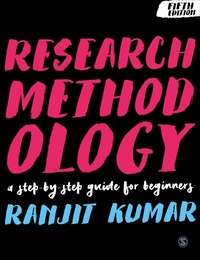
Research Methodology
A Step-by-Step Guide for Beginners
5th Edition
Published on 10. December 2018
528 pages
978-1-5264-5710-3 (ISBN)
Description

Designed with students, for students
Eight steps, two pathways, one book. The Fifth Edition of the bestseller Research Methodology has reimagined, redesigned, and fully renovated how a textbook can help students achieve success in their methods course or research project.
Eight steps: Foolproof for any beginner researcher, the book breaks the process of designing and doing a research project into achievable stages. It delivers students from research problem to their written research report at the pace they need, with clear explanations, DIY tasks and study skills support.
In a new landscape format it presents figures, models and visualizations elegantly, so they don't break over a page, making even complex concepts easier to understand.
Two pathways: With an innovative, beautiful design, regular progress checkpoints have been built into the book and its online resources. As students proceed through the 8 steps, each chapter provides regular opportunities for students to check understanding or give themselves a challenge. Each pathway then gives them the resources they need.
Confused? Stop, practise with quizzes and flashcards, or use a video to look at a concept a different way.
Up for a challenge? Access a wealth of additional material including research articles, readings, case studies, activities, bibliography tools and inspiration to pursue your curiosity, impress your lecturer, and nail your assignments.
With this one book, every student gets what they need to succeed. It is the perfect essential text for students and beginner researchers across the social sciences.
Eight steps, two pathways, one book. The Fifth Edition of the bestseller Research Methodology has reimagined, redesigned, and fully renovated how a textbook can help students achieve success in their methods course or research project.
Eight steps: Foolproof for any beginner researcher, the book breaks the process of designing and doing a research project into achievable stages. It delivers students from research problem to their written research report at the pace they need, with clear explanations, DIY tasks and study skills support.
In a new landscape format it presents figures, models and visualizations elegantly, so they don't break over a page, making even complex concepts easier to understand.
Two pathways: With an innovative, beautiful design, regular progress checkpoints have been built into the book and its online resources. As students proceed through the 8 steps, each chapter provides regular opportunities for students to check understanding or give themselves a challenge. Each pathway then gives them the resources they need.
Confused? Stop, practise with quizzes and flashcards, or use a video to look at a concept a different way.
Up for a challenge? Access a wealth of additional material including research articles, readings, case studies, activities, bibliography tools and inspiration to pursue your curiosity, impress your lecturer, and nail your assignments.
With this one book, every student gets what they need to succeed. It is the perfect essential text for students and beginner researchers across the social sciences.
More details
Edition
Fifth Edition
Language
English
Place of publication
London
United Kingdom
Target group
College/higher education
Product notice
Reflowable
ISBN-13
978-1-5264-5710-3 (9781526457103)
Copyright in bibliographic data and cover images is held by Nielsen Book Services Limited or by the publishers or by their respective licensors: all rights reserved.
Schweitzer Classification
Other editions
Additional editions

Book
01/2019
5th Edition
SAGE Publications Ltd
€242.56
Shipment within 15-20 days

Book
01/2019
5th Edition
SAGE Publications Ltd
€89.43
Shipment within 15-20 days
Person
Dr Ranjit Kumar taught at Curtin University of Technology and the University of Western Australia for 30 years. He is currently a freelance research and evaluation consultant in Western Australia.
Content
Chapter 1: Research: A Way of Thinking
Chapter 2: The Research Process: A Quick Glance
Step I: Formulating a Research Problem
Chapter 3: Reviewing the Literature
Chapter 4: Formulating a Research Problem
Chapter 5: Identifying Variables
Chapter 6: Constructing Hypotheses
Step II: Conceptualising a Research Design
Chapter 7: The Research Design
Chapter 8: Selecting a Study Design
Step III: Constructing an Instrument for Data Collection
Chapter 9: Selecting a Method of Data Collection
Chapter 10: Collecting Data Using Attitudinal Scales
Chapter 11: Establishing the Validity and Reliability of a Research Instrument
Step IV: Selecting a Sample
Chapter 12: Selecting a Sample
Step V: Writing a Research Proposal
Chapter 13: Writing a Research Proposal
Step VI: Collecting Data
Chapter 14: Considering Ethical Issues in Data Collection
Step VII: Processing and Displaying Data
Chapter 15: Processing Data
Chapter 16: Displaying Data
Step VIII: Writing a Research Report
Chapter 17: Writing a Research Report
Chapter 2: The Research Process: A Quick Glance
Step I: Formulating a Research Problem
Chapter 3: Reviewing the Literature
Chapter 4: Formulating a Research Problem
Chapter 5: Identifying Variables
Chapter 6: Constructing Hypotheses
Step II: Conceptualising a Research Design
Chapter 7: The Research Design
Chapter 8: Selecting a Study Design
Step III: Constructing an Instrument for Data Collection
Chapter 9: Selecting a Method of Data Collection
Chapter 10: Collecting Data Using Attitudinal Scales
Chapter 11: Establishing the Validity and Reliability of a Research Instrument
Step IV: Selecting a Sample
Chapter 12: Selecting a Sample
Step V: Writing a Research Proposal
Chapter 13: Writing a Research Proposal
Step VI: Collecting Data
Chapter 14: Considering Ethical Issues in Data Collection
Step VII: Processing and Displaying Data
Chapter 15: Processing Data
Chapter 16: Displaying Data
Step VIII: Writing a Research Report
Chapter 17: Writing a Research Report
