

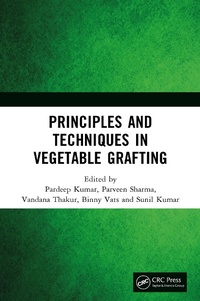
Principles and Techniques in Vegetable Grafting
1st Edition
Published on 22. November 2024
210 pages
978-1-040-15534-9 (ISBN)
Description

Written out of extensive research on vegetable grafting, this book contains current scientific and applied practical knowledge about its various aspects. A discussion of various practical issues pertinent to the field is carried out, and topics such as rootstocks and their significance, various methods of grafting, use of robotic machines, potential contribution of grafting and future perspectives of this technique towards improvement of vegetable production are also discussed.
This book is aimed at aimed at both the people involved in the commercial production and cultivation of grafted plants as well as researchers interested in the understanding of the science and technology behind a grafted plant.
Print edition not for sale in South Asia (India, Sri Lanka, Nepal, Bangladesh, Pakistan or Bhutan)
This book is aimed at aimed at both the people involved in the commercial production and cultivation of grafted plants as well as researchers interested in the understanding of the science and technology behind a grafted plant.
Print edition not for sale in South Asia (India, Sri Lanka, Nepal, Bangladesh, Pakistan or Bhutan)
More details
Edition
1. Auflage
Language
English
Place of publication
London
United Kingdom
Publishing group
Taylor & Francis Ltd
Target group
College/higher education
Professional and scholarly
ISBN-13
978-1-040-15534-9 (9781040155349)
Copyright in bibliographic data and cover images is held by Nielsen Book Services Limited or by the publishers or by their respective licensors: all rights reserved.
Schweitzer Classification
Other editions
Additional editions
Pardeep Kumar | Parveen Sharma | Vandana Thakur
Principles and Techniques in Vegetable Grafting
Book
11/2024
1st Edition
CRC Press
€113.60
Shipment within 10-20 days
Persons
Pardeep Kumar is Head, Department of Plant Sciences and Dean, School of Life Sciences, Central University of Himachal Pradesh, India. He is credited with the systematic research and development of Pomato. He is also recipient of State Innovation Award (2016-2017) by the State Government of Himachal Pradesh, India for his innovative vegetative propagation technology for high value vegetables bell-pepper, tomato and cucumber.
Parveen Sharma worked as Assistant Scientist at Research Sub Station Akrot (Una), CSK Himachal Pradesh Krishi Vishvavidyalaya, Palampur, Himachal Pradesh, India. He standardized production technologies of potential vegetable crops for protected environment under different agroclimatic zones of Himachal Pradesh and is presently working on breeding vegetables for protected cultivation.
Vandana Thakur completed Ph.D. in Vegetable Science from CSK Himachal Pradesh Krishi Vishvavidyalaya, Palampur, Himachal Pradesh, India on Vegetable grafting (Pomato). She is a fellow of Indian Students Association (ISA) and has also worked as Researcher.
Binny Vats is pursuing Ph.D. in 'Plant Sciences' from School of Life Sciences, Central University of Himachal Pradesh, Himachal Pradesh, India. She also worked as Senior Research Fellow in the Department of Vegetable Science and Floriculture, CSKHPKV, Palampur, Himachal Pradesh, India. She holds experience in protected cultivation of vegetable crops, grafting techniques, pomato development and vegetative propagation in potential vegetables.
Sunil Kumar is Associate Professor and Head in the Department of Animal Sciences, School of Life Sciences, Central University of Himachal Pradesh, Dharamshala, Himachal Pradesh, India. He also serves as Proctor at the Central University of Himachal Pradesh and has organized various training programs for officials and farmers.
Parveen Sharma worked as Assistant Scientist at Research Sub Station Akrot (Una), CSK Himachal Pradesh Krishi Vishvavidyalaya, Palampur, Himachal Pradesh, India. He standardized production technologies of potential vegetable crops for protected environment under different agroclimatic zones of Himachal Pradesh and is presently working on breeding vegetables for protected cultivation.
Vandana Thakur completed Ph.D. in Vegetable Science from CSK Himachal Pradesh Krishi Vishvavidyalaya, Palampur, Himachal Pradesh, India on Vegetable grafting (Pomato). She is a fellow of Indian Students Association (ISA) and has also worked as Researcher.
Binny Vats is pursuing Ph.D. in 'Plant Sciences' from School of Life Sciences, Central University of Himachal Pradesh, Himachal Pradesh, India. She also worked as Senior Research Fellow in the Department of Vegetable Science and Floriculture, CSKHPKV, Palampur, Himachal Pradesh, India. She holds experience in protected cultivation of vegetable crops, grafting techniques, pomato development and vegetative propagation in potential vegetables.
Sunil Kumar is Associate Professor and Head in the Department of Animal Sciences, School of Life Sciences, Central University of Himachal Pradesh, Dharamshala, Himachal Pradesh, India. He also serves as Proctor at the Central University of Himachal Pradesh and has organized various training programs for officials and farmers.
Content
Preface
About the Authors
1. Grafting-A Mad Science
2. Historical Background of Vegetable Grafting
3. Vegetable Grafting: Importance and Scope in India
4. Vegetable Grafting: Concept, Production Process, Present Status and Benefits
5. Disease Management in Vegetable Crops through Resistant Rootstocks
6. Infrastructure and Grafting Aids
7. Importance and Selection of Rootstocks
8. Potential Vegetable Crops for Grafting
9. Grafting Techniques in Vegetables
10. Grafting Techniques in Tomato
11. Grafting Techniques in Capsicum
12 Grafting Techniques in Cucurbits
13. Post Graft Handling Management in Vegetable Crops
14. Transplanting of Grafted Seedlings and After Care
15. Problems and Precautions Allied to Vegetable Grafting
16. Vegetative Propagation Techniques in Potential Vegetables under Protected Conditions
17. History of Pomato
18. 'Pomato' or 'Tomtato': The Future Recombinant Horticultural Wonder Plant
19. Grafting Miracle Brimato
20. Impact of Grafting on Fruit Quality of Vegetable Crops
21. Enactment of Grafting in Underutilized Crops
22. Research Background in Vegetable Grafting
23. Robotic Vegetable Grafting: New Dimension in Vegetable Grafting
References
About the Authors
1. Grafting-A Mad Science
2. Historical Background of Vegetable Grafting
3. Vegetable Grafting: Importance and Scope in India
4. Vegetable Grafting: Concept, Production Process, Present Status and Benefits
5. Disease Management in Vegetable Crops through Resistant Rootstocks
6. Infrastructure and Grafting Aids
7. Importance and Selection of Rootstocks
8. Potential Vegetable Crops for Grafting
9. Grafting Techniques in Vegetables
10. Grafting Techniques in Tomato
11. Grafting Techniques in Capsicum
12 Grafting Techniques in Cucurbits
13. Post Graft Handling Management in Vegetable Crops
14. Transplanting of Grafted Seedlings and After Care
15. Problems and Precautions Allied to Vegetable Grafting
16. Vegetative Propagation Techniques in Potential Vegetables under Protected Conditions
17. History of Pomato
18. 'Pomato' or 'Tomtato': The Future Recombinant Horticultural Wonder Plant
19. Grafting Miracle Brimato
20. Impact of Grafting on Fruit Quality of Vegetable Crops
21. Enactment of Grafting in Underutilized Crops
22. Research Background in Vegetable Grafting
23. Robotic Vegetable Grafting: New Dimension in Vegetable Grafting
References
