

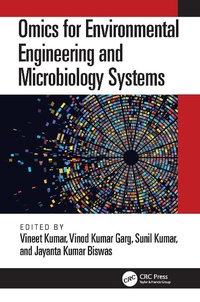
Omics for Environmental Engineering and Microbiology Systems
1st Edition
Published on 7. November 2022
550 pages
978-1-000-73723-3 (ISBN)
Description

Bioremediation using microbes is a sustainable technology for biodegradation of target compounds, and an omics approach gives more clarity on these microbial communities. This book provides insights into the complex behavior of microbial communities and identifies enzymes/metabolites and their degradation pathways. It describes the application of microbes and their derivatives for the bioremediation of potentially toxic and novel compounds. It highlights the existing technologies along with industrial practices and real-life case studies.
Features:
Includes recent research and development in the areas of omics and microbial bioremediation.
Covers the broad environmental pollution control approaches such as metagenomics, metabolomics, fluxomics, bioremediation, and biodegradation of industrial wastes.
Reviews metagenomics and waste management, and recycling for environmental cleanup.
Describes the metagenomic methodologies and best practices, from sample collection to data analysis for taxonomies.
Explores various microbial degradation pathways and detoxification mechanisms for organic and inorganic contaminants of wastewater with their gene expression.
This book is aimed at graduate students and researchers in environmental engineering, soil remediation, hazardous waste management, environmental modeling, and wastewater treatment.
Features:
Includes recent research and development in the areas of omics and microbial bioremediation.
Covers the broad environmental pollution control approaches such as metagenomics, metabolomics, fluxomics, bioremediation, and biodegradation of industrial wastes.
Reviews metagenomics and waste management, and recycling for environmental cleanup.
Describes the metagenomic methodologies and best practices, from sample collection to data analysis for taxonomies.
Explores various microbial degradation pathways and detoxification mechanisms for organic and inorganic contaminants of wastewater with their gene expression.
This book is aimed at graduate students and researchers in environmental engineering, soil remediation, hazardous waste management, environmental modeling, and wastewater treatment.
More details
Edition
1. Auflage
Language
English
Place of publication
London
United Kingdom
Publishing group
Taylor & Francis Ltd
Target group
Professional and scholarly
Illustrations
41 Tables, black and white; 65 Line drawings, black and white; 8 Halftones, black and white; 73 Illustrations, black and white
ISBN-13
978-1-000-73723-3 (9781000737233)
Copyright in bibliographic data and cover images is held by Nielsen Book Services Limited or by the publishers or by their respective licensors: all rights reserved.
Schweitzer Classification
Other editions
Additional editions
Vineet Kumar | Vinod Kumar Garg | Sunil Kumar
Omics for Environmental Engineering and Microbiology Systems
Book
10/2024
1st Edition
CRC Press
€113.00
Shipment within 10-20 days
Vineet Kumar | Vinod Kumar Garg | Sunil Kumar
Omics for Environmental Engineering and Microbiology Systems
Book
11/2022
1st Edition
CRC Press
€264.20
Shipment within 10-20 days
Persons
Vineet Kumar, Jayanta Kumar Biswas
Content
1. Omics to Field Bioremediation: Current Status, Challenges, and Future Opportunities
2. Role of Genomics, Metagenomics, and Other Meta-Omics Approaches for Expunging the Environmental Contaminants by Bioremediation
3. Functional Metagenomics: A Methodological Approach to View the Microbial World: A Review
4. Analysis of Emerging Microbial Contaminants through Next-Generation Sequencing (NGS)
5. Quorum Sensing: A Potential Mechanism Toward Microbial Activity and Biofilm Formation
6. Integrated Omics Approaches to Understand and Improve Wastewater Remediation
7. Omics Insights into Quorum Sensing and Biofilm Formation
8. Genome Editing Tools: Increasing Efficiency of Microbes for Remediating Contaminated Environment
9. Recent Advancements in Microbial Degradation of Xenobiotics by Using Proteomics Approaches
10. Importance of Genetically Engineered Microbes (GEMs) In Bioremediation of Environmental Pollutants: Recent Advances and Challenges
11. Role of Indigenous Microbial Community in Bioremediation: Recent Advances, Challenges, and Future Outlook
12. Functional Metagenomics in Environmental Bioremediation: Recent Advances, Challenges and Future Outlook
13. The Use of Microalgae and Cyanobacteria for Wastewater Treatment and the Sustainable Production of Biomass
14. Bioprospecting of Microbial Diversity for Sustainable Agriculture and Environment
15. A Consortium of Sulfate-Reducing Bacteria Used for Lead, Copper, and Cadmium Bioremediation
16. Omics Reflection on the Bacterial Escape from the Toxic Trap of Metal(loid)s: Cracking the Code of Contaminants Stress, Resistance Repertoire, and Remediation
17. Omics Approaches for Microalgal Remediation of Wastewater: Recent Advances, Challenges, and Future Outlook
18. Disturbance and Stress in Coastal Ecosystems: Quantifying Responses at Multiple Levels of Biological Organization
19. Impact of Cadmium Toxicity on Environment and Its Remedy
20. Metal(loid)-Microbe Interactions: Trading on Tolerance and Transformation for Environmental Remediation
21. Insights into Pathways of Biodegradation of Endocrine Disrupting Chemicals by Microbes
22. New Insights into Horizontal Gene Transfer among Bacterial Pathogens to Acquire Antibiotic Resistance and Culture-Independent Techniques to Study ARG Dissemination
23. Genetically Engineered Microorganisms: A Promising Approach for Bioremediation
24. Microbial Biofilm in Remediation of Environmental Contaminants from Wastewater: Mechanisms, Opportunities, Challenges, and Future Perspectives
25. Artificial Intelligence in Waste Management/Wastewater Treatment
2. Role of Genomics, Metagenomics, and Other Meta-Omics Approaches for Expunging the Environmental Contaminants by Bioremediation
3. Functional Metagenomics: A Methodological Approach to View the Microbial World: A Review
4. Analysis of Emerging Microbial Contaminants through Next-Generation Sequencing (NGS)
5. Quorum Sensing: A Potential Mechanism Toward Microbial Activity and Biofilm Formation
6. Integrated Omics Approaches to Understand and Improve Wastewater Remediation
7. Omics Insights into Quorum Sensing and Biofilm Formation
8. Genome Editing Tools: Increasing Efficiency of Microbes for Remediating Contaminated Environment
9. Recent Advancements in Microbial Degradation of Xenobiotics by Using Proteomics Approaches
10. Importance of Genetically Engineered Microbes (GEMs) In Bioremediation of Environmental Pollutants: Recent Advances and Challenges
11. Role of Indigenous Microbial Community in Bioremediation: Recent Advances, Challenges, and Future Outlook
12. Functional Metagenomics in Environmental Bioremediation: Recent Advances, Challenges and Future Outlook
13. The Use of Microalgae and Cyanobacteria for Wastewater Treatment and the Sustainable Production of Biomass
14. Bioprospecting of Microbial Diversity for Sustainable Agriculture and Environment
15. A Consortium of Sulfate-Reducing Bacteria Used for Lead, Copper, and Cadmium Bioremediation
16. Omics Reflection on the Bacterial Escape from the Toxic Trap of Metal(loid)s: Cracking the Code of Contaminants Stress, Resistance Repertoire, and Remediation
17. Omics Approaches for Microalgal Remediation of Wastewater: Recent Advances, Challenges, and Future Outlook
18. Disturbance and Stress in Coastal Ecosystems: Quantifying Responses at Multiple Levels of Biological Organization
19. Impact of Cadmium Toxicity on Environment and Its Remedy
20. Metal(loid)-Microbe Interactions: Trading on Tolerance and Transformation for Environmental Remediation
21. Insights into Pathways of Biodegradation of Endocrine Disrupting Chemicals by Microbes
22. New Insights into Horizontal Gene Transfer among Bacterial Pathogens to Acquire Antibiotic Resistance and Culture-Independent Techniques to Study ARG Dissemination
23. Genetically Engineered Microorganisms: A Promising Approach for Bioremediation
24. Microbial Biofilm in Remediation of Environmental Contaminants from Wastewater: Mechanisms, Opportunities, Challenges, and Future Perspectives
25. Artificial Intelligence in Waste Management/Wastewater Treatment
