

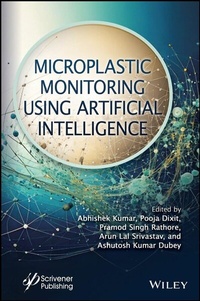
Microplastic Monitoring Using Artificial Intelligence
Description

Revolutionize your approach to environmental protection with this groundbreaking resource, which details how to replace labor-intensive manual analysis with deep learning and explainable AI (XAI) to achieve precise, real-time identification and scalable monitoring of microplastic pollution.
AI-driven microplastic monitoring sits at the intersection of environmental science, artificial intelligence, and data analytics, representing a rapidly developing frontier in both research and industry. Microplastic pollution, which has become a critical environmental and public health concern, is challenging to monitor using traditional techniques due to the vast scale, complexity, and minute size of microplastics. Conventional methods, such as manual filtration, microscopic examination, and chemical analysis, are often labor-intensive, time-consuming, and limited in their ability to provide real-time, large-scale data. This book is a groundbreaking exploration of how artificial intelligence, particularly deep learning and explainable AI (XAI), is revolutionizing microplastic research. It highlights innovative applications of deep learning for precise identification and classification of microplastics, while emphasizing the role of XAI in providing transparency and interpretability to AI-driven methods. By integrating these approaches with advanced sensing technologies and predictive models, the book addresses key limitations of traditional methods, offering robust solutions for scalable and accurate monitoring. Additionally, the book considers the ethical, regulatory, and policy implications of deploying AI in environmental science, providing a balanced perspective on the potential benefits and challenges. With contributions from leading researchers and practitioners, this book is an essential resource for environmental scientists, data scientists, policymakers, and technologists committed to sustainable solutions for combating microplastic pollution.
More details
Other editions
Additional editions
Persons
Abhishek Kumar, PhD is an Assistant Director and Professor in the Computer Science and Engineering Department at Chandigarh University with more than 13 years of teaching experience. He has authored seven books, edited 51 books, and published more than 170 peer-reviewed articles. His research spans AI, renewable energy, image processing, and data mining.
Pooja Dixit is an Assistant Professor in the Department of Computer Science at Sophia Girls' College and is pursuing her Ph.D. in Computer Science from Manipal University. With more than seven years of academic teaching and two years of research experience, she has published more than 25 research papers in reputed journals, books, and conferences. Her research interests include artificial intelligence, machine learning, and data mining.
Pramod Singh Rathore, PhD is an Assistant Professor in the Department of Computer and Communication Engineering at Manipal University with more than 11 years of academic experience. He has published more than 55 papers in reputable, peer-reviewed national and international journals, books, and conferences. His research interests include NS2, computer networks, mining, and database management systems.
Arun Lal Srivastav, PhD is an Associate Professor in the School of Engineering and Technology at Chitkara University. He has published more than 100 research papers in various prestigious journals, conferences, and book chapters and edited many internationally published books. His research interests include water quality surveillance, climate change, water treatment, river ecosystems, soil health maintenance, engineering education, phytoremediation, and waste management.
Ashutosh Kumar Dubey, PhD is an Associate Professor in the Department of Computer Science at in the School of Engineering and Technology at Chitkara University with more than 16 years of experience. He has authored and edited 20 books and published more than 80 articles in peer-reviewed international journals and conference proceedings. His research interests encompass machine learning, renewable energy, health informatics, nature-inspired algorithms, cloud computing, and big data.
Content
Preface xv
1 Introduction to Microplastic and the Role of AI 1
Pooja Dixit, Shaloo Dadheech, Priya Batta and Neeraj Bhargava
1.1 Introduction 2
1.2 Microplastic Distribution and Pathways 5
1.3 Current Methods of Microplastic Detection 8
1.4 Role of Artificial Intelligence (AI) in Microplastic Research 12
1.5 Case Studies and Applications 16
1.6 Challenges and Limitations 18
1.7 Future Directions 20
1.8 Conclusion 21
2 A CNN-ViT Hybrid Deep Learning Architecture for Accurate Microplastic Detection 23
B. Dhanalaxmi, B. Saritha, P. Punitha, G. Jagan Naik and B. Anupama
2.1 Introduction 24
2.2 Literature Review 26
2.3 Proposed Mythology 29
2.4 Result and Discussion 31
2.5 Concluding Remarks and Future Scope 33
3 XAI for Decision Support in Microplastic Pollution Management 37
Srinibas Pattanaik, Sachin Ahuja, Sartajvir Singh Dhillon, Jasneet Chawla, Deeksha Sonal and Alessandro Vinciarelli
3.1 Introduction 38
3.2 Causes and Consequences and Effects of Microplastic Pollution 40
3.3 The Application of AI in Management of the Environment 42
3.4 XAI Frameworks are Flexible and for the Micro Plastic Environmental Management and the Summary to Explainable Artificial Intelligence 43
3.5 Application and Case Studies of XAI Microplastic Pollution Management 45
3.6 The Utilization of Machine Learning with Explainable AI (XAI) Regarding Decision Support Systems 48
3.7 Futures Directions and Challenges of Explainable AI with Microplastic Pollution 49
3.8 Conclusion 51
4 AI-Driven Technologies in Mitigation of Microplastic Pollution 55
Lata Rani, Hurmat, Deepa Singh, Babu Bharman, Arun Lal Srivastav, Jyotsna Kaushal, Komal Thapa and Neha Kanojia
4.1 Introduction 56
4.2 AI Assisted Detection Techniques for the Microplastic 60
4.3 Application of AI in Microplastic Pollution Control 71
4.4 Conclusion 74
5 AI Driven Optical Imaging and Spectroscopic Techniques 83
Muchukota Sushma, Mekkanti Manasa Rekha, Ramya C. V. and Zaid Khan
List of Abbreviations 84
5.1 Introduction 84
5.2 Fundamentals of Optical Imaging and Spectroscopic Techniques 90
5.3 AI Innovations in Microplastic Detection 92
5.4 Applications in Real-Time Monitoring 94
5.5 Case Studies in AI-Driven Microplastic Detection 95
5.6 Challenges in AI-Driven Microplastic Monitoring 97
5.7 Future Directions 99
5.8 Conclusion 101
6 Integrating AI with Advanced Sensor Technologies for Real-Time Monitoring 109
Avnish Chauhan, Shivam Attri, Aanchal Saklani, Prabhat K. Chauhan, Man Vir Singh, Vishal Rajput, Muneesh Sethi and Samuele Barrili
6.1 Introduction 110
6.2 Bibliographic Study 111
6.3 AI-Enabled Sensor Technologies for Microplastic Detection 113
6.4 Challenges and Future Prospects 120
6.5 Conclusion 122
7 Machine Learning for Microplastic Source and Pathway Prediction 127
Vanshika and Neetu Rani
7.1 Introduction 128
7.2 Microplastic Sources and Pathways: An Overview 130
7.3 Data Acquisition and Preprocessing 132
7.4 Machine Learning Approaches for Microplastic Modeling 134
7.5 Model Development and Validation 137
7.6 Case Studies and Real-World Implementations 138
7.7 Visualization and Decision Support 138
7.8 Challenges and Ethical Considerations 142
7.9 Conclusion and Future Scope 143
8 Big Data Analytics in Mapping the Global Microplastic Distribution 147
Prasann Kumar
8.1 Introduction 148
8.2 Data Sources for Microplastic Mapping 152
8.3 Big Data Techniques in Microplastic Analytics 155
8.4 Challenges in Big Data for Microplastic Studies 159
8.5 Case Studies 163
8.6 Applications and Implications 166
8.7 Future Directions 170
8.8 Conclusion 173
8.9 Acknowledgement 174
9 Automation in Sampling and Processing, Robotics, and AI Synergy 179
Prasann Kumar
9.1 Introduction 180
9.2 Robotics in Sampling and Processing 185
9.3 AI-Driven Processing Workflows 189
9.4 Challenges and Limitations 193
9.5 Case Studies and Applications 195
9.6 Innovations and Emerging Trends 198
9.7 Future Directions 202
9.8 Conclusion 205
10 Cross-Disciplinary Case Studies: AI in Action for Microplastic Research 209
B. Dhanalaxmi, V. Prema Tulasi, Mittapalli Anusha, G. Sreeram and Komati Sathish
10.1 Introduction 210
10.2 Literature Review 212
10.3 Proposed Methodology 216
10.4 Result and Discussion 218
10.5 Concluding Remarks and Future Scope 222
11 Ethical and Social Implications of AI in Environmental Science: Balancing Innovation and Responsibility 225
Priyanka
12 Regulatory and Policy Challenges for AI-Enhanced Microplastic Monitoring 239
Gurjeet Kour, Mansi Rana, Pratibha Singh and Ajay Sharma
12.1 Introduction 240
12.2 Microplastic Monitoring through AI 243
12.3 The Current State of Microplastic Monitoring Regulations 245
12.4 Regulatory Obstacles in AI-Powered Microplastic Identification 250
12.5 Privacy and Ethical Issues with AI-Powered Environmental Monitoring 252
12.6 Policy Ideas for Including AI in Microplastic Monitoring 253
12.7 Multidisciplinary Cooperation's Function in Policy Development 257
12.8 Conclusion 259
13 Future Trends: AI Driven Innovation in Environmental Science 267
Priyanka Sharma, Ankita Sharma and Prashant Ahluwalia
13.1 Introduction to AI in Environmental Science 268
13.2 AI and Climate Change Mitigation 270
13.3 AI in Water Resource Management 272
13.4 AI in Biodiversity Conservation 274
13.5 AI for Sustainable Agriculture and Forestry 276
13.6 AI in Air Pollution Control 279
13.7 AI and Renewable Energy Optimization 280
13.8 AI for Smart Disaster Resilience 281
13.9 Environmental Sustainability 283
13.10 Future Scope 285
14 XAI for Decision Support in Microplastic Pollution Management 293
Yeligeti Raju, N. Venkatesh, S. Adilakshmi, Namita Parati and A. Kalaivani
14.1 Introduction 294
14.2 Literature Review 297
14.3 Proposed Methodology 299
14.4 Result and Discussion 301
14.5 Concluding Remarks and Future Scope 305
15 The Road Ahead: AI's Role in Tackling Global Microplastic Pollution 309
Yeligeti Raju, K. Damodhar Rao, M. Lavanya, Mursubai Sandhya Rani and Sendhil Kumar B.B.
15.1 Introduction 310
15.2 Literature Review 312
15.3 Proposed Methodology 317
15.4 Result and Discussion 319
15.5 Concluding Remarks and Future Scope 322
References 323
16 Intelligent Environmental Surveillance: Integrating AI Systems for Comprehensive Microplastic Monitoring and Analysis 325
Mamta
16.1 Introduction 326
16.2 Understanding Microplastic Pollution 328
16.3 AI-Based Monitoring Systems 331
16.4 Implementation and Case Studies 333
16.5 Future Scope 336
16.6 Conclusion 340
Bibliography 342
Index 347
1
Introduction to Microplastic and the Role of AI
Pooja Dixit1*, Shaloo Dadheech2, Priya Batta3 and Neeraj Bhargava4
1Department of Computer Science, Shri Ratanlal Kanwarlal Patni Girls' College, Kishangarh, India
2Department of Computer Applications, JIET, Jodhpur, India
3Department of Computer Science, Amity University Mohali, Punjab, India
4Department of Computer Application, Amity University Jaipur, Rajasthan, India
Abstract
Microplastic pollution has become a global environmental challenge of today that directly threatens human health, biodiversity and sustainability. Microplastics - plastic particles smaller than 5 mm - have spread everywhere; in oceans, rivers, soil and air. They also reach the human body through the food chain, where they create health risks through ingestion, inhalation and toxic leaching. Traditional detection techniques such as microscopy, FTIR and Raman spectroscopy are useful but are time-consuming, costly and have limited scalability due to which their efficiency is low. Artificial Intelligence (AI) fills this gap. AI-based methods such as machine learning and deep learning make automated detection, classification and predictive modeling of microplastics possible. AI with sensors and IoT integration also enables real-time monitoring and pollution hotspot mapping. But challenges such as data availability, high computational cost and ethical concerns need to be addressed. In the future, through explainable AI, interdisciplinary collaborations and policy integration, AI could become a game-changer for microplastic management. Overall, this study establishes a strong bridge between microplastics and AI that can provide sustainable solutions for both environment and human health.
Keywords: Microplastics, AI, FTIR, Raman spectroscopy
1.1 Introduction
1.1.1 Background and Importance of the Study
Today, environmental pollution has become a global concern, in which a relatively "new" and hidden pollutant-microplastics-has become a major challenge for scientists, policymakers and the general public. Microplastics means those small particles of plastic which are smaller than 5 millimeters. Their size is so small that they easily spread in every part of the environment - whether it is in ocean, rivers, soil or air. In the last 50-60 years, plastic production has increased exponentially. Plastic was initially considered a "wonder material" because it was durable, lightweight and cheap. But now this durability has become an environmental disaster. When this plastic degrades, it breaks into small pieces and forms microplastics. These particles persist in the environment for centuries.
This study is important because microplastics are not just a pollution problem but also a threat to human health, biodiversity and global sustainability. Microplastics affect marine species in oceans, reduce soil fertility and even reach the human body through the food chain. The role of AI (Artificial Intelligence) becomes important in this field because detection and monitoring of microplastics using conventional methods is time-consuming and expensive. AI-based models help with automatic detection, classification, and prediction. This chapter, therefore, forms a foundation for understanding microplastics and connecting the role of AI [1, 2].
1.1.2 Definition of Microplastics
Scientists have used different definitions to define microplastics, but the consensus is that they are plastic particles smaller than 5 mm in size. Some researchers refine this further, such as:
- Large Microplastics: 1-5 mm
- Small Microplastics: 1 µm-1 mm
And now there is the concept of nano plastics, which are particles smaller than 1 µm.
Microplastics are generally divided into two categories:
- Primary Microplastics: These are produced directly in small sizes, such as microbeads in cosmetics, personal care products, industrial abrasives.
- Secondary Microplastics: These are formed after the breakdown of larger plastics, such as plastic bags, bottles or fishing nets, which degrade and convert into microplastics.
Another important aspect of the definition is their composition and chemical nature. Plastics are polymer-based, with additives, stabilizers, and dyes mixed in. These additives make microplastics more toxic when they are released into the environment [3].
1.1.3 Sources and Types of Microplastics
The sources of microplastics are so diverse that they can originate from practically everywhere. Some major sources are listed below:
Industrial and Consumer Products:
Microbeads in cosmetics and toothpaste.
Fibers derived from synthetic textiles (polyester, nylon) when we use washing machines.
Degradation of Larger Plastics:
Sunlight (UV radiation), physical abrasion and chemical weathering break down larger plastic items to form microplastics.
Wastewater Treatment Plants:
This is a major pathway. The microplastics we generate for domestic or industrial use are released into the environment through wastewater.
Tire Wear Particles:
When vehicles run on roads, the friction of their tires releases small rubber particles, which is a hidden source of microplastics.
Types of Microplastics:
- Fibres (synthetic clothes, ropes, nets)
- Fragments (breakdown pieces of large plastics)
- Films (thin plastic layers like plastic bags)
- Beads/Pellets (cosmetic products or plastic industry raw material)
It is very important to identify their type and source, as this knowledge helps in creating AI-based classification systems [4, 5].
1.1.4 Environmental and Health Impacts
The impacts of microplastics are multidimensional. It is a "silent pollutant" that is not directly visible, but gradually damages both ecosystem and human health.
(A) Environmental Impacts
Marine Ecosystems:
Oceans have become the biggest sink for microplastics. Marine organisms such as fish, plankton, and seabirds consume microplastics as food. This has a negative impact on their growth, reproduction and survival rates.
Freshwater Systems:
Rivers and lakes become carriers of microplastics. These particles disturb aquatic biodiversity and ultimately reach the oceans.
Soil Systems:
Sewage sludge used as fertilizer in agriculture also contains microplastics. They reduce soil fertility and microbial activity.
Airborne Pollution:
Microplastics are also suspended in the air. They circulate with dust particles and are capable of long-distance transport.
(B) Human Health Impacts
Ingestion:
Humans ingest microplastics through contaminated seafood, drinking water, and even packaged food.
Inhalation:
Airborne microplastics reach the lungs, which can cause respiratory problems.
Toxicity and Chemical Leaching:
Microplastics not only create physical blockage, but they also contain additives and absorbed pollutants (like pesticides, heavy metals), which release toxic chemicals.
Potential Health Risks:
Endocrine disruption
Inflammation
Carcinogenic effects (long-term exposure)
These impacts are still the subject of ongoing research, but evidence strongly suggests that microplastics remain an emerging public health crisis [6].
1.2 Microplastic Distribution and Pathways
Once microplastic particles are released into the environment, they circulate in different mediums-water (marine and freshwater), soil (soil and agriculture), air (airborne particles), and finally accumulate in the bodies of living organisms through the food chain. This section explains in detail how microplastics are distributed and their major pathways.
1.2.1 Marine and Freshwater Systems
Marine and freshwater ecosystems are the largest sinks for microplastics. The majority of global plastic waste ultimately reaches oceans and rivers. When plastic items fall into oceans, they degrade and convert into microplastics by mechanical abrasion, UV radiation, and wave action.
Marine Systems (Oceans, Seas):
Research studies show that microplastics are present in surface waters, deep sea sediments, and even in Arctic ice cores.
Ocean currents carry them for thousands of kilometers, causing microplastics to be found even in remote and pristine areas.
Marine organisms such as plankton, mollusks, fish, and seabirds accidentally ingest these particles. This ingestion disturbs their growth, reproduction, and metabolic activities.
Freshwater Systems (Rivers, Lakes):
Rivers act as transport highways for microplastics. Microplastics generated from cities and industries enter rivers as wastewater and finally reach the oceans.
Lakes accumulate microplastics due to stagnant water.
Studies have shown that freshwater organisms such as crustaceans and small fish also consume microplastics, which changes their food chain dynamics.
Important Point:
Marine and freshwater systems form an interconnected cycle in which once plastic enters, it becomes almost impossible to completely remove it [7].
1.2.2 Soil and Agricultural Environments
When we talk about microplastics, the focus is usually on...
