

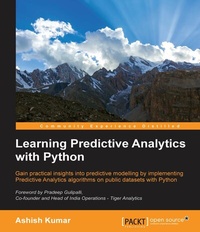
Learning Predictive Analytics with Python
Gain practical insights into predictive modelling by implementing Predictive Analytics algorithms on public datasets with Python
Published on 8. July 2025
354 pages
978-1-78398-327-8 (ISBN)
Description

Gain practical insights into predictive modelling by implementing Predictive Analytics algorithms on public datasets with Python
Key Features
[*]A step-by-step guide to predictive modeling including lots of tips, tricks, and best practices
[*]Get to grips with the basics of Predictive Analytics with Python
[*]Learn how to use the popular predictive modeling algorithms such as Linear Regression, Decision Trees, Logistic Regression, and Clustering
Book DescriptionSocial Media and the Internet of Things have resulted in an avalanche of data. Data is powerful but not in its raw form - It needs to be processed and modeled, and Python is one of the most robust tools out there to do so. It has an array of packages for predictive modeling and a suite of IDEs to choose from. Learning to predict who would win, lose, buy, lie, or die with Python is an indispensable skill set to have in this data age. This book is your guide to getting started with Predictive Analytics using Python. You will see how to process data and make predictive models from it. We balance both statistical and mathematical concepts, and implement them in Python using libraries such as pandas, scikit-learn, and numpy. You'll start by getting an understanding of the basics of predictive modeling, then you will see how to cleanse your data of impurities and get it ready it for predictive modeling. You will also learn more about the best predictive modeling algorithms such as Linear Regression, Decision Trees, and Logistic Regression. Finally, you will see the best practices in predictive modeling, as well as the different applications of predictive modeling in the modern world.What you will learn
[*]Understand the statistical and mathematical concepts behind Predictive Analytics algorithms and implement Predictive Analytics algorithms using Python libraries
[*]Analyze the result parameters arising from the implementation of Predictive Analytics algorithms
[*]Write Python modules/functions from scratch to execute segments or the whole of these algorithms
[*]Recognize and mitigate various contingencies and issues related to the implementation of Predictive Analytics algorithms
[*]Get to know various methods of importing, cleaning, sub-setting, merging, joining, concatenating, exploring, grouping, and plotting data with pandas and numpy
[*]Create dummy datasets and simple mathematical simulations using the Python numpy and pandas libraries
[*]Understand the best practices while handling datasets in Python and creating predictive models out of them
Who this book is forIf you wish to learn how to implement Predictive Analytics algorithms using Python libraries, then this is the book for you. If you are familiar with coding in Python (or some other programming/statistical/scripting language) but have never used or read about Predictive Analytics algorithms, this book will also help you. The book will be beneficial to and can be read by any Data Science enthusiasts. Some familiarity with Python will be useful to get the most out of this book, but it is certainly not a prerequisite.
Key Features
[*]A step-by-step guide to predictive modeling including lots of tips, tricks, and best practices
[*]Get to grips with the basics of Predictive Analytics with Python
[*]Learn how to use the popular predictive modeling algorithms such as Linear Regression, Decision Trees, Logistic Regression, and Clustering
Book DescriptionSocial Media and the Internet of Things have resulted in an avalanche of data. Data is powerful but not in its raw form - It needs to be processed and modeled, and Python is one of the most robust tools out there to do so. It has an array of packages for predictive modeling and a suite of IDEs to choose from. Learning to predict who would win, lose, buy, lie, or die with Python is an indispensable skill set to have in this data age. This book is your guide to getting started with Predictive Analytics using Python. You will see how to process data and make predictive models from it. We balance both statistical and mathematical concepts, and implement them in Python using libraries such as pandas, scikit-learn, and numpy. You'll start by getting an understanding of the basics of predictive modeling, then you will see how to cleanse your data of impurities and get it ready it for predictive modeling. You will also learn more about the best predictive modeling algorithms such as Linear Regression, Decision Trees, and Logistic Regression. Finally, you will see the best practices in predictive modeling, as well as the different applications of predictive modeling in the modern world.What you will learn
[*]Understand the statistical and mathematical concepts behind Predictive Analytics algorithms and implement Predictive Analytics algorithms using Python libraries
[*]Analyze the result parameters arising from the implementation of Predictive Analytics algorithms
[*]Write Python modules/functions from scratch to execute segments or the whole of these algorithms
[*]Recognize and mitigate various contingencies and issues related to the implementation of Predictive Analytics algorithms
[*]Get to know various methods of importing, cleaning, sub-setting, merging, joining, concatenating, exploring, grouping, and plotting data with pandas and numpy
[*]Create dummy datasets and simple mathematical simulations using the Python numpy and pandas libraries
[*]Understand the best practices while handling datasets in Python and creating predictive models out of them
Who this book is forIf you wish to learn how to implement Predictive Analytics algorithms using Python libraries, then this is the book for you. If you are familiar with coding in Python (or some other programming/statistical/scripting language) but have never used or read about Predictive Analytics algorithms, this book will also help you. The book will be beneficial to and can be read by any Data Science enthusiasts. Some familiarity with Python will be useful to get the most out of this book, but it is certainly not a prerequisite.
All prices
More details
Edition
Digital original
Language
English
Place of publication
Birmingham
United Kingdom
Target group
Professional and scholarly
US School Grade: College Graduate Student
Edition type
Digital original
File size
15,49 MB
ISBN-13
978-1-78398-327-8 (9781783983278)
Copyright in bibliographic data and cover images is held by Nielsen Book Services Limited or by the publishers or by their respective licensors: all rights reserved.
Schweitzer Classification
Other editions
Additional editions
Ashish Kumar
Learning Predictive Analytics with Python
Book
02/2016
Packt Publishing
€63.30
Shipment within 3-4 weeks
Person
Kumar Ashish :
Ashish Kumar is a seasoned data science professional, a publisher author and a thought leader in the field of data science and machine learning. An IIT Madras graduate and a Young India Fellow, he has around 7 years of experience in implementing and deploying data science and machine learning solutions for challenging industry problems in both hands-on and leadership roles. Natural Language Procession, IoT Analytics, R Shiny product development, Ensemble ML methods etc. are his core areas of expertise. He is fluent in Python and R and teaches a popular ML course at Simplilearn. When not crunching data, Ashish sneaks off to the next hip beach around and enjoys the company of his Kindle. He also trains and mentors data science aspirants and fledgling start-ups.
Ashish Kumar is a seasoned data science professional, a publisher author and a thought leader in the field of data science and machine learning. An IIT Madras graduate and a Young India Fellow, he has around 7 years of experience in implementing and deploying data science and machine learning solutions for challenging industry problems in both hands-on and leadership roles. Natural Language Procession, IoT Analytics, R Shiny product development, Ensemble ML methods etc. are his core areas of expertise. He is fluent in Python and R and teaches a popular ML course at Simplilearn. When not crunching data, Ashish sneaks off to the next hip beach around and enjoys the company of his Kindle. He also trains and mentors data science aspirants and fledgling start-ups.
Content
Table of Contents
Getting started with Predictive Modelling
Data Cleaning
Data Wrangling
Statistics Concepts for Predictive Modelling
Linear Regression with Python
Logistic Regression with Python
Clustering with Python
Decision Tree & Random Forests with Python
Exploring Best Practices
Appendix - List of links
Getting started with Predictive Modelling
Data Cleaning
Data Wrangling
Statistics Concepts for Predictive Modelling
Linear Regression with Python
Logistic Regression with Python
Clustering with Python
Decision Tree & Random Forests with Python
Exploring Best Practices
Appendix - List of links

