

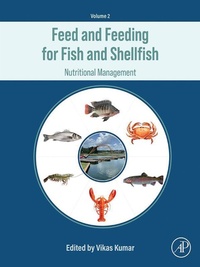
Feed and Feeding for Fish and Shellfish
Nutritional Management
Published on 19. November 2024
600 pages
978-0-443-21557-5 (ISBN)
Description

Feed and Feeding for Fish and Shellfish: Nutritional Physiology presents foundational knowledge and the most recent advances in aquaculture finfish and crustacean metabolism and nutritional requirements, feed ingredients, nutrient deficiency disorders, and integrated sciences. Nutrition is fundamental to the success and sustainability of the aquaculture industry as it relates to economics, fish health, high-quality product production, and pollution minimization. This book provides a unique, complete, and comprehensive coverage of the nutrition, metabolism, and feeding strategies of key aquaculture species.Written by an international group of experts, this work introduces nutrient requirements of finfish, prawn, shrimp, crabs, and lobster before delving into advances in feed ingredients, production, and practices. Latter chapters discuss the risks of nutritional deficiency and associated diseases and disorders. The final section of the book describes integrated sciences, including aquaculture species immune systems, muscle development, reproduction, gut health, and broader perspectives on seafood quality and food security.
- Presents the most recent advances in the field over the last decade
- Includes all nutritionally balanced, environmentally sound, and cost-effective feed for finfish and crustaceans
- Provides comprehensive coverage related to nutrition and metabolism of finfish and crustaceans
More details
Other editions
Additional editions
Book
11/2024
Academic Press
€230.50
Shipment within 15-20 days
Content
Section I: Introductory remarks1. Introduction of Feed and Feeding ManagementSection II: Nutrient requirements2. Nutrients and energy requirements for fin fish3. Nutrients and energy requirements for prawn and shrimp4. Nutrients and energy requirements for crabs and lobsterSection III: Feed ingredients and feeding practices5. Feed ingredients for aquafeed6. Antinutritional factors and adventitious toxins7. Feed Additives8. Prebiotic and probiotic applications in fish and crustaceans9. Applications of in vitro digestive simulations10. Feed manufacturing technology11. Feeding practices and practical management strategies for finfish and crustaceansSection IV: Nutritional deficiency diseases and aquatic environment12. The Pathology of Nutritional disease13. Water quality and its impacts on feeding practicesSection V: Integrated sciences with nutrition14. Nutrition and the immune system in fish and shellfish15. Larval and Broodstock Nutrition of Fin Fish16. Larval and Broodstock Nutrition of Crustaceans17. The importance of gut microbes for nutrition and health18. Omics approaches in fish nutrition research19. Feed to food
