

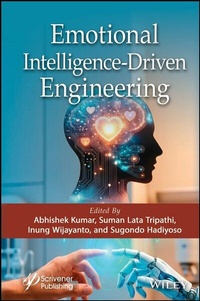
Emotional Intelligence-Driven Engineering
Description

In a digital age where technical expertise is no longer enough, this book provides the essential tools to integrate empathy, psychology, and neuroscience into your design process for a deeper human-technology connection.
Engineering has traditionally prioritized functional and technical factors, enhancing equipment for reliability, effectiveness, and efficiency. However, a dramatic perspective shift is changing the way technologies are created, developed, and implemented, as well as how we interact with them. This book provides an innovative perspective on the design and development of systems, services, and products by investigating the significant confluence of engineering, technology, and emotional intelligence. In the growing digital age of today, technological expertise is no longer sufficient to satisfy the wide range of consumer demands. It is equally important to comprehend, predict, and account for human emotion. This book incorporates the interdisciplinary method known as emotion-driven engineering, which includes emotional intelligence in the design, development, and implementation of engineering solutions. Based on disciplines including human-computer interface, design thinking, psychology, and neuroscience. This book provides an efficient framework for developing products that connect with consumers. With both theoretical ideas and practical applications, the book is organized to help engineers, designers, and technologists integrate emotional awareness and empathy into their work.
More details
Other editions
Additional editions
Persons
Abhishek Kumar, PhD is an Associate Professor in the School of Electronics and Electrical Engineering at Lovely Professional University with more than 11 years of experience. He has published over 55 research papers, five books, and 20 patents, and contributed to numerous conference proceedings and e-books. His research interests include hardware security, cryptanalysis, and machine learning.
Suman Lata Tripathi, PhD is a Professor at Lovely Professional University with more than 22 years of experience in academics and research. She has published more than 125 research papers, 27 books, 14 Indian patents, and four copyrights. Her expertise includes microelectronics device modeling, low-power VLSI design, testing, and advanced FET design for IoT.
Inung Wijayanto, PhD is an Associate Professor at Telkom University with more than 14 years of experience. He has published over 64 research papers. His research interests include biomedical signal and image processing, EEG/ECG analysis, computer vision, and medical instrumentation.
Sugondo Hadiyoso, PhD is a Lecturer at Telkom University with more than 12 years of experience. His expertise includes biomedical engineering, AI, and applied sciences. He has published over 100 research papers and contributes actively to international journals and conferences as a reviewer and committee member.
