

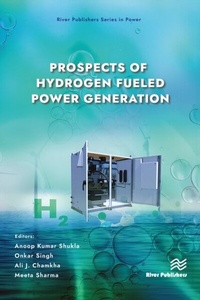
Prospects of Hydrogen Fueled Power Generation
1st Edition
Published on 12. March 2024
294 pages
978-1-003-82337-7 (ISBN)
Description

Prospects of Hydrogen-fueled Power Generation brings together experts to explore the various challenges and opportunities of hydrogen as a fuel in power generation, transportation, storage, and safety. Special interest is given to proton exchange membrane fuel cell (PEMFC) fuel cells, hydrogen energy, and the conversion methods. The usage of clean fuel in road transportation, marine transportation, and the power generation sector are also discussed in detail. Additionally, performance investigations reveal information about the system's energy and exergy analysis.
Hydrogen-fueled power generation is the process of generating electricity using hydrogen as the primary fuel source. This process typically involves the conversion of hydrogen into electricity using fuel cells or combustion engines. Fuel cells are electrochemical devices that convert hydrogen into electricity and water with no emissions other than water vapor. Combustion engines, on the other hand, burn hydrogen to produce heat, which is used to generate electricity through a turbine. The byproducts of hydrogen combustion are water and heat, with no harmful emissions. One advantage of hydrogen-fueled power generation is that it produces no harmful emissions, making it a clean and sustainable source of energy. Additionally, hydrogen is a highly abundant element that can be produced from a variety of sources, including natural gas, biomass, and renewable energy sources like solar and wind power.
Hydrogen-fueled power generation is the process of generating electricity using hydrogen as the primary fuel source. This process typically involves the conversion of hydrogen into electricity using fuel cells or combustion engines. Fuel cells are electrochemical devices that convert hydrogen into electricity and water with no emissions other than water vapor. Combustion engines, on the other hand, burn hydrogen to produce heat, which is used to generate electricity through a turbine. The byproducts of hydrogen combustion are water and heat, with no harmful emissions. One advantage of hydrogen-fueled power generation is that it produces no harmful emissions, making it a clean and sustainable source of energy. Additionally, hydrogen is a highly abundant element that can be produced from a variety of sources, including natural gas, biomass, and renewable energy sources like solar and wind power.
More details
Series
Edition
1. Auflage
Language
English
Place of publication
London
United Kingdom
Publishing group
Taylor & Francis Ebooks
Target group
College/higher education
Professional and scholarly
Illustrations
31 Tables, black and white; 97 Illustrations, color; 14 Illustrations, black and white
ISBN-13
978-1-003-82337-7 (9781003823377)
Copyright in bibliographic data and cover images is held by Nielsen Book Services Limited or by the publishers or by their respective licensors: all rights reserved.
Schweitzer Classification
Other editions
Additional editions
Anoop Kumar Shukla | Onkar Singh | Ali J. Chamkha
Prospects of Hydrogen Fueled Power Generation
Book
03/2024
1st Edition
River Publishers
€169.30
Article not available for order
Persons
Dr. Anoop Kumar Shukla is presently working as an assistant professor in the Department of Mechanical Engineering at Amity University Noida, India. He completed his M.Tech. with distinction from Harcourt Butler Technological Institute (HBTI) Kanpur. Dr. Shukla earned his Ph.D. from Dr. APJ Abdul Kalam Technical University Lucknow in 2017. His area of research is energy conversion and thermal management, combined power cycles, cogeneration, multigeneration, biofuels, and gas turbine cooling. He has published two edited books and more than 54 SCI/Scopus indexed journal and conference publications. He has guided one Ph.D. and more than twenty projects/dissertations at the UG/PG level. Currently, he is guiding three Ph.D. and two M.Tech. students. He has also authored book chapters with highly acclaimed publishers, including Springer and Material Research Forum. Dr. Shukla has organized several international conferences and symposiums. He is an active reviewer for various highly reputed international journals, including Applied Thermal Engineering, Sustainable Energy Technologies, and Assessments, Applied Sciences, Energy, International Journal of Green Energy, Sustainability, Desalination, Journal of Power and Energy, Thermal Science and Engineering Progress, and Energies.
Professor Onkar Singh, currently the Vice Chancellor of Veer Madho Singh Bhandari Uttarakhand Technical University, Dehradun is a Professor of Mechanical Engineering at Harcourt Butler Technical University (Formerly HBTI), Kanpur since January 2007. Dr. Singh was also founding Vice Chancellor of Madan Mohan Malaviya University of Technology, Gorakhpur and Vice Chancellor of Uttar Pradesh Technical University, Lucknow. Dr. Singh has authored 11 books and 11 chapters in different books. He has published 231 papers in international/national journals and conferences and 117 popular articles. Dr. Singh has guided 14 Ph.D. and 27 PG dissertations, held 3 patents, and completed 7 research projects. He holds the National Records-LIMCA Book of Records, March 2014 & LIMCA Book of Records, February 2015. Dr. Singh is Fellow and member of number of international and national professional societies of repute.
Professor Ali J. Chamkha is currently associated as the Dean of Engineering and in charge of all academic and research affairs at Kuwait College of Science and Technology. He has extensive research experience and authored and co-authored more than 750 peer-reviewed journal and conference publications. He is editor in chief for the Journal of Nanofluids. He also serves as Associate Editor for several journals of high repute, such as ASME Journal of Thermal Science and Engineering Applications, International Journal of Numerical Methods for Heat and Fluid Flow, Journal of Porous Media, Scientia Iranica. Professor Chamkha is the Trainer for Engineering and Management Courses such as leadership skills, soft skills, six sigma, internal auditing, ISO certification, quality control, strategic planning, project and operations management, total quality management, effective presentations and time management skills, seven habits of highly effective people, valves and pumps technology, filtration technology and others. He has received more than 12 achievement awards for outstanding teaching and research from the local, regional and international levels. Professor Chamkha also provides consultancy to various industries such as filtration, water, oil and gas, HSE, environment, quality management, and auditing.
Dr. Meeta Sharma is working as an Associate Professor in the Mechanical Engineering Department, Amity University, Noida. She completed her B.Tech. and M.Tech. from Aligarh Muslim University, Aligarh, India and her Ph.D. from Dr. A.P.J Abdul Kalam Technical University, Lucknow, India. She has around 18 years of teaching experience and has published good research papers in reputed journals such as Applied Thermal Engineering, Heat Transfer - Asian Research, Journal of Thermal Engineering, Energy Sources and many more. Dr. Sharma has reviewed many research papers for reputed journals such as Applied Thermal Engineering, Heat Transfer - Asian Research, Journal of Thermal Engineering, Energy Sources, Energy Report and Journal of Power and Energy, Part A of the Proceedings of the Institution of Mechanical Engineers. She has contributed to many book chapters and participated in international Scopus conferences. Her areas of interest include combined cycle power plants, cogeneration plants, waste heat recovery systems, solar energy, heat transfer and applied thermodynamics. Currently, Dr. Sharma is guiding two Ph.D. and 3 M.Tech. dissertations and one B.Tech. project as research assignments. She has guided 12 M.Tech. dissertations and many B.Tech. projects. She is a member of the Institution of Engineers.
Professor Onkar Singh, currently the Vice Chancellor of Veer Madho Singh Bhandari Uttarakhand Technical University, Dehradun is a Professor of Mechanical Engineering at Harcourt Butler Technical University (Formerly HBTI), Kanpur since January 2007. Dr. Singh was also founding Vice Chancellor of Madan Mohan Malaviya University of Technology, Gorakhpur and Vice Chancellor of Uttar Pradesh Technical University, Lucknow. Dr. Singh has authored 11 books and 11 chapters in different books. He has published 231 papers in international/national journals and conferences and 117 popular articles. Dr. Singh has guided 14 Ph.D. and 27 PG dissertations, held 3 patents, and completed 7 research projects. He holds the National Records-LIMCA Book of Records, March 2014 & LIMCA Book of Records, February 2015. Dr. Singh is Fellow and member of number of international and national professional societies of repute.
Professor Ali J. Chamkha is currently associated as the Dean of Engineering and in charge of all academic and research affairs at Kuwait College of Science and Technology. He has extensive research experience and authored and co-authored more than 750 peer-reviewed journal and conference publications. He is editor in chief for the Journal of Nanofluids. He also serves as Associate Editor for several journals of high repute, such as ASME Journal of Thermal Science and Engineering Applications, International Journal of Numerical Methods for Heat and Fluid Flow, Journal of Porous Media, Scientia Iranica. Professor Chamkha is the Trainer for Engineering and Management Courses such as leadership skills, soft skills, six sigma, internal auditing, ISO certification, quality control, strategic planning, project and operations management, total quality management, effective presentations and time management skills, seven habits of highly effective people, valves and pumps technology, filtration technology and others. He has received more than 12 achievement awards for outstanding teaching and research from the local, regional and international levels. Professor Chamkha also provides consultancy to various industries such as filtration, water, oil and gas, HSE, environment, quality management, and auditing.
Dr. Meeta Sharma is working as an Associate Professor in the Mechanical Engineering Department, Amity University, Noida. She completed her B.Tech. and M.Tech. from Aligarh Muslim University, Aligarh, India and her Ph.D. from Dr. A.P.J Abdul Kalam Technical University, Lucknow, India. She has around 18 years of teaching experience and has published good research papers in reputed journals such as Applied Thermal Engineering, Heat Transfer - Asian Research, Journal of Thermal Engineering, Energy Sources and many more. Dr. Sharma has reviewed many research papers for reputed journals such as Applied Thermal Engineering, Heat Transfer - Asian Research, Journal of Thermal Engineering, Energy Sources, Energy Report and Journal of Power and Energy, Part A of the Proceedings of the Institution of Mechanical Engineers. She has contributed to many book chapters and participated in international Scopus conferences. Her areas of interest include combined cycle power plants, cogeneration plants, waste heat recovery systems, solar energy, heat transfer and applied thermodynamics. Currently, Dr. Sharma is guiding two Ph.D. and 3 M.Tech. dissertations and one B.Tech. project as research assignments. She has guided 12 M.Tech. dissertations and many B.Tech. projects. She is a member of the Institution of Engineers.
Content
1. Introduction to Hydrogen Fueled Power Generation Systems 2. Polymer Electrolyte Membrane Fuel Cell (PEMFC) Membranes 3. Tri-objective Optimization of a Hydrogen-fueled Hybrid Power Generation System 4. Prospects for Hydrogen and Fuel Cells 5. Offshore Wind Energy and Green Hydrogen-powered Ships 6. Liquid Organic Hydrogen Carrier System 7. Hydrogen Added Natural Gas for Gasoline Engines 8. Performance Analysis of Hydrogen as a Fuel for Power Generation 9. Fuel Cell and Hydrogen-based Hybrid Energy Conversion Technologies 10. Hydrogen Powered Transportation Vehicles 11. Hydrogen Utilization for Renewable Ammonia Production (Power-to-ammonia)
