

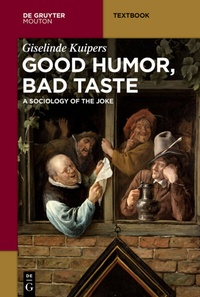
Good Humor, Bad Taste
A Sociology of the Joke
1st Edition
Published on 24. April 2015
XVIII, 282 pages
978-1-5015-1044-1 (ISBN)
Description

This is an updated edition of Good Humor, Bad Taste: A Sociology of the Joke , published in 2006. Using a combination of interview materials, survey data, and historical materials, it explores the relationship between humor and gender, age, social class, and national differences in the Netherlands and the United States. This edition includes new developments and research findings in the field of humor studies.
More details
Other editions
Additional editions
E-Book
04/2015
1st Edition
De Gruyter Mouton
€39.95
Available for download
Book
03/2015
1st Edition
De Gruyter Mouton
€33.95
Article not available at the moment
Person
Content
- Intro
- Preface to the new edition
- Acknowledgments
- Contents
- Chapter 1. Introduction: Jokes, humor, and taste
- Researching jokes
- Jokes and humor
- Humor as a social phenomenon
- Humor and taste
- The context of Dutch humor
- The design of this book
- Part I Style and social background
- Chapter 2. The joke: Genesis of an oral genre
- The joke as oral culture
- The spread of the joke
- The genesis of the joke
- The status of the joke
- High and low humor
- Conclusion: Changing criteria for judging the joke
- Chapter 3. Joke telling as communication style
- Joke telling and social background
- Jokes and gender
- Jokes and class
- Gender roles and class cultures
- Joking and trade
- Humorous communication styles
- Gender and speech
- Class and speech
- Conclusion: Objections to jokes and criteria for good humor
- Chapter 4. The humor divide: Class, age and humor styles
- Humor styles: High and low, old and young
- Style, status, and knowledge
- Highbrow and lowbrow humor styles
- Arguments for lowbrow humor
- Arguments for highbrow humor
- The eye of the beholder?
- Humor styles and taste variations
- Conclusion: Humor styles beyond standardized Dutch humor?
- Chapter 5. The logic of humor styles
- Distinguishing good humor from bad
- Coarseness: Objections to bad humor
- "A good sense of humor": Criteria for good humor
- Class culture and humor style
- The sense of humor and the self: humor style and authenticity
- Conclusion: Jokes, taste, and authenticity
- Part II Taste and quality
- Chapter 6. The repertoire: Dutch joke culture
- Jokes and social boundaries
- Innocuous jokes: Stupidity and other unseemly behavior
- Sexual jokes: From allusion to transgression
- Irreverent jokes: Religion, power, suffering and sickness
- Hurtful jokes: Jokes at the expense of others
- Conclusion: The hardening of the humor
- Chapter 7. Temptation and transgression
- The balance between funny and offensive
- Varying viewpoints on offensiveness
- Tempting the laugh
- World-class jokes: Joke tellers on joke technique
- The importance of joke-work
- "Humor is humor": The incompatibility of humor and morals
- Conclusion: temptation, transgression, and joke quality
- Chapter 8. Sense and sociability
- Personal styles of joke tellers
- Avoiding or transgressing boundaries
- Specialists and generalists
- Transgression, identification, and Dutch joke culture(s)
- Young and old
- Men and women
- Non-college and college-educated people
- Conclusion: Mechanisms of taste and the sense of sociability
- Part III Comparing humor styles
- Chapter 9. National humor styles: Humor styles, joke telling and social background in the United States
- Researching humor styles in America
- Jokes and humor styles in the United States: Survey results
- Transgression and identification in American jokes
- American humorous identifications
- The social status of the joke in America
- American arguments against the joke
- American views on a good sense of humor
- "You gotta have a sense of humor": Humor and the moral self
- Conclusion: Telling a joke to save your life
- Chapter 10. Sociology and the joke
- The appreciation of jokes: Genre and individual jokes
- Style: Evaluating a humorous genre
- Form and content: Evaluating individual jokes
- Gender, age, class and nationality: The dynamics of social differences
- Gender and role
- Age and phase
- Class and culture
- National differences and cultural logics
- Distinction and difference
- Good humor and bad taste
- Appendix 1. The jokes used in the Dutch survey
- Appendix 2. Dutch humorists and television programs
- References
- Subject index
