

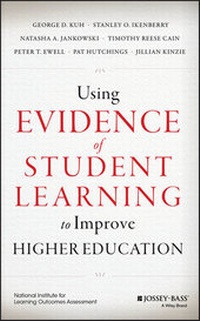
Using Evidence of Student Learning to Improve Higher Education
Description

More details
Other editions
Additional editions
Persons
Content
PREFACE
UNDERSTANDING WHAT STUDENTS know and are able to do as a result of their college education is no simple task, yet it is fundamental to student success and to the quality and effectiveness of American higher education. This volume grows out of a deep concern that the practical value of otherwise well-conceived efforts to assess student learning in American higher education is often diminished by deeply nested misconceptions. Many in the academy-especially those most directly responsible for the assessment of student learning-still view the assessment of student learning as an obligatory, externally imposed chore of compliance and accountability. Yes, to be fair, the capacity and commitment of colleges and universities to assess student learning outcomes have grown substantially, especially over the last decade. But the fruits of these investments-the tangible benefits to students and academic institutions-are embarrassingly modest.
What is required, we believe, is a fundamental reframing of the conversation around assessment and a clearer focus on the use of evidence of student learning in more productive and targeted ways. As we explain in this book, a complex, evolving combination of trends and forces makes evidence of student learning essential to improving student success and strengthening the vitality of colleges and universities. The quality of student learning at colleges and universities is inadequate-even declining, some say-and the meaning and coherence of a college degree are threatened as most undergraduates attend multiple institutions. New providers of higher education, transformative emergent technologies, anxiety over college costs, scarce and constrained resources, high levels of student debt, and the growing concerns of governing board members, employers, policymakers, accreditors, donors, and others have placed the gathering and use of evidence of student learning in a new light. Often missed in this cacophony of voices is the fact that many institutions have been responding to these challenges for years, but with too little to show for their efforts.
It is the use of evidence of student learning-its utility and impact on the lives of students and the prospects of campuses-that is the focus of this book. Documenting student learning and the conditions that promote high levels of student performance is a daunting task. Knowing how to harness evidence of student learning to improve teaching and learning and propel students to greater accomplishment is ultimately what matters.
This is the central challenge we take up in this book: identifying what colleges and universities must do to move the assessment of student learning from an act of compliance to the use of assessment results to guide changes that foster stronger student and institutional performance. Rather than accept the conventional view that going through the motions of assessment is a necessary burden, we argue that evidence of student learning is essential to strengthen the impact of courses, programs, and collegiate experiences; to ensure that students acquire the intended knowledge, proficiencies, and dispositions; to continuously improve teaching and learning; and to document the value of higher education to individuals and society. Thus conceived, gathering evidence of student learning is not for compliance with external demands but, rather, an institutional strategy, a core function of continuous improvement, and a means for faculty and staff to elevate student success and strengthen institutional health.
The Authors
The contributors to this book are especially well suited to take up its challenge. All are actively engaged with the work of the National Institute for Learning Outcomes Assessment (NILOA), which is colocated at the University of Illinois and Indiana University. Founded in 2008, NILOA is the leading national voice supporting efforts by colleges and universities to obtain, use, and share evidence of student learning to strengthen student attainment and improve undergraduate education. NILOA's monthly newsletter informs more than 6,500 college presidents, provosts, faculty, student affairs staff, institutional research directors, and assessment professionals about fresh thinking and new developments, resources including NILOA reports on special topics, case studies featuring best practices, and related topics. On average, more than 10,000 individuals each month visit the NILOA website (www.learningoutcomesassessment.org); most are from the United States, but academics from 120 countries and territories also draw on NILOA resources.
Since 2012, NILOA has tracked the use of Lumina Foundation's Degree Qualifications Profile (DQP) and related efforts to calibrate teaching and learning activities with desired outcomes, including developing a library of exemplary course assignments from different disciplines that elicit essential learning outcomes. NILOA's Occasional Paper series-with more than 20 releases at the time of this writing-has engaged the nation's most prominent educational leaders and assessment scholars and practitioners in a dialogue around contemporary issues. All of these efforts are designed to increase the capacity of colleges and universities to gather and use evidence of student learning to guide change in ways that strengthen the quality and impact of American higher education.
Taken together, the contributors to this volume represent an exceptional blend of scholarly acumen and practical experience.
Tim Cain, a historian of higher education with a background in college student development, brings to his inquiries related to faculty involvement in outcomes assessment both expertise on faculty and students and experience codirecting a campus-wide undergraduate research initiative at the University of Illinois.
Peter Ewell, at the National Center on Higher Education Management Systems, inspired and chronicled many of the formative and contemporary events shaping assessment work since the mid-1980s by working with hundreds of campuses and providing policy advice on assessment to states and accreditors.
Pat Hutchings was among the pioneers at Alverno College in its early years of outcomes assessment, served as the inaugural director of the American Association for Higher Education Assessment Forum, and, as a senior scholar at the Carnegie Foundation for the Advancement of Teaching, worked with faculty who were studying their students' learning.
Stan Ikenberry, president emeritus of the University of Illinois and the American Council of Education and NILOA co-principal investigator, has a lifetime of experience in American higher education and a deep understanding of why colleges and universities must harness evidence of student learning to confront the challenges facing students and institutions.
Natasha A. Jankowski manages the day-to-day work of NILOA and is among the best-informed scholar-practitioners about issues related to public reporting and use of assessment data to mobilize resources to realize the promises of data-informed efforts to promote student success and institutional improvement.
Jillian Kinzie, through her work with hundreds of colleges and universities at the National Survey of Student Engagement (NSSE) Institute for Effective Educational Practice and her experience with various accreditation organizations and review teams, brings deep insight into the applications of assessment results for institutional improvement.
George Kuh, also a NILOA co-principal investigator, with his leadership roles with national assessment programs such as NSSE, the Strategic National Arts Alumni Project (SNAAP), and the College Student Experiences Questionnaire (CSEQ) research program, coupled with a 35-year run as a university faculty member and academic administrator, brings another set of informed perspectives and expertise to the topics this book addresses.
Perhaps the most important qualification these authors share is a commitment to shift the functions and forms of assessment away from the conventional view that assessment is primarily an act of compliance to the realization that gathering and using evidence of student accomplishment are indispensable for addressing concerns about academic quality and informing institutional improvement.
The Organization of the Book
Stan Ikenberry and George Kuh open the book with their chapter "From Compliance to Ownership: Why and How Colleges and Universities Assess Student Learning." They present the contextualized rationale for why it is imperative for the focus of assessment to shift from an act of mere compliance to one of institutional ownership in which evidence of student learning is harnessed to make decisions and guide change. As signaled earlier, the guiding premise is that assessment of student learning is essential to student success and institutional performance. While this same work may also confirm the quality and benefit of higher education and may be useful to regional accreditors and policymakers, the value of evidence of student learning lies on campus, within the academy, where it can be harnessed to make wiser decisions and improve the learning experience of all students.
This volume is then divided into three main parts.
Part I: Making Assessment Work
In Chapter 2, "Evidence of Student Learning: What Counts and What Matters for Improvement," Pat Hutchings, Jillian Kinzie, and Kuh discuss what constitutes actionable evidence of...
