

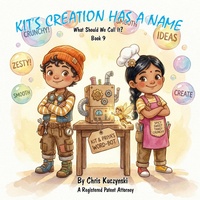
Kit's Creation Has a Name: What Should We Call It?
Description

Kit made something. It works. Now what is it called? Kit thinks. Sparks thinks. The cat thinks. They try names. They cross names out. They try more names. By the end, Kit has chosen the perfect name for the most important thing he knows: Kit's invention.
Naming is the first step toward ownership. In intellectual property law, this is called trademark. In a three year old's world, this is called "Mine. It's called Twirly." The vocabulary changes; the right does not. Book 9 teaches children that the thing they made is theirs to name, and that the name they choose matters.
Kit tries silly names, serious names, names that almost work, names that already exist. Each choice teaches a tiny lesson: a name has to be different, has to be memorable, has to feel like the thing. By the end, children understand that naming is its own creative act, separate from making.
Illustrated in watercolor with the invention's evolving name written across each spread. Sturdy board pages. Free narrated read-aloud. Free educator guide with a "name your creation" activity sheet for children to fill in.
For parents whose child names every stuffed animal. For preschool teachers introducing early literacy and self expression. For families raising a child who knows their work is worth naming.
Written by Chris Kuczynski, an engineer for the first twelve years of his career, then a registered patent attorney, and a co-founder of a preschool. He wrote the Kit's Little Sparks series to give two to four year olds the language of invention long before kindergarten.
Book 9 is part of Kit's Little Sparks, a 20 book board book series that walks young children through five developmental phases of an inventor: wondering, making, sharing, growing together, and becoming. Book 10 is where Kit says, out loud, the most important sentence of the series.
