

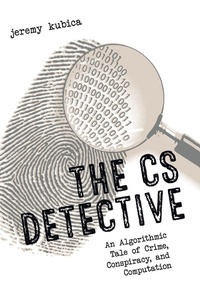
The CS Detective
An Algorithmic Tale of Crime, Conspiracy, and Computation
Published on 16. August 2016
256 pages
978-1-59327-787-1 (ISBN)
Description

Meet Frank Runtime. Disgraced ex-detective. Hard-boiled private eye. Search expert.
When a robbery hits police headquarters, it's up to Frank Runtime and his extensive search skills to catch the culprits. In this detective story, you'll learn how to use algorithmic tools to solve the case. Runtime scours smugglers' boats with binary search, tails spies with a search tree, escapes a prison with depth-first search, and picks locks with priority queues. Joined by know-it-all rookie Officer Notation and inept tag-along Socks, he follows a series of leads in a best-first search that unravels a deep conspiracy. Each chapter introduces a thrilling twist matched with a new algorithmic concept, ending with a technical recap.
Perfect for computer science students and amateur sleuths alike, The CS Detective adds an entertaining twist to learning algorithms.
Follow Frank's mission and learn:
-The algorithms behind best-first and depth-first search, iterative deepening, parallelizing, binary search, and more
-Basic computational concepts like strings, arrays, stacks, and queues
-How to adapt search algorithms to unusual data structures
-The most efficient algorithms to use in a given situation, and when to apply common-sense heuristic methods
When a robbery hits police headquarters, it's up to Frank Runtime and his extensive search skills to catch the culprits. In this detective story, you'll learn how to use algorithmic tools to solve the case. Runtime scours smugglers' boats with binary search, tails spies with a search tree, escapes a prison with depth-first search, and picks locks with priority queues. Joined by know-it-all rookie Officer Notation and inept tag-along Socks, he follows a series of leads in a best-first search that unravels a deep conspiracy. Each chapter introduces a thrilling twist matched with a new algorithmic concept, ending with a technical recap.
Perfect for computer science students and amateur sleuths alike, The CS Detective adds an entertaining twist to learning algorithms.
Follow Frank's mission and learn:
-The algorithms behind best-first and depth-first search, iterative deepening, parallelizing, binary search, and more
-Basic computational concepts like strings, arrays, stacks, and queues
-How to adapt search algorithms to unusual data structures
-The most efficient algorithms to use in a given situation, and when to apply common-sense heuristic methods
More details
Other editions
Additional editions
Book
08/2016
1st Edition
No Starch Press
€24.00
Shipment within 3-4 weeks
Person
Jeremy Kubica is a principal engineer at Google working on machine learning and algorithms. He has a PhD in robotics from Carnegie Mellon University and a BS in computer science from Cornell University. Kubica is the author of the popular Computational Fairy Tales blog.
Content
- Intro
- Title Page
- Copyright Page
- About the Author
- About the Technical Reviewer
- Contents
- Acknowledgments
- A Note to Readers
- Chapter 1: Search Problems
- Chapter 2: Exhaustive Search for an Informant
- Chapter 3: Arrays and Indexes on a Criminal's Farm
- Chapter 4: Strings and Hidden Messages
- Chapter 5: Binary Search for a Smuggler's Ship
- Chapter 6: Binary Search for Clues
- Chapter 7: Adapting Algorithms for a Daring Escape
- Chapter 8: Socks: An Interlude and an Introduction
- Chapter 9: Backtracking to Keep the Search Going
- Chapter 10: Picking Locks with Breadth-First Search
- Chapter 11: Depth-First Search in an Abandoned Prison
- Chapter 12: Cafeteria Stacks and Queues
- Chapter 13: Stacks and Queues for Search
- Chapter 14: Let's Split Up: Parallelized Search
- Chapter 15: Iterative Deepening Can Save Your Life
- Chapter 16: Inverted Indexes: The Search Narrows
- Chapter 17: A Binary Search Tree Trap
- Chapter 18: Building Binary Search Ladders
- Chapter 19: Binary Search Trees for Suspects
- Chapter 20: Adding Suspects to the Search Tree
- Chapter 21: The Binary Search Tree Property
- Chapter 22: Tries for Paperwork
- Chapter 23: Best-First Search: A Detective's Most Trusted Tool
- Chapter 24: Priority Queues for Investigations
- Chapter 25: Priority Queues for Lock Picking
- Chapter 26: Heuristics in Search
- Chapter 27: Heaps in Politics and Academia
- Chapter 28: Difficult Search Problems
- Chapter 29: Search Termination
- Epilogue
- Index
- Updates
- Meet Frank Runtime. Disgraced Ex-Detective. Hard-Boiled Private Eye. Search Expert.
