

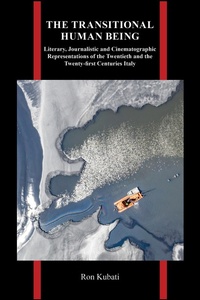
The Transitional Human Being
Description

This book analyzes the crisis of the idea of human being based on timeless notions, in the Euroamerican context, as seen primarily through literature and cinema. It focuses on Italy, which has been and remains a crossroads for diverse cultural and political currents-open to Mediterranean cultural influences while remaining within a typically Western cultural context. The "new man," defined by Corrado Alvaro during his trip in Russia in 1934 as "transitional," implies a human being with a fundamental need for change. Instead of the "new man," Italo Calvino in the 1960 preface to his I nostri antenati wrote about the incomplete human being who is always changing, always being completed without ever reaching completion, and thus always in transition.
In these pages, the author examines the twentieth- and twenty-first-centuries Italian metamorphosis of the concept of the human being, mirroring closely at every historical turn the contextual demands of the country. From Brignone's film Sotto la croce del sud (1938), and its faulted "biracial" protagonists to the Netflix series Summertime (2020), characterized by the intentional lack of problematization of a multicultural society; from the fascist manhood represented by Roberto Rossellini's aviator "modern knight of our time"(1942), to Fellini's Marcello who chooses to not choose (1959); from Marinetti's idea of the woman who belonged "to the race's development" (1919) to Mazzacurati's Mara, who wishes "to live thirteen different lives" (2007); from Primo Levi's non-humans and stripped men, to not-belonging, to Arendt's stateless persons, to migrants crossing the desert and the Mediterranean sea in Segre's and Rosi's movies (2008, 2016): the journey chronicled in these pages is a surprising one, as today's Italy is very different than that imagined toward the second half of the nineteenth century.
More details
Other editions
Additional editions
Person
Content
Part One: The "New Man"
Chapter One: The "New Man" and the Universal Man
Chapter Two: Fascism, Nazism and Bolshevism in Alvaro
Chapter Three: Soldiers and Mothers of the Race
Chapter Four: The Stripped Man
Chapter Five: The Interruption of Tradition
Chapter Six: From Berlin to Rome
Conclusion to Part One
Part Two: The Urban Explorer
Chapter Seven: Excluded and Transformed
Chapter Eight: Different Readings of Pasolini
Chapter Nine: Literature as Re-Representation: Calvino and the Encyclopedic Novel
Chapter Ten: Fellini's Invisible Cities
Conclusion to Part Two
Part Three: The Geographic Human Being
Chapter Eleven: The Italo-Albanian Cinematographic Confrontation on Fascism and Immigration
Chapter Twelve: Lampesuda: The New Border
Chapter Thirteen: The Modesty of Representation
Chapter Fourteen: On Communities
Chapter Fifteen: The Multi-Belonger
Conclusion to Part Three
A Final Note
Notes
Works Cited
Filmography
Index
About the book
About the author
