

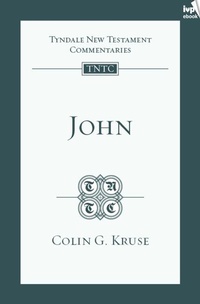
John
Tyndale New Testament Commentary
Published on 26. March 2015
496 pages
978-1-78359-315-6 (ISBN)
Description

Among the Gospels, John's is unique. Its structure incorporates long conversations and extended debates, and much of its content is not found elsewhere. Jesus' relationship to the Father and his teaching on the Holy Spirit are given special prominence. Ultimately, faith, believing in Jesus, is at the centre - with signs highlighted to provoke faith and stories of those who responded to Jesus as examples of faith. Colin Kruse shows how the Fourth Gospel weaves its themes of belief and unbelief into its rich Christology.
This exegetical commentary on the Gospel of John is part of the Tyndale New Testament Commentaries series designed to help the reader of the Bible understand what the text says and what it means.
This exegetical commentary on the Gospel of John is part of the Tyndale New Testament Commentaries series designed to help the reader of the Bible understand what the text says and what it means.
More details
Language
English
Place of publication
Nottingham
United Kingdom
Product notice
Reflowable
ISBN-13
978-1-78359-315-6 (9781783593156)
Copyright in bibliographic data and cover images is held by Nielsen Book Services Limited or by the publishers or by their respective licensors: all rights reserved.
Schweitzer Classification
Other editions

Person
Colin G. Kruse is Senior Lecturer in New Testament, Melbourne School of Theology. His previous books include Paul, the Law and Justification, Paul's Letter to the Romans (PNTC), The Letters of John (PNTC), 2 Corinthians (TNTC) and New Testament Models for Ministry: Jesus and Paul.
Content
- Intro
- Tyndale New Testament Commentaries
- John
- Contents
- General preface
- Author's preface
- Chief Abbreviations
- Select Bibliography
- Commentaries
- Other Works
- Introduction
- 1. Overview
- 2. Distinctive features of the Fourth gospel
- 3. The Fourth Gospel and the letters of John: a scenario
- 4. Composition of the Fourth Gospel
- 5. Purpose and readership
- 6. Authorship
- a. External evidence
- b. Internal evidence
- c. Reasons for frequent rejection of apostolic authorship
- 7. Date and place of writing
- 8. Historical reliability
- 9. Recent trends in the interpretation of the Fourth gospel
- a. A Gospel of Signs
- b. A two-level drama
- c. Narrative criticism
- 10. Theology of the Fourth gospel
- a. God the Father
- b. Jesus the Son
- c. The Holy Spirit
- d. Eschatology
- e. Eternal life/salvation
- f. Witness
- g. Faith and signs
- h. Love and obedience
- i. The church
- j. Sacramentalism
- k. 'The Jews' in the Fourth Gospel
- 11. Structure of the Fourth gospel
- ANALYSIS
- 1. Prologue (1:1-18)
- 2. Jesus' work in the world (1:19-12:50)
- 3. Jesus' return to the father (13:1-20:31)
- 4. Epilogue (21:1-25)
- COMMENTARY
- 1. Prologue (1:1-18)
- A. The Word as he was in the beginning (1:1-5)
- B. The ministry of John (the Baptist) (1:6-8)
- C. The true light comes into the world (1:9-11)
- D. Those who receive the Word become children of God (1:12-13)
- E. The coming of the Word into the world (1:14)
- Additional note: Monogenes
- F. The testimony of John (the Baptist) (1:15)
- G. The Word makes the Father known (1:16-18)
- 2. Jesus' work in the world (1:19-12:50)
- A. John the Baptist bears witness to Jesus (1:19-34)
- i. John's testimony to 'the Jews' of Jerusalem (1:19-28)
- ii. John's testimony to Jesus as the Lamb of God (1:29-34)
- B. Early disciples follow Jesus (1:35-51)
- i. John's disciples follow Jesus (1:35-39)
- ii. Andrew brings Peter to Jesus (1:40-42)
- iii. Jesus calls Philip and Philip brings Nathanael to Jesus (1:43-51)
- Additional note: 'The Son of Man'
- C. The wedding feast at Cana (2:1-12)
- Additional note: Signs
- D. Jesus goes up to Jerusalem for Passover (2:13-25)
- i. Cleansing the temple (2:13-22)
- Additional note: The different words used for 'temple' in 2:13-22
- ii. Jesus and those who 'believed' (2:23-25)
- E. Jesus and Nicodemus (3:1-21)
- i. Jesus' conversation with Nicodemus (3:1-15)
- Additional note: Being born of water and the Spirit
- Additional note: Eternal life
- ii. The evangelist's comments (3:16-21)
- Additional note: Judgment
- F. The ministries of John the Baptist and Jesus (3:22-36)
- i. The overlapping ministries of Jesus and John (3:22-24)
- ii. The debate between John's disciples and a Jew (3:25-30)
- iii. The evangelist's comments (3:31-36)
- G. Jesus and the woman of Samaria (4:1-42)
- i. The setting (4:1-6)
- ii. Jesus' conversation with the Samaritan woman (4:7-30)
- Additional note: Jews and Samaritans
- Additional note: Ego eimi
- iii. Jesus instructs his disciples (4:31-38)
- iv. Jesus and the Samaritan townspeople (4:39-42)
- Additional note: The Saviour of the world
- H. The healing of the royal official's son (4:43-54)
- I. Jesus heals an invalid at the pool of Bethesda (5:1-47)
- i. The setting (5:1-3)
- ii. Jesus heals the invalid (5:5-9a)
- iii. 'The Jews' and the man who was healed (5:9b-13)
- iv. Jesus and the man whom he healed (5:14)
- v. The man who was healed and 'the Jews' (5:15)
- vi. Jesus and 'the Jews' (5:16-18)
- vii. The authority of the Son (5:19-30)
- viii. Witnesses to Jesus (5:31-47)
- J. Jesus and the bread of life (6:1-71)
- i. Jesus feeds the five thousand (6:1-15)
- Additional note: Kingship
- ii. Jesus walks on the Sea of Galilee (6:16-21)
- iii. The crowd follow Jesus to Capernaum (6:22-24)
- iv. Jesus' bread of life discourse (6:25-59)
- v. Many disciples stop following Jesus (6:60-71)
- K. Jesus goes to Jerusalem for the Feast of Tabernacles (7:1-52)
- i. Prior to the feast: the unbelief of Jesus' brothers (7:1-9)
- ii. During the feast: 'the Jews' look for Jesus (7:10-13)
- iii. During the feast: Jesus teaches in the temple (7:14-24)
- iv. During the feast: Jerusalemites ask, 'Is this the Christ?'(7:25-31)
- v. During the feast: officers sent to arrest Jesus (7:32-36)
- vi. Last day of the feast: Jesus offers living water (7:37-39)
- vii. Last day of the feast: division among the people (7:40-44)
- viii. Last day of the feast: officers return empty handed (7:45-52)
- L. Jesus forgives a woman taken in adultery (7:53-8:11)
- M. Jesus in conflict with 'the Jews' of Jerusalem (8:12-59)
- i. Jesus, the light of the world (8:12-20)
- ii. Where I am going you cannot come (8:21-29)
- iii. The truth will make you free (8:30-38)
- iv. Your father the devil (8:39-47)
- v. Before Abraham was I am (8:48-59)
- N. Jesus heals a man born blind (9:1-41)
- i. Jesus' disciples ask about the man born blind (9:1-5)
- ii. Jesus heals the man born blind (9:6-7)
- iii. The man is questioned by his neighbours (9:8-12)
- iv. The man is questioned by the Pharisees (9:13-17)
- v. Parents of the man are questioned by 'the Jews' (9:18-23)
- vi. The man is questioned by 'the Jews' again (9:24-34)
- vii. Jesus reveals himself to the man (9:35-39)
- viii. Jesus accuses the Pharisees of 'blindness' (9:40-41)
- O. Jesus, the good shepherd (10:1-21)
- i. The parable of the sheepfold (10:1-6)
- ii. Jesus, the good shepherd (10:7-21)
- P. Jesus at the Feast of Dedication (10:22-42)
- i. Conflict with 'the Jews' (10:22-39)
- ii. Jesus departs from Jerusalem (10:40-42)
- Q. Jesus restores Lazarus to life and its aftermath (11:1-54)
- i. Jesus receives news of Lazarus' illness (11:1-6)
- ii. Jesus decides to return to Judea (11:7-16)
- iii. Jesus meets Martha (11:17-27)
- iv. Jesus meets Mary (11:28-37)
- v. Lazarus restored to life (11:38-44)
- vi. The decision to kill Jesus (11:45-54)
- R. Jesus' hour has come (11:55-12:50)
- i. 'The Jews' look for Jesus in Jerusalem at Passover (11:55-57)
- ii. Mary anoints Jesus' feet at Bethany (12:1-8)
- iii. The plot to kill Lazarus (12:9-11)
- iv. Jesus' triumphal entry into Jerusalem (12:12-19)
- v. Greek pilgrims seek Jesus (12:20-26)
- vi. Jesus faces the prospect of the cross (12:27-36)
- vii. The evangelist explains the unbelief of the crowd (12:37-43)
- viii. Jesus' final word to 'the Jews' (12:44-50)
- 3. Jesus' return to the Father (13:1-20:31)
- A. The Last Supper (13:1-30)
- i. Jesus washes his disciples' feet (13:1-11)
- ii. A lesson for the disciples (13:12-17)
- iii. Jesus' knowledge of what was to happen (13:18-20)
- iv. Jesus predicts his betrayal by Judas Iscariot (13:21-30)
- B. The first part of the farewell discourse (13:31-14:31)
- i. Jesus to be glorified and the love command (13:31-35)
- ii. Peter's denial predicted (13:36-38)
- iii. The way to the Father (14:1-11)
- iv. Greater works and prayer (14:12-14)
- Additional note: 'In my name / in his name'
- v. The first promise of the Counsellor (14:15-21)
- Additional note: The Parakletos
- vi. Jesus does not reveal himself to the world (14:22-24)
- vii. Jesus speaks of his departure again (14:25-31)
- C. The second part of the farewell discourse (15:1-16:33)
- i. The true vine and its branches (15:1-17)
- ii. The world's hatred of Jesus and his followers (15:18-16:4)
- iii. The work of the Counsellor (16:5-15)
- iv. The disciples' grief will give way to joy (16:16-24)
- v. Jesus speaks plainly to his disciples (16:25-33)
- D. Jesus' prayer (17:1-26)
- i. Jesus prays for himself (17:1-5)
- ii. Jesus prays for his disciples (17:6-19)
- iii. Jesus prays for all who are to believe (17:20-24)
- iv. Jesus concludes his prayer (17:25-26)
- E. The passion narrative (18:1-19:42)
- i. Jesus is betrayed and arrested in the olive grove (18:1-11)
- ii. Jesus taken to Annas (18:12-14)
- iii. Peter's first denial (18:15-18)
- iv. The high priest questions Jesus (18:19-24)
- v. Peter's second and third denials (18:25-27)
- vi. Jesus' trial before Pilate (18:28-19:16a)
- vii. Jesus is crucified (19:16b-22)
- viii. The soldiers divide Jesus' garments (19:23-24)
- ix. Jesus makes provision for his mother (19:25-27)
- x. The death of Jesus (19:28-30)
- xi. Jesus' side is pierced (19:31-37)
- xii. The burial of Jesus (19:38-42)
- F. The resurrection narrative (20:1-31)
- i. The morning of the first day of the week (20:1-18)
- ii. The evening of the first day of the week (20:19-23)
- iii. The following Sunday (20:24-29)
- iv. Concluding statement of purpose (20:30-31)
- 4. Epilogue (21:1-25)
- A. Jesus appears to seven disciples (21:1-14)
- B. Jesus and Peter (21:15-19)
- C. Jesus and the beloved disciple (21:20-24)
- D. Conclusion (21:25)
- Bibliography
- Notes
- Introduction
- Chapter 1
- Chapter 2
- Chapter 3
- Chapter 4
