

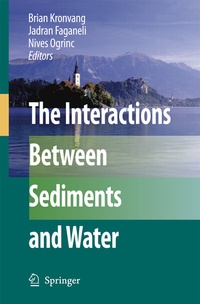
The Interactions Between Sediments and Water
Description

This book focuses on sediments as a pollutant in natural freshwater and marine habitats, and as a vector for the transfer of chemicals such as nutrients and contaminants. Sediment-water research is carried out all over the world within a variety of disciplines. The selected papers cover three main topics:
-assessment and/or restoration of disturbed watersheds
-sediment-water linkages in terrestrial and aquatic environments
-evaluation of sediment and ecological changes in marine and freshwater habitats.
Innovative research in both developed and less developed countries is included and both fundamental research and insight into applied research and system management are covered.
This book will be of interest to graduate students, researchers, catchment managers and government regulators working within many areas of education, protection and management of the environment, including sediment geochemistry and dynamics, aquatic habitats, water quality, aquatic ecology, river morphology, restoration techniques and catchment management.
More details
Other editions
Additional editions
Content
INTERACTIONS BETWEEN SEDIMENT AND WATER: PERSPECTIVES ON THE 10TH INTERNATIONAL ASSOCIATION FOR SEDIMENT WATER SCIENCE SYMPOSIUM (p. 1)
ELLEN L. PETTICREW1, IAN G. DROPPO2, NIVES OGRINC3, BRIAN KRONVANG4 and JADRAN FAGANELI5
1School of Geography, University of Plymouth, Plymouth, UK
2National Water Research Institute, Burlington, Canada
3Department of Environmental Science, Jozef Stefan Institute, Ljubljana, Slovenia
4National Environmental Research Institute, Silkeborg, Denmark
5Marine Biological Station, National Institute of Biology, Piran, Slovenia
Abstract.
The 10th International Symposium on Interactions Between Sediment and Water was held in Lake Bled, Slovenia from August 28 to September 3, 2005. Approximately 155 delegates, attended the symposium where talks and posters addressed five themes incorporating the physical, chemical, biological, and/or management aspects of lacustrine, riverine, estuarine, and/or marine sediment were presented.
A review of the symposium themes and plenary talks was provided. As well, this symposiums’ focus is put into context with respect to historical changes noted over the 29 years that the International Association for Sediment Water Science (IASWS) has been meeting.
Keywords: sediment, water, aquatic science, IASWS
The International Association for Sediment Water Science (IASWS) developed from a meeting in Amsterdam in 1976, held to respond to a need for specific discussions on sediment-water interactions. At that time collaborations between academic disciplines and/or different aquatic environments was novel, and the value of meeting to discuss riverine, lacustrine and marine sediment-water issues was recognized, such that it has continued on a 3-year cycle.
This 10th symposium held in Lake Bled, Slovenia brought together an interdisciplinary group of 155 scientists from 35 countries that included geochemists, aquatic ecologists, sedimentologists, geomorphologists, environmental engineers and ecosystem managers. This symposium was structured around five themes:
(1) Source, fate and effect of sediments in marine and freshwater ecosystems,
(2) Modeling the movement of aquatic sediments,
(3) Sediment-associated nutrient and contaminant processes,
(4) Assessing and/or restoring disturbed catchments and
(5) Biogenic influences on sediment water interactions from the micro- to macro-scale.
These process-oriented themes facilitated interdisciplinary interactions and incorporated 132 oral presentations and 121 poster presentations. Of these, 31 papers are presented in this special issue but are grouped by their aquatic environment: streams, lakes, coastal waters and estuaries, and catchment linkages.
Materials and Geoenvironment (Faganeli, Ogrinc, &, Horvat, 2005) contains the abstracts of all of the talks and posters that are as well posted via links on the IASWS website (www. iasws.com) until 2008.
Six plenary speakers were invited with Bojan Ogorelec from the Geologic Survey of Slovenia opening with a sediment water introduction to our symposium location, by providing a summary of Lake Bled sediment studies undertaken over the past 30 years. The other plenaries were invited to present extended talks on their research as it linked to the five symposium themes.
