

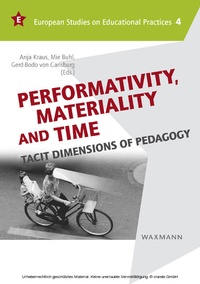
Performativity, Materiality and Time
Tacit Dimensions of Pedagogy
1st Edition
Published on 1. August 2014
143 pages
978-3-8309-8116-9 (ISBN)
Description

Focusing mainly on the tacit side of pedagogical practices entails not only a revision of instructional practices but also that of the existing theoretical approaches to educational practices and learning and a work on the methodology of empirical research in the Educational Sciences. In terms of this effort references to subjects, objects and given structures are replaced by the concepts performativity, materiality and time. In this volume the paradigm shift is applied to different educational fields, questions and methodologies, such as the performativity in imaginary, mediated and virtual spaces and other tacit subjects of learning, such as language education, the ethical implications of the adult-child differentiation, educational research on things and the mastery of university by the students.
More details
Other editions
Additional editions
Anja Kraus | Mie Buhl | Gerd-Bodo Von Carlsburg
Performativity, Materiality and Time
Tacit Dimensions of Pedagogy
Book
08/2014
1st Edition
Waxmann
€24.90
Article exhausted; check different version
Content
1 - Cover [Seite 2]
1.1 - Preface [Seite 6]
1.2 - Content [Seite 7]
2 - Introduction [Seite 8]
3 - Break In/Out [Seite 11]
4 - Teaching Performance in Performing Arts:Video Conferencing at the Highest Level of Music Education [Seite 17]
4.1 - 1. Introduction [Seite 17]
4.2 - 2. Classical Music Education as a Subject for Discussion [Seite 18]
4.3 - 3. Performativity as the Key to "the Third Room" of Music Education [Seite 20]
4.4 - 4. The Emergence and Research Design of the Project [Seite 22]
4.5 - 5. VCE and Music Activity as a Negotiating Field for Practising Teaching [Seite 25]
4.6 - 6. Results on the Significance of the Teaching Challenges of Music Education in a VCE [Seite 27]
4.7 - 7. Conclusion [Seite 33]
5 - Mimetic References to a Digital World [Seite 37]
5.1 - 1. Actors and Objects in Interaction [Seite 37]
5.2 - 2. Empirical Example: Irritations Caused by the Interface [Seite 39]
5.3 - 3. Body Images on the Screen [Seite 41]
5.4 - 4. Concluding Remarks: Self-Development in Hybrid Cultures [Seite 44]
6 - Mermaid Experiences - Empractical Subjectivation [Seite 48]
6.1 - Introduction [Seite 48]
6.2 - 1. Perspectives on a New Symbolic Activity: New SportsTrends [Seite 49]
6.3 - 2. Discourse and Practice: Historical Shifts in Symbolism [Seite 55]
6.4 - 3. Empirical Research on Mermaiding, First Results and Interpretations [Seite 64]
7 - In Search of the Content of Scientific Concepts: A Linguistic Ethnographic Analysis of the Translation Strategies of Teachers [Seite 76]
7.1 - Introduction [Seite 76]
7.2 - 1. School-Language Socialization and its Role in the Processes of Teaching and Learning [Seite 77]
7.3 - 2. Scientific Concepts and Everyday Concepts [Seite 79]
7.4 - 3. Research Methodology [Seite 80]
7.5 - 4. Confused Languages Stage of Concept Transmission [Seite 82]
7.6 - 5. Translation Strategies in the Search of the Content of Scientific Concepts [Seite 84]
7.7 - 6. Conclusion [Seite 92]
8 - Asymmetry and Gift. On Ethical Implications of the Adult-Child Differentiation [Seite 96]
9 - Materiality and Displacement. About the Pedagogically Framed Constitution of Subjectivity [Seite 108]
9.1 - 1. The Reference to the "Things" in Pedagogical Theories [Seite 109]
9.2 - 2. The Reference to the "Things" in Practical Pedagogical Regards [Seite 110]
9.3 - 3. The "Order of the Things" as a Critique on Traditional Pedagogy [Seite 111]
9.4 - 4. The "Order of the Things" as an Analytical Category [Seite 114]
9.5 - 5. The Analytical Potential of the "Things" in the Frame of Heterotopies [Seite 118]
9.6 - 6. Heterotopies and Displacement as Means of Pedagogy [Seite 120]
10 - Learning strategies - new routes for students to master university? [Seite 128]
10.1 - 1. Performance, performativity and Masters Discourse [Seite 128]
10.2 - 2. Self-ranking, the Gaze and the body as object! [Seite 132]
10.3 - 3. The Law, order and the object a [Seite 136]
10.4 - 4. Time and Freedom [Seite 137]
10.5 - 5. Summary [Seite 139]
11 - About the Authors [Seite 142]
1.1 - Preface [Seite 6]
1.2 - Content [Seite 7]
2 - Introduction [Seite 8]
3 - Break In/Out [Seite 11]
4 - Teaching Performance in Performing Arts:Video Conferencing at the Highest Level of Music Education [Seite 17]
4.1 - 1. Introduction [Seite 17]
4.2 - 2. Classical Music Education as a Subject for Discussion [Seite 18]
4.3 - 3. Performativity as the Key to "the Third Room" of Music Education [Seite 20]
4.4 - 4. The Emergence and Research Design of the Project [Seite 22]
4.5 - 5. VCE and Music Activity as a Negotiating Field for Practising Teaching [Seite 25]
4.6 - 6. Results on the Significance of the Teaching Challenges of Music Education in a VCE [Seite 27]
4.7 - 7. Conclusion [Seite 33]
5 - Mimetic References to a Digital World [Seite 37]
5.1 - 1. Actors and Objects in Interaction [Seite 37]
5.2 - 2. Empirical Example: Irritations Caused by the Interface [Seite 39]
5.3 - 3. Body Images on the Screen [Seite 41]
5.4 - 4. Concluding Remarks: Self-Development in Hybrid Cultures [Seite 44]
6 - Mermaid Experiences - Empractical Subjectivation [Seite 48]
6.1 - Introduction [Seite 48]
6.2 - 1. Perspectives on a New Symbolic Activity: New SportsTrends [Seite 49]
6.3 - 2. Discourse and Practice: Historical Shifts in Symbolism [Seite 55]
6.4 - 3. Empirical Research on Mermaiding, First Results and Interpretations [Seite 64]
7 - In Search of the Content of Scientific Concepts: A Linguistic Ethnographic Analysis of the Translation Strategies of Teachers [Seite 76]
7.1 - Introduction [Seite 76]
7.2 - 1. School-Language Socialization and its Role in the Processes of Teaching and Learning [Seite 77]
7.3 - 2. Scientific Concepts and Everyday Concepts [Seite 79]
7.4 - 3. Research Methodology [Seite 80]
7.5 - 4. Confused Languages Stage of Concept Transmission [Seite 82]
7.6 - 5. Translation Strategies in the Search of the Content of Scientific Concepts [Seite 84]
7.7 - 6. Conclusion [Seite 92]
8 - Asymmetry and Gift. On Ethical Implications of the Adult-Child Differentiation [Seite 96]
9 - Materiality and Displacement. About the Pedagogically Framed Constitution of Subjectivity [Seite 108]
9.1 - 1. The Reference to the "Things" in Pedagogical Theories [Seite 109]
9.2 - 2. The Reference to the "Things" in Practical Pedagogical Regards [Seite 110]
9.3 - 3. The "Order of the Things" as a Critique on Traditional Pedagogy [Seite 111]
9.4 - 4. The "Order of the Things" as an Analytical Category [Seite 114]
9.5 - 5. The Analytical Potential of the "Things" in the Frame of Heterotopies [Seite 118]
9.6 - 6. Heterotopies and Displacement as Means of Pedagogy [Seite 120]
10 - Learning strategies - new routes for students to master university? [Seite 128]
10.1 - 1. Performance, performativity and Masters Discourse [Seite 128]
10.2 - 2. Self-ranking, the Gaze and the body as object! [Seite 132]
10.3 - 3. The Law, order and the object a [Seite 136]
10.4 - 4. Time and Freedom [Seite 137]
10.5 - 5. Summary [Seite 139]
11 - About the Authors [Seite 142]
