

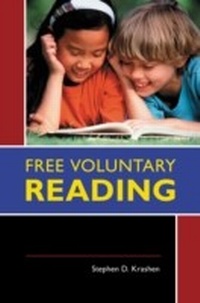
Free Voluntary Reading
1st Edition
Published on 18. May 2011
104 pages
978-1-59884-845-8 (ISBN)
Description

An eye-opening look at the latest research findings about the success of free voluntary reading in developing high levels of literacy.
Free voluntary reading looks better and more powerful than ever. Stephen D. Krashen, PhD, is an advocate for free voluntary reading in schools and has published many journal articles on the subject. Free Voluntary Reading: Power 2010 collects the last ten years of his extensive work and reconsiders all aspects of this important debate in light of the latest findings.
The book provides an accessible examination of topics, such as free voluntary reading's value in language and literary acquisition domestically and worldwide, recent developments in support of free voluntary reading, whether rewards-based programs benefit the development of lifelong reading, the value of phonics in reading instruction, and trends in literacy in the United States.
Free voluntary reading looks better and more powerful than ever. Stephen D. Krashen, PhD, is an advocate for free voluntary reading in schools and has published many journal articles on the subject. Free Voluntary Reading: Power 2010 collects the last ten years of his extensive work and reconsiders all aspects of this important debate in light of the latest findings.
The book provides an accessible examination of topics, such as free voluntary reading's value in language and literary acquisition domestically and worldwide, recent developments in support of free voluntary reading, whether rewards-based programs benefit the development of lifelong reading, the value of phonics in reading instruction, and trends in literacy in the United States.
More details
Edition
1. Auflage
Language
English
Place of publication
New York
United States
Publishing group
Bloomsbury Publishing Plc
Target group
Interest Age: From 7 to 17 years
ISBN-13
978-1-59884-845-8 (9781598848458)
Copyright in bibliographic data and cover images is held by Nielsen Book Services Limited or by the publishers or by their respective licensors: all rights reserved.
Schweitzer Classification
Other editions
Additional editions
Stephen D. Krashen
Free Voluntary Reading
Book
05/2011
Libraries Unlimited Inc
€39.20
Shipment within 15-20 days
Person
Stephen Krashen, PhD, is an advocate for free voluntary reading in schools.
Content
- Cover
- Contents
- Introduction
- 1. Eighty-Three Generalizations About Free Voluntary Reading
- Research on Sustained Silent Reading
- Guidelines for SSR
- 2. Does the Power of Reading Apply to All Languages?
- First Language Development
- Heritage Language
- Foreign Language Studies
- 3. Extensive Reading in English as a Foreign Language by Adolescents and Young Adults: A Meta-Analysis
- Access
- Duration
- Results
- Summary and Discussion
- Conclusion
- 4. Should We Reward Recreational Reading?
- Evaluating Accelerated Reader
- Is Accelerated Reader Harmful?
- A Jump-Start?
- The Cost
- Alternatives
- 5. The "Decline" in Reading in America: Another Case of the "Shock Doctrine"?
- Are Americans Reading Less?
- Are We Reading Worse?
- "No Single Barrier" to Raising Reading Rates?
- 6. Does Intensive Decoding Instruction Contribute to Reading Comprehension?
- Evidence from the National Reading Panel
- Evidence from Direct Instruction
- The Clackmannanshire Study
- Is Decoding Proficiency Part of Learning to Read?
- Heavy Skills Instruction Not Necessary
- 7. Free Voluntary Web-Surfing
- The Computer as Skill-Builder
- The Computer as a Source of Written Comprehensible Input
- The Computer as a Source of Comprehensible Texts
- Free Voluntary Surfing
- Conclusion
- 8. Hypotheses About Free Voluntary Reading
- The Forgetting Hypothesis
- The Effortless Reading Hypothesis
- The Unawareness of Acquisition Hypothesis
- The Comprehension Checking Hypothesis
- Conclusions
- Index
- A
- B
- C
- D
- E
- F
- G
- H
- I
- J
- K
- L
- M
- N
- P
- R
- S
- T
- U
- V
- W
- Y
- Z
