

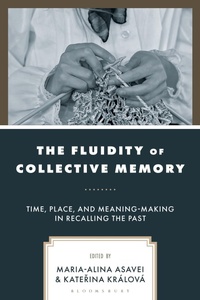
The Fluidity of Collective Memory
Time, Place, and Meaning-Making in Recalling the Past
1st Edition
Published on 8. January 2026
268 pages
979-8-216-26327-2 (ISBN)
Description

In their collective dimension, memories are fluid-their form and content constantly adjusted by locations, places, generations, cultures, traditions, politics, epistemic authorities, and historical predictabilities.
Contrary to the notion of memory as a static repository of facts, this volume examines the malleability of collective memory, exploring how memories are constantly adjusted and re-shaped in a temporal and spatial dimension of meaning-making. The contributors in this volume do not address memory in its psychological dimension. Instead, they explore the mnemonic materializations in cultural and social settings, treating memory as a powerful force that shapes the identity of societies, cultures, and communities. It is the tapestry of shared experiences, narratives, and symbols that define how a group remembers its past. This volume explores how societies actively construct meanings around these collective recollections and argues that collective memory is often constructed, reconstructed, negotiated, and questioned to serve various ends.
Contrary to the notion of memory as a static repository of facts, this volume examines the malleability of collective memory, exploring how memories are constantly adjusted and re-shaped in a temporal and spatial dimension of meaning-making. The contributors in this volume do not address memory in its psychological dimension. Instead, they explore the mnemonic materializations in cultural and social settings, treating memory as a powerful force that shapes the identity of societies, cultures, and communities. It is the tapestry of shared experiences, narratives, and symbols that define how a group remembers its past. This volume explores how societies actively construct meanings around these collective recollections and argues that collective memory is often constructed, reconstructed, negotiated, and questioned to serve various ends.
More details
Edition
1. Auflage
Language
English
Place of publication
New York
United States
Publishing group
Bloomsbury Publishing Plc
Target group
Professional and scholarly
ISBN-13
979-8-216-26327-2 (9798216263272)
Copyright in bibliographic data and cover images is held by Nielsen Book Services Limited or by the publishers or by their respective licensors: all rights reserved.
Schweitzer Classification
Other editions
Additional editions
Katerina Kralova | Maria-Alina Asavei
The Fluidity of Collective Memory
Time, Place, and Meaning-Making in Recalling the Past
Book
approx. 03/2026
Rowman & Littlefield Publishers
€120.40
Not yet published
Persons
Maria-Alina Asavei is Associate Professor in the Institute of International Studies, Faculty of Social Sciences, at Charles University, Czechia.
Katerina Králová is Professor in the Institute of International Studies, Faculty of Social Sciences, at Charles University, Czechia.
Katerina Králová is Professor in the Institute of International Studies, Faculty of Social Sciences, at Charles University, Czechia.
Content
List of Figures
List of Contributors
Introduction, Maria Alina Asavei and Katerina Kralova
Part I: Artistic and Cultural Memories in Changing Times and Spaces
1. From Text to Place and Back: Exploring Information Dynamics and Visitor Engagement at Literary Heritage Sites, Iulian Vamanu and Rachel Rackham
2. Villains of the Lost Paradise: Reshaping Histories and Shifting Memories of Nicolae and Elena Ceau?escu and Communism, Klara Vedlichova
3. Making and Un-Making Memories. Reviving Recent Contemporary Art in Romania, Cristina Stoenescu
4. Weaving between Meta-Narratives of Multiple Pasts: How Do the Postmodern Novels The Adventures of a Wanderer in Slovakia and Flights Employ Petite Histoire to Reveal the Socialist and Post-Socialist Simulacrum of the State? Claudia Macey-Dare
Part II: Testimonial Recounting of the Past: Shifting Meanings, Images, and Narratives
5. Nicolae Ceau?escu's Official Portrait in the Shifting Memories of Romania's Generation X, Alexandru Stanescu
6. Memories of Loss and Atrocities: Jewish Photographers of Thessaloniki and their Post-Holocaust Family Archives, Katerina Kralova and Nathalie Soursos
7. "Life(-long) Storying": An Integrated Approach to Understanding the Multidimensional Embeddedness of Personal Narrative Production, Jiri Kocian, Jakub Mlynar and Grygorii Maliukov
Part III: Urban Space and Memory Making and Un-Making
8. From Raising a Soviet Man to Building a US Embassy: The Republican Stadium in Chisinau between Two Hegemons, Katerina Fuksova and Ecaterina Pislari
9. Shifting Nostalgias through Urban Domestic Interiors in (Post-)Communist Romania, Maria Alina Asavei
Part IV: National(ist) Narratives between Heroism and Victimhood
10. Projecting National Victimhood into Foreign Policy: Serbia in the Wake of Russia's 2022 Invasion of Ukraine, Jessie Barton Hronesova
11. Unity through Disunity: Turkey and the Memory of the Treaty of Sevres in the Twenty-First Century, Jacob Maze
Index
List of Contributors
Introduction, Maria Alina Asavei and Katerina Kralova
Part I: Artistic and Cultural Memories in Changing Times and Spaces
1. From Text to Place and Back: Exploring Information Dynamics and Visitor Engagement at Literary Heritage Sites, Iulian Vamanu and Rachel Rackham
2. Villains of the Lost Paradise: Reshaping Histories and Shifting Memories of Nicolae and Elena Ceau?escu and Communism, Klara Vedlichova
3. Making and Un-Making Memories. Reviving Recent Contemporary Art in Romania, Cristina Stoenescu
4. Weaving between Meta-Narratives of Multiple Pasts: How Do the Postmodern Novels The Adventures of a Wanderer in Slovakia and Flights Employ Petite Histoire to Reveal the Socialist and Post-Socialist Simulacrum of the State? Claudia Macey-Dare
Part II: Testimonial Recounting of the Past: Shifting Meanings, Images, and Narratives
5. Nicolae Ceau?escu's Official Portrait in the Shifting Memories of Romania's Generation X, Alexandru Stanescu
6. Memories of Loss and Atrocities: Jewish Photographers of Thessaloniki and their Post-Holocaust Family Archives, Katerina Kralova and Nathalie Soursos
7. "Life(-long) Storying": An Integrated Approach to Understanding the Multidimensional Embeddedness of Personal Narrative Production, Jiri Kocian, Jakub Mlynar and Grygorii Maliukov
Part III: Urban Space and Memory Making and Un-Making
8. From Raising a Soviet Man to Building a US Embassy: The Republican Stadium in Chisinau between Two Hegemons, Katerina Fuksova and Ecaterina Pislari
9. Shifting Nostalgias through Urban Domestic Interiors in (Post-)Communist Romania, Maria Alina Asavei
Part IV: National(ist) Narratives between Heroism and Victimhood
10. Projecting National Victimhood into Foreign Policy: Serbia in the Wake of Russia's 2022 Invasion of Ukraine, Jessie Barton Hronesova
11. Unity through Disunity: Turkey and the Memory of the Treaty of Sevres in the Twenty-First Century, Jacob Maze
Index
