

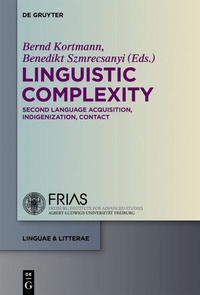
Linguistic Complexity
Description

Linguistic complexity is one of the currently most hotly debated notions in linguistics. The essays in this volume reflect the intricacies of thinking about the complexity of languages and language varieties (here: of English) in three major contact-related fields of (and schools in) linguistics: creolistics, indigenization and nativization studies (i.e. in the realm of English linguistics, the "World Englishes" community), and Second Language Acquisition (SLA) research: How can we adequately assess linguistic complexity? Should we be interested in absolute complexity or rather relative complexity? What is the extent to which language contact and/or (adult) language learning might lead to morphosyntactic simplification? The authors in this volume are all leading linguists in different areas of specialization, and they were asked to elaborate on those facets of linguistic complexity which are most relevant in their area of specialization, and/or which strike them as being most intriguing. The result is a collection of papers that is unique in bringing together leading representatives of three often disjunct fields of linguistic scholarship in which linguistic complexity is seen as a dynamic and inherently variable parameter.
Reviews / Votes
"This volume is a welcome addition to the growing body of work on linguisticcomplexity, especially as it pertains to morphosyntactic complexity in contactvarieties of English."Natalie Operstein and Amber Clontz in: Linguist List 23.5022More details
Other editions
Additional editions
Persons
Content
2 - Introduction: Linguistic complexity - Second Language Acquisition, indigenization, contact?????????????????????????????????????????????????????????????????????????????????????????????????????????????????????????????????????????????????????????????????????????????????????????????????? [Seite 12]
3 - Accounting for analyticity in creoles???????????????????????????????????????????????????????????????????????????????????????? [Seite 41]
4 - Nothing will come of nothing?????????????????????????????????????????????????????????????????????? [Seite 68]
5 - Deletions, antideletions and complexity theory, with special reference to Black South African and Singaporean Englishes???????????????????????????????????????????????????????????????????????????????????????????????????????????????????????????????????????????????????????????????????????????????????????????????????????????????????????????????????????????????????????????? [Seite 96]
6 - The complexity of the personal and possessive pronoun system of Norf'k?????????????????????????????????????????????????????????????????????????????????????????????????????????????????????????????????????????????????????????? [Seite 107]
7 - Interlanguage complexity: A construct in search of theoretical renewal?????????????????????????????????????????????????????????????????????????????????????????????????????????????????????????????????????????????????????????? [Seite 133]
8 - Complexity as a function of iconicity: The case of complement clause constructions in New Englishes???????????????????????????????????????????????????????????????????????????????????????????????????????????????????????????????????????????????????????????????????????????????????????????????????????????????????? [Seite 162]
9 - Acquisitional complexity: What defies complete acquisition in Second Language Acquisition???????????????????????????????????????????????????????????????????????????????????????????????????????????????????????????????????????????????????????????????????????????????????????????????? [Seite 198]
10 - Syntactic and variational complexity in British and Ghanaian English. Relative clause formation in the written parts of the International Corpus of English???????????????????????????????????????????????????????????????????????????????????????????????????????????????????????????????????????????????????????????????????????????????????????????????????????????????????????????????????????????????????????????????????????????????????????????????????????????????????????????????????? [Seite 224]
11 - Complexity hotspot: The copula in Saramaccan and its implications [Seite 249]
