

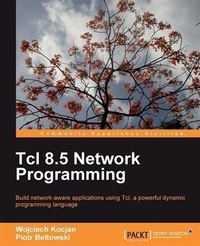
Tcl 8.5 Network Programming
Learn Tcl and you'AEoll never look back when it comes to developing network-aware applications. This book is the perfect way in, taking you from the basics to more advanced topics in easy, logical steps.
Published on 13. January 2025
588 pages
978-1-84951-097-4 (ISBN)
Description

Learn Tcl and you'AEoll never look back when it comes to developing network-aware applications. This book is the perfect way in, taking you from the basics to more advanced topics in easy, logical steps.
Key Features
Develop network-aware applications with Tcl
Implement the most important network protocols in Tcl
Packed with hands-on-examples, case studies, and clear explanations for better understanding
Book DescriptionTcl (Tool Command Language) is a very powerful and easy to learn dynamic programming language, suitable for a very wide range of uses. Tcl is regarded as one of the best-kept secrets in the software industry. This book gives you a hands-on experience on Tcl, helping you develop network-aware applications using this mature yet evolving language. This book shows you how to create network-aware applications with Tcl language. Packed with practical examples, the book not only takes you through the implementation of network protocols in Tcl, but also key aspects of Tcl programming. The book starts with the basic element of Tcl programming as we take a look at the syntax and fundamental commands of the language. To get us ready for network programming, we look at important Tcl features such as object-oriented programming, accessing files, packaging in TCL, event driven programming, and multithreaded applications. To create standalone single-file executable applications with Tcl we take a look at the Starpack technology, and ensure that we'AEoll be able to create robust applications with a thorough coverage of troubleshooting and debugging Tcl applications. The book is really about network programming, and it will not let you down with its deep coverage of these topics. Of course we look at protocols, but there are plenty of practical examples to keep things moving along. We start with the TCP and UDP protocols, and look at some other protocols to see examples of synchronizing time with other servers, querying user information and authenticating users over LDAP and performing DNS queries. The book explains Simple Network Management Protocol (SNMP), which is often used for monitoring and gathering information from various devices, such as routers, gateways, printers and many other types of equipment. We'AEoll also look at web programming in Tcl; processing the requests coming from the clients via the HTTP protocol and responding to these requests. You'AEoll be able to create a complete solution for creating a client-server application in Tcl. To round things off, you'AEoll see how to secure your networked applications, build public key infrastructure into your application and use Tcl'AEos safe interpreter feature to reduce risk of running code from unknown source.What you will learn
Get to know the the tools available to ease up development of Tcl code
Discover Tcl'AEos approach of using events over threads, which is very different from many other languages
Learn the VFS feature that allows the usage of Metakit database as normal file system
Create loggers, define log levels, write your logs to file or channel, and trace the execution of your code
Get to know the key differences between free TclPro Debugger and paid ActiveState Tcl Dev Kit Debugger
Handle different text encoding, dependent on the region you live, and create multi-language, internationalized application with msgcat package
Handle UDP communication in Tcl was presented, with TclUDP extension as the implementation
Manage files remotely over File Transfer Protocol (FTP) and learn to download a file from a web site using Hypertext Transfer Protocol (HTTP),
Learn the usage Lightweight Directory Access Protocol (LDAP) to look up information and/or authenticate users, manually querying host names and time servers
Get to know the Tcl package Scotty that handles SNMP and provides a Tk based GUI application that can be used for inspecting devices, discovering systems within our network and browsing data that can be retrieved over SNMP
Use Tcl code as legacy CGI scripts and improve it with ncgi package
Create client-server application based on HTTP protocol and Tclhttpd as embedded web server packed into Starkit technology for easy deployment
Connect to XML-RPC services and issue methods remotely, and easily integrate with major blogging engines
Create SOAP services using Tclhttpd and Web Services for Tcl; define complex data types for storing structured information
Learn to use encrypted connections from Tcl and the method to make sure you know whom your application is communicating with
Who this book is forThis book is for Tcl developers with basic network programming concepts, who want to add networking capabilities to their applications. Working knowledge of Tcl and basic experience of network protocols will be useful. The reader should be familiar with basic concepts used in modern networking 'AEi keywords like TCP, HTTP or XML should not be a mystery. The book does not require advanced knowledge of Tcl 'AEi the first chapters will swiftly introduce the reader into it, allowing refreshing the information or gaining a quick overview of the Tcl language abilities.
Key Features
Develop network-aware applications with Tcl
Implement the most important network protocols in Tcl
Packed with hands-on-examples, case studies, and clear explanations for better understanding
Book DescriptionTcl (Tool Command Language) is a very powerful and easy to learn dynamic programming language, suitable for a very wide range of uses. Tcl is regarded as one of the best-kept secrets in the software industry. This book gives you a hands-on experience on Tcl, helping you develop network-aware applications using this mature yet evolving language. This book shows you how to create network-aware applications with Tcl language. Packed with practical examples, the book not only takes you through the implementation of network protocols in Tcl, but also key aspects of Tcl programming. The book starts with the basic element of Tcl programming as we take a look at the syntax and fundamental commands of the language. To get us ready for network programming, we look at important Tcl features such as object-oriented programming, accessing files, packaging in TCL, event driven programming, and multithreaded applications. To create standalone single-file executable applications with Tcl we take a look at the Starpack technology, and ensure that we'AEoll be able to create robust applications with a thorough coverage of troubleshooting and debugging Tcl applications. The book is really about network programming, and it will not let you down with its deep coverage of these topics. Of course we look at protocols, but there are plenty of practical examples to keep things moving along. We start with the TCP and UDP protocols, and look at some other protocols to see examples of synchronizing time with other servers, querying user information and authenticating users over LDAP and performing DNS queries. The book explains Simple Network Management Protocol (SNMP), which is often used for monitoring and gathering information from various devices, such as routers, gateways, printers and many other types of equipment. We'AEoll also look at web programming in Tcl; processing the requests coming from the clients via the HTTP protocol and responding to these requests. You'AEoll be able to create a complete solution for creating a client-server application in Tcl. To round things off, you'AEoll see how to secure your networked applications, build public key infrastructure into your application and use Tcl'AEos safe interpreter feature to reduce risk of running code from unknown source.What you will learn
Get to know the the tools available to ease up development of Tcl code
Discover Tcl'AEos approach of using events over threads, which is very different from many other languages
Learn the VFS feature that allows the usage of Metakit database as normal file system
Create loggers, define log levels, write your logs to file or channel, and trace the execution of your code
Get to know the key differences between free TclPro Debugger and paid ActiveState Tcl Dev Kit Debugger
Handle different text encoding, dependent on the region you live, and create multi-language, internationalized application with msgcat package
Handle UDP communication in Tcl was presented, with TclUDP extension as the implementation
Manage files remotely over File Transfer Protocol (FTP) and learn to download a file from a web site using Hypertext Transfer Protocol (HTTP),
Learn the usage Lightweight Directory Access Protocol (LDAP) to look up information and/or authenticate users, manually querying host names and time servers
Get to know the Tcl package Scotty that handles SNMP and provides a Tk based GUI application that can be used for inspecting devices, discovering systems within our network and browsing data that can be retrieved over SNMP
Use Tcl code as legacy CGI scripts and improve it with ncgi package
Create client-server application based on HTTP protocol and Tclhttpd as embedded web server packed into Starkit technology for easy deployment
Connect to XML-RPC services and issue methods remotely, and easily integrate with major blogging engines
Create SOAP services using Tclhttpd and Web Services for Tcl; define complex data types for storing structured information
Learn to use encrypted connections from Tcl and the method to make sure you know whom your application is communicating with
Who this book is forThis book is for Tcl developers with basic network programming concepts, who want to add networking capabilities to their applications. Working knowledge of Tcl and basic experience of network protocols will be useful. The reader should be familiar with basic concepts used in modern networking 'AEi keywords like TCP, HTTP or XML should not be a mystery. The book does not require advanced knowledge of Tcl 'AEi the first chapters will swiftly introduce the reader into it, allowing refreshing the information or gaining a quick overview of the Tcl language abilities.
More details
Edition
Digital original
Language
English
Place of publication
Birmingham
United Kingdom
Edition type
Digital original
File size
7,65 MB
ISBN-13
978-1-84951-097-4 (9781849510974)
Copyright in bibliographic data and cover images is held by Nielsen Book Services Limited or by the publishers or by their respective licensors: all rights reserved.
Schweitzer Classification
Other editions
Additional editions
Wojciech Kocjan | Piotr Beltowski
TCL 8.5 Network Programming
Book
06/2010
Packt Publishing
€65.40
Shipment within 3-4 weeks
Persons
Wojciech Kocjan is a system administrator and programmer with 10 years of experience. His work experience includes several years of using Nagios for enterprise IT infrastructure monitoring. He also has experience with wide variety of devices and servers, routers, Linux, Solaris, AIX servers and i5/OS mainframes. His programming experience includes multiple languages (such as Java, Ruby, Python, and Perl) and focuses on web applications as well as client-server solutions. Piotr Beltowski is an IT and software engineer, and co-author of several US patents and publications. A Master of Science in telecommunications, his technical experience includes various aspects of telecommunication, such as designing IP networks or implementing support for network protocols. Piotr's experience as Level 3 customer support lead makes him focused on finding simple solutions to complex technical issues. His professional career includes working in international corporations such as IBM and Ericsson.
Content
Table of Contents
