

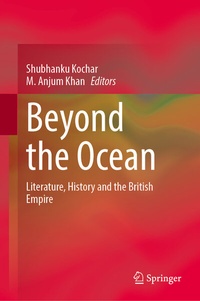
Beyond the Ocean
Description

This book aims to provide nuanced understanding of the British Empire with reference to history, literature, and migration studies. It demonstrates subtle intersection of subaltern, diaspora, ecological, and gender perspectives, making it a scholarly yet engaging read. It features original and well researched essays, with contributions from global scholars, exploring previously unknown literary texts. This book unfolds fascinating historical insights and discussions that shed light on the complexities of twenty-first century's global cultural landscape. This book is ideal for students, research scholars, and academicians from disciplines such as Literature, Cultural, Postcolonial, Ecological, Migration, and Interdisciplinary studies. Additionally, it also appeals to history enthusiasts eager to deepen their understanding of Indian migration under the British Empire. The intersection of narrative and theoretical frameworks offers a comprehensive and insightful exploration of this significant historical period.
More details
Other editions
Additional editions
Persons
Shubhanku Kochar teaches at the University School of Humanities and Social Sciences, Guru Gobind Singh Indraprastha University, Delhi. His interests include African and African Diasporic Literature and Ecological Literary Criticism. His recent books are Environmental Post-Colonialism: A Literary Response (2021), Literature from the Peripheries: Refrigerated Culture and Pluralism (2023), and Pastoral and Anti-Pastoral: Representation of City and Village in Literature (2024). Currently, he is working on a project on migration with reference to African-American fiction.
M. Anjum Khan teaches at the Avinashilingam Institute for Home Science and Higher Education for Women, Coimbatore. Her interests include Canadian writing with a focus on migration and disability literary studies. She has published about sixty research papers and contributed chapters to publishers like Lexington Press, Routledge, Springer, and Cambridge Scholars Publishing. Her recent books are Environmental Post-Colonialism: A Literary Response (2021), Literature from the Peripheries: Refrigerated Culture and Pluralism (2023), and Unveiling Migration and Education in Marina Budhos's Fiction: Narratives of Mobility (2024).
Content
Tracing the Roots of Indians in East Africa: A Reading of M.G. Vassanji's Novels The Gunny Sack, The Book of Secrets and No New Land by Urmi Satyan.- From Madras to Tanzania: Exploring Nurse Migration in Benyamin's Nishabda Sancharangal by Prabha Zacharias.- The Poetics of Routes and Roots: Tracing the Matrilineal in Gitan Djeli's "Mother Wounds" by Anju Gurawa and Sagar Kumar.- Between Caste and Colony: Reading the Dual Experiences of Servitude and Agency of the Female Indentured Migrant in Joanne Joseph's Children of Sugarcane by Kuheli Singha.- Resilient Women in Transit: Gender Dynamics and Identity Formation in Amitav Ghosh's Sea of Poppies by Kalplata.
