

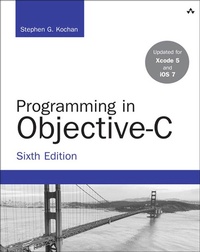
Programming in Objective-C
Programming in Obj.ePub _6
6th Edition
Published on 18. November 2013
552 pages
978-0-13-375687-6 (ISBN)
Description

Updated for OS X 10.9 Mavericks, iOS 7, and Xcode 5
Programming in Objective-C is a concise, carefully written tutorial on the basics of Objective-C and object-oriented programming for Apple's iOS and OS X platforms.
The book makes no assumptions about prior experience with object-oriented programming languages or with the C language (which Objective-C is based upon). Because of this, both beginners and experienced programmers alike can use this book to quickly and effectively learn the fundamentals of Objective-C. Readers can also learn the concepts of object-oriented programming without having to first learn all of the intricacies of the underlying C programming language.
This unique approach to learning, combined with many small program examples and exercises at the end of each chapter, makes Programming in Objective-C ideally suited for either classroom use or self-study.
This edition has been fully updated to incorporate new Objective-C features and technologies introduced with Xcode 5, iOS 7, and Mac OS X Mavericks.
"The best book on any programming language that I've ever read. If you want to learn Objective-C, buy it."-Calvin Wolcott
"An excellent resource for a new programmer who wants to learn Objective-C as their first programming language-a woefully underserved market."-Pat Hughes
Programming in Objective-C is a concise, carefully written tutorial on the basics of Objective-C and object-oriented programming for Apple's iOS and OS X platforms.
The book makes no assumptions about prior experience with object-oriented programming languages or with the C language (which Objective-C is based upon). Because of this, both beginners and experienced programmers alike can use this book to quickly and effectively learn the fundamentals of Objective-C. Readers can also learn the concepts of object-oriented programming without having to first learn all of the intricacies of the underlying C programming language.
This unique approach to learning, combined with many small program examples and exercises at the end of each chapter, makes Programming in Objective-C ideally suited for either classroom use or self-study.
This edition has been fully updated to incorporate new Objective-C features and technologies introduced with Xcode 5, iOS 7, and Mac OS X Mavericks.
"The best book on any programming language that I've ever read. If you want to learn Objective-C, buy it."-Calvin Wolcott
"An excellent resource for a new programmer who wants to learn Objective-C as their first programming language-a woefully underserved market."-Pat Hughes
More details
Edition
6. Auflage
Language
English
Product notice
Windows
File size
5,20 MB
ISBN-13
978-0-13-375687-6 (9780133756876)
Copyright in bibliographic data and cover images is held by Nielsen Book Services Limited or by the publishers or by their respective licensors: all rights reserved.
Schweitzer Classification
Other editions
Additional editions
Stephen Kochan
Programming in Objective-C
Book
12/2013
6th Edition
Addison Wesley
€45.79
Article not available at the moment
Person
Stephen Kochan is the author and coauthor of several bestselling titles on the C language, including Programming in C (Sams, 2004), Programming in ANSI C (Sams, 1994), and Topics in C Programming (Wiley, 1991), and several UNIX titles, including Exploring the Unix System (Sams, 1992) and Unix Shell Programming (Sams, 2003). He has been programming on Macintosh computers since the introduction of the first Mac in 1984, and he wrote Programming C for the Mac as part of the Apple Press Library. In 2003, Kochan wrote Programming in Objective-C (Sams, 2003), and followed that with another Mac-related title, Beginning AppleScript (Wiley, 2004).
Content
1 Introduction
PART I - The Objective-C Language
2 Programming in Objective-C
3 Classes, Objects, and Methods
4 Data Types and Expressions
5 Program Looping
6 Making Decisions
7 More on Classes
8 Inheritance
9 Polymorphism, Dynamic Typing, and Dynamic Binding
10 More on Variables and Data Types
11 Categories and Protocols
12 The Preprocessor
13 Underlying C Language Features
PART II - The Foundation Framework
14 Introduction to the Foundation Framework
15 Numbers, Strings, and Collections
16 Working with Files
17 Memory Management and Automatic Reference Counting (ARC)
18 Copying Objects
19 Archiving
PART III - Cocoa, Cocoa Touch, and the iOS SDK
20 Introduction to Cocoa and Cocoa Touch
21 Writing iOS Applications
Appendixes
A Glossary
B Address Book Program Source Code
PART I - The Objective-C Language
2 Programming in Objective-C
3 Classes, Objects, and Methods
4 Data Types and Expressions
5 Program Looping
6 Making Decisions
7 More on Classes
8 Inheritance
9 Polymorphism, Dynamic Typing, and Dynamic Binding
10 More on Variables and Data Types
11 Categories and Protocols
12 The Preprocessor
13 Underlying C Language Features
PART II - The Foundation Framework
14 Introduction to the Foundation Framework
15 Numbers, Strings, and Collections
16 Working with Files
17 Memory Management and Automatic Reference Counting (ARC)
18 Copying Objects
19 Archiving
PART III - Cocoa, Cocoa Touch, and the iOS SDK
20 Introduction to Cocoa and Cocoa Touch
21 Writing iOS Applications
Appendixes
A Glossary
B Address Book Program Source Code
